
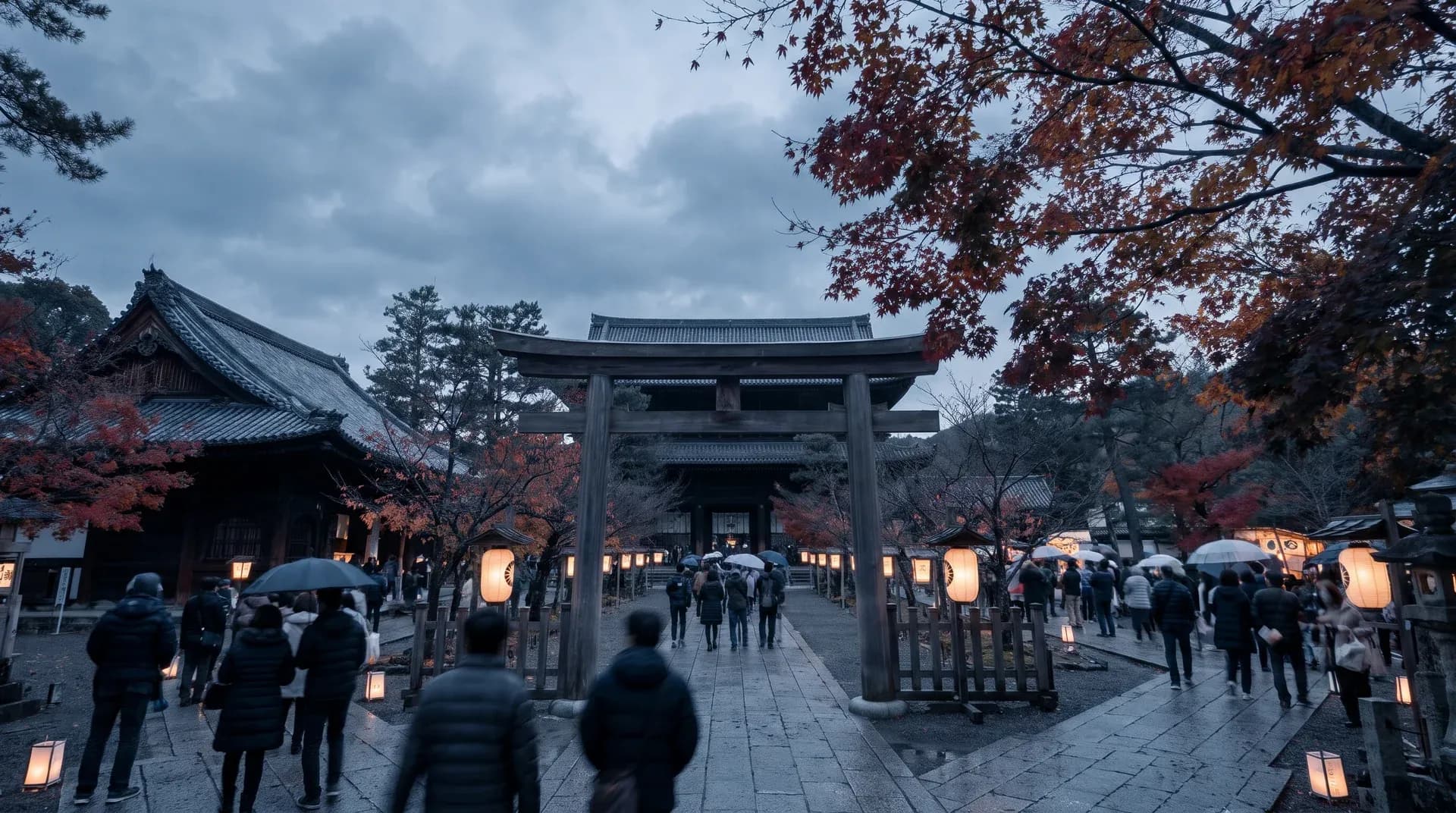
Tokyo New Year's Eve 2026
Plan Tokyo New Year's Eve 2026 with temple countdowns at Meiji Shrine (¥1,000 entry), street parties in Shibuya (free), and midnight celebrations at Tokyo Station (¥3,500 dinner). Arrive by December 24; hotels book 3 months ahead. Expect ¥15,000-¥25,000 daily budget excluding accommodation.
Affiliate link — we may earn a commission at no extra cost to you. Affiliate disclosure
The first chime of the new year echoes across Tokyo as devotees gather at Meiji Shrine, their heads bowed in traditional hatsumode prayer before the midnight bell. This is your complete 2026 guide to experiencing Tokyo New Year's Eve like a local: temple countdowns with proper etiquette, free street parties in Shibuya, upscale dinners at Tokyo Station, and the exact budget to survive January 1-3 without breaking the bank. International visitors planning to stay past midnight need to book accommodation by September 2026, as hotels fill 180 days out for the holiday period.
This guide serves first-time visitors to Tokyo who want authentic New Year celebrations beyond tourist traps. You'll find specific locations, train routes, entry fees, and cultural protocols that prevent embarrassing mistakes. All costs reflect 2026 pricing and include USD conversions based on current exchange rates.
Essential Highlights & Local Itinerary
December 31 - Midnight at Tokyo Station
Location: Tokyo Station Marunouchi Building, Marunouchi 1-9-1, Chiyoda-ku, Tokyo 100-0005
How to get there: Take the JR Yamanote Line from Shinjuku Station (¥200 fare) and alight at Tokyo Station. From Narita Airport, take the Narita Express (N'EX) directly to Tokyo Station for ¥3,070. Upon arrival, exit through Marunouchi South Exit (green signs) and follow the illuminated New Year's Eve banners for approximately 200 meters toward the Marunouchi Building entrance. The venue is clearly marked with large digital displays showing countdown timings and reservation information.
Timing: Arrive by 6 PM for dinner reservations. The celebration officially runs until 1:30 AM, though many guests linger until 2 AM. The actual New Year's countdown occurs at midnight sharp, accompanied by a specially commissioned orchestra performance in the atrium.
Cost: Multi-course kaiseki dinner ¥15,000-¥25,000 ($105-$175 USD). Entry to the celebration area is technically free but dinner reservations are mandatory for access. You can expect to pay around ¥18,000 ($126 USD) for the standard set menu, which includes tax and service charge. Premium seating upgrades cost an additional ¥5,000-¥8,000.
Tokyo Station transforms its luxury Marunouchi Building restaurant into a spectacular New Year's celebration venue, offering traditional kaiseki cuisine with seasonal ingredients like Hokkaido sea urchin, wagyu beef from Kobe, and fresh snow crab. The multi-course meal includes essential New Year dishes: zoni (sweet bean soup with mochi), age-dara (fried fish cake), tsubu-nabe (hot pot), and narezushi (fermented fish). The restaurant's floor-to-ceiling windows provide an unobstructed view of the station's historic architecture while staff in traditional kimono serve each course with precise ceremony.
December 31 - Shibuya Crossing Street Party
Location: Shibuya Crossing, Shibuya 2-29-25, Shibuya-ku, Tokyo 150-0002
How to get there: Take the JR Yamanote Line or Tokyo Metro Fukutoshin Line to Shibuya Station (¥200 from Tokyo Station). Use the Hachiko Exit (Exit 1) and walk directly to the crossing. From Shinjuku, take the JR Yamanote Line directly to Shibuya Station, a 12-minute journey. For international visitors arriving at Haneda Airport, the Keikyu Line connects to the Yamanote Line at Shinagawa Station, then continue to Shibuya for approximately ¥450 total.
Timing: 8 PM to 2 AM. The crossing actually closes at 11:30 PM for official party setup and crowd management. The main DJ stages are erected on the second floor of Shibuya Sky observation deck, which opens at 5 PM for early visitors to secure viewing positions.
Cost: Free entry. Street food vendors around Shibuya Sky observation deck charge ¥500-¥1,200 per item. A typical dinner of yakitori, takoyaki, and ramen will cost between ¥2,500-¥4,000 for two people.
Shibuya's famous scramble crossing becomes a massive open-air street party with multiple DJ stages, food trucks, and thousands of revelers. Unlike the paid Tokyo Station event, this celebration costs nothing beyond individual food purchases. Locals bring their own bento boxes and beer, creating an impromptu festival atmosphere that attracts visitors from across Japan. The party officially kicks off at 8 PM when the crossing shuts down for safety reasons, and the energy builds until the midnight countdown when everyone simultaneously cheers 'Akemashite omedetou gozaimasu!'
January 1 - Meiji Shrine Hatsumode
Location: 1-1 Yoyogikamizono-cho, Shibuya-ku, Tokyo 151-8569
How to get there: Take the JR Yamanote Line to Harajuku Station (¥200 from Shibuya). Use the North Exit and walk approximately 10 minutes north through the expansive Yoyogi Park toward the massive wooden torii gates. The shrine entrance is clearly visible from the main road, with directional signs in both Japanese and English. For visitors coming from Tokyo Station, the journey takes 18 minutes via the Yamanote Line.
Timing: Open 5 AM to 6 PM daily. Best time is 7-9 AM for fewer crowds and proper hatsumode atmosphere. The shrine's main hall (honden) opens at 5 AM for the first prayer of the year, and many locals attend this early ceremony. Between 9 AM and 11 AM, the crowds become manageable, allowing for proper photography and shrine exploration.
Cost: Free entry. Ema (wooden prayer plaques) ¥100 each. Omikuji (fortune slips) ¥100 each. Omamori (protective charms) range from ¥500-¥1,000 depending on the type and design. A complete hatsumode experience with all traditional elements will cost approximately ¥1,200-¥2,000.
Meiji Shrine draws the largest New Year's crowd in Tokyo for hatsumode, Japan's most important Shinto New Year tradition. Visitors draw omikuji fortunes, write wishes on ema plaques, and purchase omamori (protective charms) from the shrine shops. The main hall opens at 5 AM for the first prayer of the year. The shrine grounds encompass 175 acres of serene forest, making it easy to lose yourself in contemplation even among the crowds. The traditional purification ritual involves washing hands and rinsing the mouth at the temizuya (water pavilion) before approaching the main hall.
January 2-3 - Asakusa Temple Countdowns
Location: 2-3-1 Asakusa, Taito-ku, Tokyo 111-0032
How to get there: Take the Tokyo Metro Ginza Line to Asakusa Station (¥200 from Ueno). Use Exit 2 and walk approximately 3 minutes to Senso-ji Temple. From Tokyo Station, take the Marunouchi Line to Ginza Station (¥170), transfer to the Hibiya Line to Kanda Station (¥170), then take the JR Ueno Line to Ueno Station (¥140), and finally transfer to the Ginza Line to Asakusa (¥170) - total fare approximately ¥650. Alternatively, take the Toei Asakusa Line directly from Shibuya to Asakusa for ¥350.
Timing: 7 AM opening. Less crowded than Meiji Shrine, making it ideal for second-day reflection. The temple's famous thunder gate (kaminarimon) remains open until 5 PM, while the main hall closes at 4 PM. On January 2nd and 3rd, the temple hosts special Buddhist memorial services where visitors can make offerings for deceased family members.
Cost: Free entry. Temple food offerings ¥800-¥1,500 at nearby restaurants. Traditional o-sechi ryori (New Year's boxed lunch) can be purchased for ¥1,200-¥2,000 from temples and shrine shops. The Nakamise-dori shopping street stays open until 6 PM on January 1st, selling traditional snacks like ningyo-yaki (heart-shaped cakes) and kibi-dango (sweet dumplings) that locals traditionally share with family.
Senso-ji Temple offers a quieter New Year experience with traditional bell ringing and first sunrise viewing from the temple grounds. The massive bronze bell named Great Buddha calls the nation to prayer at specific intervals throughout the holiday period. The surrounding Nakamise-dori shopping street stays open late January 1st, selling traditional snacks like ningyo-yaki (heart-shaped cakes) and kibi-dango (sweet dumplings) that locals traditionally share with family.
Practical Details & Dual-Currency Budget
Best Season & Weather
New Year's in Tokyo means clear, crisp weather with average temperatures of 4-8°C (39-46°F) during daytime hours. January 1-3 is the optimal window for comfortable walking between celebrations. Morning temperatures can drop to -1°C (30°F), requiring proper winter layering. The humidity is low, making the cold feel sharper than in many other climates. Snowfall is rare but not impossible - when it does occur, it creates a magical atmosphere particularly at temple sites. Daylight hours are limited, with sunrise occurring around 6:45 AM and sunset at 5:15 PM, so plan outdoor activities accordingly. February can be significantly colder, with temperatures ranging from 0-6°C, and while accommodation rates may be lower, the extreme cold and shorter daylight hours limit temple access hours significantly.
Budget Breakdown
Budget traveler daily cost: ¥15,000-¥20,000 ($105-$140 USD)
- Hostel dorm bed: ¥3,500-¥5,000 ($25-$35 USD). Capsule hotels in Asakusa or Ueno offer the most affordable options at ¥3,500-¥4,000 per night. Private rooms in hostels cost ¥6,000-¥8,000.
- Convenience store meals: ¥1,000-¥1,500 ($7-$11 USD). A typical day's worth of meals from 7-Eleven, FamilyMart, or Lawson costs approximately ¥1,200-¥1,800. Breakfast rice balls (onigiri) ¥150-¥200, lunch bento boxes ¥500-¥800, dinner instant noodles or convenience store sandwiches ¥300-¥500.
- Local train day pass: ¥800 ($6 USD). The Tokyo Metro 24-hour pass costs ¥800 and covers all metro lines. Adding JR lines increases the cost to approximately ¥1,200 for a similar period. For visitors primarily staying in central Tokyo, the metro pass is sufficient.
- Street food/snacks: ¥2,000-¥3,000 ($14-$21 USD). This includes ¥500-¥800 for street food at Shibuya party, ¥800-¥1,200 for temple snacks, and ¥700-¥1,000 for convenience store purchases throughout the day.
- Drinks: ¥1,500-¥2,500 ($11-$18 USD). A can of coffee from a convenience store ¥150-¥200, bottled water ¥100-¥150, beer at convenience stores ¥300-¥400, alcoholic beverages at izakayas or bars ¥500-¥800 per drink.
Mid-range traveler daily cost: ¥25,000-¥35,000 ($175-$245 USD)
- Business hotel: ¥10,000-¥15,000 ($70-$105 USD). Business hotels like APA Hotel, Toyoko Inn, or Daiwa Roynet Hotel charge ¥10,000-¥13,000 for single rooms in central locations. These typically include breakfast and Wi-Fi. Mid-range options in Shibuya or Shinjuku range from ¥12,000-¥18,000 depending on the season.
- Restaurant meals: ¥3,000-¥5,000 ($21-$35 USD). Lunch at mid-range restaurants costs ¥1,500-¥2,500 per person. Dinner at izakayas or casual restaurants ranges from ¥2,500-¥4,000. Special New Year's cuisine at temples or shrine restaurants adds ¥1,000-¥2,000 to meal costs.
- Tokyo Metro 24-hour pass: ¥1,000 ($7 USD). For visitors who want flexibility to explore beyond central Tokyo, the 24-hour pass is worth the investment. It covers all Tokyo Metro lines and Toei subway lines, making it easy to visit multiple celebration venues in a single day.
- Drinks at establishments: ¥3,000-¥4,000 ($21-$28 USD). This includes two to three alcoholic beverages at bars or izakayas, plus soft drinks or coffee. New Year's special beverages like amazake (sweet fermented rice drink) cost ¥300-¥500 each.
Transit & Access
Purchase a Suica or Pasmo IC card before arriving at Narita or Haneda Airport. These cards work on all trains, buses, and most convenience stores. At Narita Airport, Suica cards are available at the airport station for ¥2,000 (including ¥500 refundable deposit). At Haneda Airport, they can be purchased at the Terminal 1 or Terminal 2 Keikyu Main Line station. For New Year's Eve, load at least ¥5,000 ($35 USD) as many stations don't accept credit cards after 8 PM due to maintenance schedules. The card can be recharged at any station machine or convenience store.
The JR Pass does NOT cover the Tokyo Station New Year's Eve event area, but it's valuable if you plan day trips to nearby cities like Nikko or Kamakura on January 1-2 when regular service resumes. The pass covers travel to Narita Airport (N'EX included) and Haneda Airport (Keikyu Line included), making it excellent for arrival and departure days. For visitors staying only in Tokyo, a regional pass covering the Tokyo metropolitan area might be more cost-effective than the national JR Pass.
Where to Eat & Local Food Secrets
Traditional New Year Foods
Zoni (sweet bean soup with mochi) costs ¥500-¥800 ($4-$6 USD) at temple shops. The mochi becomes increasingly thick and sweet throughout the three-day holiday period, reflecting the traditional belief that thicker mochi brings better fortune. Meiji Shrine's temple shop sells zoni from 5 AM until 3 PM, while Asakusa's Senso-ji offers it until 4 PM. The preparation involves steaming glutinous rice, pounding it into mochi, and cutting it into thick slices before adding to the sweetened bean soup with various seasonal ingredients.
Toshikoshi soba (year-ending buckwheat noodles) is served at 10 AM January 1st at traditional restaurants like Tsurutontan in Tokyo Station. A bowl costs ¥1,200-¥1,800 ($8-$13 USD). The tradition involves eating soba long enough to finish before noon, symbolizing cutting off the old year and welcoming the new one. Tsurutontan's Tokyo Station location in the Marunouchi Building offers both traditional soba and their famous mega-sized versions for those wanting to make a dramatic statement.
Street Food Around Celebrations
At Shibuya's street party, yakitori skewers cost ¥300-¥500 each ($2-$4 USD). Popular vendors include Torikizoku, which has multiple stalls throughout the party area. Each skewer typically contains 2-3 pieces of chicken, seasoned with salt or tare sauce. Takoyaki (octopus balls) from food trucks are ¥400-¥600 for three pieces ($3-$4 USD). The batter is cooked in special hexagonal molds, then topped with octopus, green onion, and bonito flakes before being drizzled with sauce and mayonnaise. Ramen bowls from dedicated street vendors cost ¥800-¥1,200 ($6-$9 USD), with tonkotsu and shoyu varieties being most popular during the celebration.
Convenience stores like 7-Eleven offer New Year's bento boxes for ¥800-¥1,200 ($6-$9 USD). These include tamagoyaki (rolled omelet), karaage (fried chicken), and pickled vegetables, packed in special New Year's packaging. The bento boxes are available from December 28th through January 3rd, with special seasonal items like osechi-chi (New Year's rice cakes) added to the selection. FamilyMart and Lawson offer similar options with regional variations.
Dining Etiquette Tips
Never stick your chopsticks vertically into rice at any New Year's meal - this resembles funeral rituals and is considered deeply disrespectful in Japanese culture. When receiving omikuji at temples, express gratitude with a slight bow before and after drawing your fortune. Purify your hands at the temizuya (water pavilion) before approaching the shrine or temple, and make sure to bow twice when entering and exiting the main hall. It's customary to toss a small offering of money into the offeratory box before receiving any blessings. When dining with Japanese companions, wait for the oldest person to start eating or for them to say 'itadakimasu' before beginning your meal.
Essential Traveler Checklist
- Pack layers: Tokyo in January requires thermal underwear, a warm coat, and comfortable walking shoes for temple visits. Temperatures can drop significantly in the evening, so bring gloves, a scarf, and an extra layer. Waterproof footwear is recommended as winter storms can bring unexpected rain or snow. Consider bringing hand warmers, which are readily available at convenience stores and can make temple visits much more comfortable.
- Download Japan Travel app and get a pocket WiFi rental (¥800/day / $6 USD) for navigation during crowded celebrations. The app provides real-time train schedules, facility locations, and emergency information. Pocket WiFi devices can be reserved online before arrival and picked up at Narita or Haneda airports for approximately ¥800 per day. Alternatively, consider a SIM card for your phone, which offers similar functionality at comparable prices.
- Carry cash: Many New Year's venues, especially temple gift shops, don't accept credit cards after 7 PM due to system maintenance. ATMs at 7-Eleven, Lawson, and Japan Post Bank accept international credit cards and can dispense cash at most locations. However, foreign ATMs may have limited availability during holiday periods, so withdraw sufficient funds upon arrival in the city.
- Dress modestly for temples: Cover shoulders and knees, remove hats, and carry a small bag that can be placed at shrine entrances. While casual attire is acceptable for most temple visits, avoid revealing clothing that might be considered inappropriate for religious sites. Remove your shoes when entering temple buildings, and keep your bag with you at all times as theft can occur in crowded areas.
- Learn key phrases: 'Akemashite omedetou gozaimasu' (Happy New Year), 'Tsumibukuro' (lucky bag), and 'Ema wo kakimasu' (I'm writing a prayer on a plaque). 'Sumimasen' (excuse me) and 'Arigatou gozaimasu' (thank you very much) are also essential for navigating interactions with shrine staff and fellow visitors. Download a translation app as backup, though many temple staff speak basic English.
Frequently Asked Questions
How much does a New Year's Eve dinner at Tokyo Station cost?
A multi-course kaiseki dinner at Tokyo Station's New Year's Eve celebration ranges from ¥15,000 to ¥25,000 ($105-$175 USD). This includes traditional dishes like zoni, narezushi, and seasonal ingredients prepared specifically for the holiday. The price varies based on seating location, with premium views of the station's historic architecture commanding higher prices. Reservations must be made in advance through the official website or authorized travel agencies, as walk-in availability is extremely limited. The dinner service includes multiple courses served over 2.5 hours, allowing guests to appreciate each dish's presentation and flavor profile.
Is Shibuya's New Year's Eve party free to attend?
Yes, the street party at Shibuya Crossing is completely free. You only pay for food and drinks purchased from vendors. Unlike Tokyo Station's paid dinner requirement, Shibuya welcomes everyone with no entry fee. However, the nearby Shibuya Sky observation deck charges ¥2,000-¥3,000 for elevated viewing of the countdown, which many visitors choose for better sightlines. The main party area surrounds the scramble crossing and extends into the streets adjacent to the Hachiko statue, covering approximately three city blocks.
When should I book hotels for Tokyo New Year's Eve 2026?
Book accommodation by September 2026 at the latest. Hotels in Tokyo fill 180 days in advance for New Year's, with rates increasing 200-300% after October 1st. Consider staying in nearby areas like Shinjuku or Ikebukuro if Tokyo Station hotels are unavailable. Shinjuku offers excellent access to both Yamanote Line venues and is approximately ¥300-¥500 cheaper per night than central Tokyo locations. Ikebukuro provides a more relaxed atmosphere while maintaining good transport connections via the Yamanote and Marunouchi Lines.
What's the etiquette for hatsumode at Meiji Shrine?
Arrive before 9 AM to avoid crowds, write your wish clearly on the ema plaque, and bow twice upon entering and exiting the shrine grounds. Purchase omamori (protective charms) from the main hall for ¥500-¥1,000 ($4-$7 USD) each. The purification ritual involves washing hands and mouth at the temizuya before approaching the main hall, and visitors should make a small monetary offering into the offeratory box before receiving blessings. It's customary to write wishes in Japanese when possible, though English requests are generally accepted.
Can I use my JR Pass for New Year's celebrations?
Your JR Pass covers travel to and from celebration venues, but not entry fees. For Tokyo Station's New Year's Eve dinner, you'll need separate tickets. The pass is valuable for January 1-2 day trips to Nikko or Kamakura when regular service resumes. The pass also covers travel to Narita and Haneda airports, making it useful for arrival and departure days. However, note that some limited express trains require additional seating reservations even with the JR Pass, particularly during holiday periods when trains are fully booked.
Tokyo's New Year's Eve transforms the city into a living celebration of tradition and modernity. Whether you choose the refined elegance of Tokyo Station's kaiseki dinner or the electric energy of Shibuya's street party, proper preparation ensures you experience January 1st with gratitude and joy. Book your accommodation by September, pack warm layers, and learn the basic etiquette phrases - your memorable first days of 2027 await.
Related reading
- [Tokyo Forest Escape: From Imperial Palace Cafe to Ogasawara ](/blog/tokyo-forest-escape-imperial-palace-cafe-ogasawara)
- [Tokyo November Travel Guide: Weather, Costs & Festival Logis](/blog/tokyo-november-travel-guide-weather-costs-festivals)
- [Tokyo Snack Shop Tour: 1,000‑Yen Delights](/blog/tokyo-snack-shop-tour-1000-yen-delights)
- [Osaka 3‑Day Budget Itinerary: Costs, Transit & Food](/blog/osaka-3day-budget-itinerary)
- [Tokyo Autumn Festivals Itinerary: Halloween, Food, Godzilla ](/blog/tokyo-autumn-festivals-itinerary)
Sources
- One of Japan's Largest Air Shows Features F-35 Jets for First Time
- New regulatory reform minister aims to make self-driving tech widely available
- Toyota hikes profit forecasts on strong demand and weak yen
- Starbucks Japan reveals this year’s lucky bag, but you’ll have to act fast to get one
- Hidden Wonders | Tokyo Sake and Tofu Along the Clear Waters of Mitake Gorge
Ready to explore Japan?
Browse tours and activities, or tell us what you're looking for and we'll suggest the best options.
Stay Connected in Japan
Airalo eSIMs work on arrival — no physical SIM needed. Data plans from $5 for 7 days.
Travel Insurance for Japan
Medical, trip cancellation, and adventure sports covered. Plans from $1.5/day.