
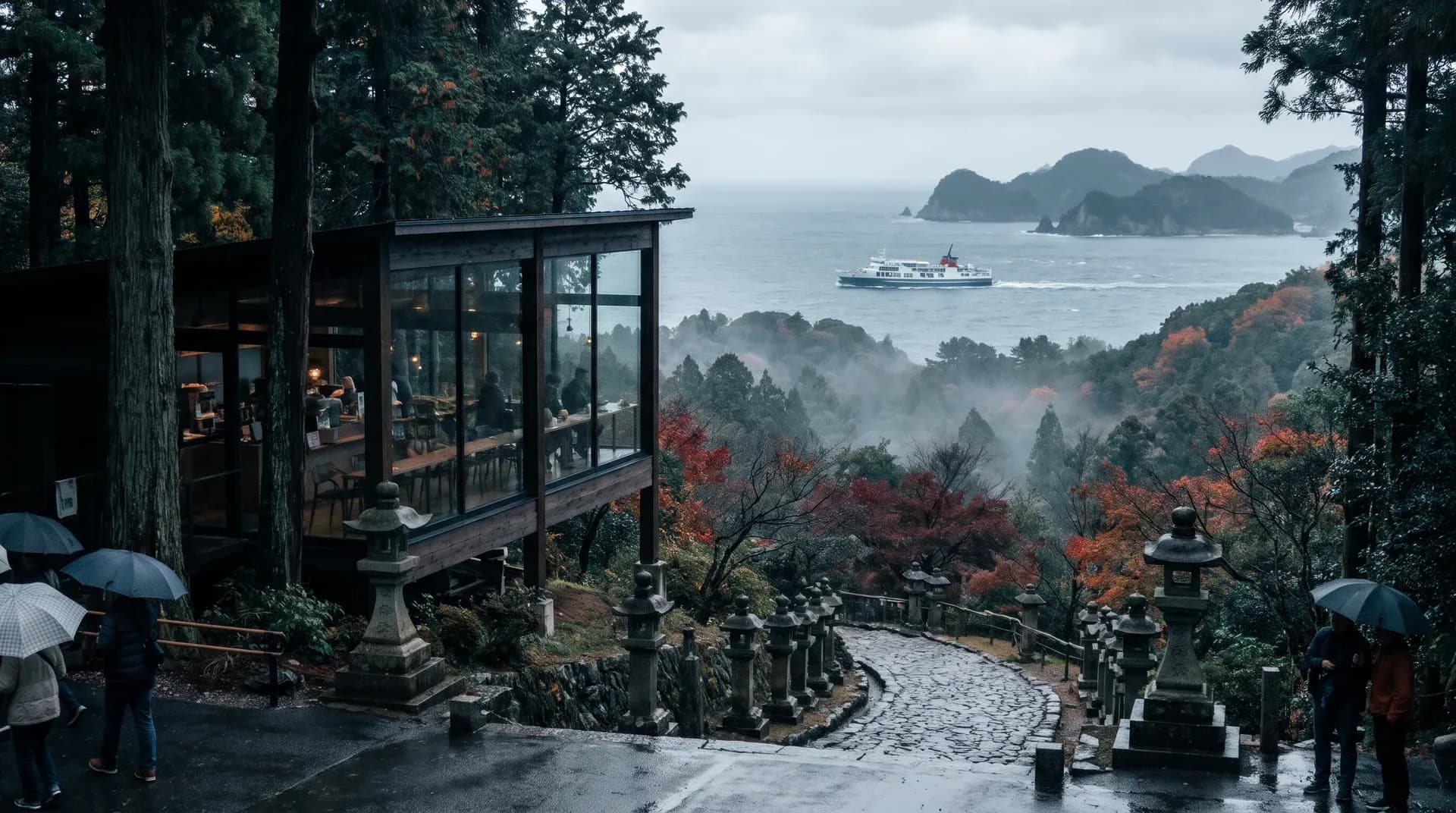
Tokyo Forest Escape: From Imperial Palace Cafe to Ogasawara
This guide unlocks Tokyo's unexpected forest experiences: the new Imperial Palace Garden cafe (¥1,500 coffee), Ueno's forested paths, and Ogasawara Island access via Tokyo Cruise (¥28,000 round-trip). Check typhoon season (June-September) for travel disruptions.
Affiliate link — we may earn a commission at no extra cost to you. Affiliate disclosure
The first whiff of cedar hits you as you step through the iron-laden gates of the Imperial Palace East Gardens, and suddenly you're not in the concrete jungle anymore—you're in a managed forest where centuries-old trees cast dappled shade over stone walls that have watched centuries of Japanese history. This is the unexpected reality of Tokyo's forest experiences: a green escape that exists within the city's grid, accessible to anyone with a Suica card and two hours to wander. For travelers seeking authentic nature without the weekend crowds of nearby Nikko or the long-haul flight to Okinawa's jungles, Tokyo's managed forests offer a different kind of wilderness—one where you can sip coffee at ground zero and still catch a train to Shibuya for dinner. The new cafe on Tokyo Imperial Palace Garden grounds, opening in November 2026, represents this urban-nature paradox perfectly: a place where you can sit inside a protected green oasis in the center of Tokyo and sip an exclusive coffee blend while city workers and tourists alike pass through on their way to or from work.
This guide is for international visitors who want to experience Japan's forest culture without committing to multi-day hikes or remote destinations. Whether you're interested in the managed woodlands of Ueno Park, the coastal rainforest of the Ogasawara Islands, or simply need to escape the urban heat with a walk through the Imperial Palace grounds, these experiences offer concrete costs, specific transit routes, and insider timing tips that make them accessible even on a tight schedule.
Essential Highlights & Local Itinerary
Day 1: Imperial Palace Forest & Coffee
Location: Imperial Palace East Gardens (Kōkyo Higashi-gān), Chiyoda-ku
Start your forest experience at the new cafe within the Imperial Palace Garden grounds. From Tokyo Station, walk 10 minutes north through Marunouchi's corporate district, or take the JR Yamanote Line to Tokyo Station and exit through the South Gate. The gardens open at 9 AM and close at 5 PM, with the cafe operating 10 AM to 4 PM.
The managed forest here consists of carefully tended trees including rare varieties of Japanese cedar and ginkgo. Unlike the more famous Western Gardens, the East Gardens receive fewer visitors, offering a quieter forest experience. The cafe serves a single blend of beans sourced from Kyushu, priced at ¥1,500 for a pour-over ($10 USD).
Transit: From Shinjuku, take the JR Chuo Line to Tokyo Station (23 minutes, ¥200). From Tokyo Station, walk 10 minutes or take the Tokyo Metro Marunouchi Line one stop to Hibiya Station, then a five-minute walk.
Best time: Weekday mornings before 10 AM for solitude; afternoons for locals taking breaks from work.
Time needed: 1.5-2 hours including coffee and gentle walking paths.
Entry fee: Free for gardens; cafe items priced separately.
Day 2: Ueno Park's Forested Heart
Location: Ueno Park (Ueno Kōen), Taito-ku
Ueno Park contains Japan's oldest botanical garden and extensive wooded areas that feel surprisingly wild despite being in Tokyo's center. From Asakusa Station, take the Ginza Line to Ueno-Hirokoji Station (7 minutes, ¥170) or walk 12 minutes from Asakusa Station.
The park's forest sections include the Shinobazu Pond area with weeping willows, the surrounding woodlands with native maple and cherry trees, and the Tokyo Metropolitan Botanical Garden's greenhouse complex. In autumn, the maples turn spectacular color; in spring, the forest paths offer a different cherry blossom experience than the crowded main avenues.
Best time: Early morning (7-9 AM) for locals practicing tai chi and meditation; late afternoon (3-5 PM) for comfortable walking temperatures.
Time needed: 2-3 hours for a complete loop through the wooded sections.
Entry fee: Free for park; Tokyo Metropolitan Botanical Garden charges ¥500 ($4 USD) for adults.
Day 3: Ogasawara Island Forest Adventure
Location: Ogasawara Islands (Ogasawara-shima), Tokyo Prefecture
The Ogasawara Islands represent Japan's most dramatic forest experience—a UNESCO World Heritage site with subtropical rainforest that feels like stepping into a different country. Access requires a ferry journey from Tokyo's Takeshiba Port near Ryogoku Station.
Transit: From Tokyo Station, take the JR Sobu Line to Kinshicho Station (15 minutes, ¥160), then transfer to the Tokyo Metro Hibiya Line to Kanda Station (8 minutes, ¥170), walk 5 minutes to Takeshiba Port. The Tokyo Cruise ferry departs twice daily at 8:30 AM and 2:00 PM, arriving 23 hours later.
Round-trip fare is ¥28,000 ($185 USD) for adults, with overnight accommodation required on the islands. The forest here is pristine subtropical rainforest with endemic species found nowhere else on Earth, including the critically endangered Ogasawara green pigeon.
Best time: December-May for dry season; June-November brings tropical storm risk.
Time needed: Minimum 3 days (2 nights) for meaningful forest exploration.
Entry fee: ¥2,000 ($13 USD) for island entry plus ¥500 ($4 USD) for national park access per day.
Practical Details & Dual-Currency Budget
Best Season & Weather
Spring (March-May): Cherry blossom season brings peak forest beauty, especially in Ueno Park and around the Imperial Palace. However, accommodation prices rise 30-50% during hanami season (late March to early April). Temperatures range from 10-20°C (50-68°F).
Summer (June-September): This is typhoon season for the Ogasawara Islands. High waves around Ogasawara Islands are expected as Typhoon In-fa approaches, with rain intensifying in areas from the Kanto region to around Shizuoka Prefecture. The main island forests remain accessible, but coastal activities become dangerous. Temperatures reach 25-35°C (77-95°F) with high humidity.
Autumn (October-November): Peak autumn foliage season offers the best forest colors across all locations. Typhoon risk decreases significantly after October. Temperatures drop to 15-25°C (59-77°F).
Winter (December-February): Cold and dry, with bare trees creating stark forest silhouettes. The Ogasawara Islands are most comfortable during this period, though whale watching season (December-March) adds marine wildlife to the forest experience.
Budget Breakdown
Budget traveler daily cost: ¥8,000-12,000 ($53-80 USD)
- Accommodation: ¥4,000-6,000 ($27-40 USD) for hostel or business hotel
- Food: ¥3,000-4,000 ($20-27 USD) for convenience store meals and street food
- Transit: ¥1,000-2,000 ($7-13 USD) for local trains and buses
Mid-range traveler daily cost: ¥15,000-25,000 ($100-165 USD)
- Accommodation: ¥10,000-15,000 ($67-100 USD) for decent hotel
- Food: ¥5,000-8,000 ($33-53 USD) for restaurant meals and cafe visits
- Transit: ¥2,000-3,000 ($13-20 USD) including occasional taxi
Special experience costs:
- Imperial Palace Cafe coffee: ¥1,500 ($10 USD)
- Tokyo Metropolitan Botanical Garden entry: ¥500 ($4 USD)
- Ogasawara Islands round-trip cruise: ¥28,000 ($185 USD)
Transit & Access
Japan's transit system makes forest experiences remarkably accessible. Purchase a Suica or Pasmo IC card at any station for ¥500 ($3 USD) deposit plus loaded value. These cards work on trains, subways, buses, and even convenience stores.
For frequent travelers, the JR Pass may not be cost-effective for forest visits alone, as most Tokyo forest experiences are within the city or accessible via local ferries. However, if combining forest visits with other JR destinations, calculate carefully: the 7-day ordinary JR Pass costs ¥33,610 ($225 USD) and covers the Ogasawara ferry route.
Ride-hailing apps like Uber operate in Tokyo, but for forest destinations, public transit is typically faster and more reliable. Download Japan Travel by Navitime for detailed route planning, and always have cash for smaller forest destinations where IC cards may not be accepted.
Where to Eat & Local Food Secrets
Japan's forest experiences naturally lead to agricultural and fishing communities whose food reflects the surrounding nature. Each forest destination has signature dishes that connect you to the local ecosystem.
In Ueno Park and surrounding neighborhoods, try monjayaki—a savory pancake made with finely chopped cabbage, seafood, and mochi flour. The dish originated in Tokyo's Tsukishima district but is available throughout Ueno. Monjayaki stands charge ¥1,200-1,800 ($8-12 USD) per serving.
Near the Imperial Palace, explore the hidden cafes of Nihonbashi district. Kushiage (deep-fried skewers) and tempura are common afternoon snacks, with small plates costing ¥800-1,500 ($5-10 USD) each. The area's traditional sake bars offer forest-inspired botanical infusions using locally foraged herbs.
On Ogasawara Islands, seafood dominates. Try the local specialty of fresh tuna sashimi, often served with mountain vegetables foraged from the island's forests. A proper sashimi set costs ¥3,000-5,000 ($20-33 USD) at local restaurants.
For a complete forest-to-table experience, visit the island's organic cafes that source ingredients from their own small farms. These establishments often serve dishes featuring mountain vegetables (sansai) including wasabi, taro root, and wild carrots. Expect ¥2,500-4,000 ($17-27 USD) for a multi-course meal.
Dining etiquette in forest destinations differs slightly from urban Tokyo. When visiting local establishments, it's polite to acknowledge that your food comes from the surrounding natural environment. Remove shoes when entering homes or traditional establishments, and always say "itadakimasu" (I humbly receive) before meals.
Essential Traveler Checklist
- Pack moisture-wicking clothing for forest humidity, especially in summer months when temperatures reach 35°C
- Download offline maps of forest destinations as cell service can be spotty in wooded areas
- Carry cash for smaller establishments—many forest-side cafes and restaurants don't accept IC cards or credit cards
- Bring a reusable water bottle—Tokyo's tap water is safe, and forest destinations often have public drinking fountains
- Wear comfortable walking shoes with good grip—forest paths can be muddy or uneven, especially after rain
Frequently Asked Questions
How much does it cost to visit the Ogasawara Islands from Tokyo?
A round-trip cruise from Tokyo's Takeshiba Port to Ogasawara Islands costs ¥28,000 ($185 USD) for adults. This price includes the ferry but not accommodation or meals on the islands. The journey takes 23 hours each way, requiring an overnight commitment. Booking should be done at least 2-3 months in advance during peak season.
Is the Imperial Palace Garden cafe worth visiting?
Yes, if you appreciate unique urban experiences. The cafe offers an exclusive coffee blend sourced from Kyushu beans, priced at ¥1,500 ($10 USD), within a protected forest setting in central Tokyo. It's particularly worthwhile for photography enthusiasts and those seeking a quiet coffee spot away from typical tourist areas. The garden itself is free and open 9 AM to 5 PM daily.
When is the best time to visit Tokyo's forests?
Autumn (October-November) offers peak foliage colors across all forest destinations, with comfortable temperatures and minimal typhoon risk. Spring (March-April) provides cherry blossom experiences, though it's peak tourist season. Summer brings humidity and typhoon concerns, especially for Ogasawara Islands. Winter (December-February) is cold but offers clear skies and unique bare-tree forest aesthetics.
Do I need special equipment for forest walking in Tokyo?
No special equipment is required for Tokyo's managed forest paths. Standard walking shoes suffice, though water-resistant footwear helps during rainy seasons. For Ogasawara Islands, hiking boots are recommended for uneven trails, and insect repellent is useful in summer months.
Can I access all forest destinations using a Suica card?
Suica cards work for accessing the Imperial Palace East Gardens (for nearby stations) and Ueno Park via train networks. However, Ogasawara Islands require separate ferry booking and payment, as the Tokyo Cruise service doesn't accept IC cards. Always carry cash as backup for smaller forest destinations.
Explore Tokyo's forest experiences this season, from the Imperial Palace Garden cafe to Ogasawara's subtropical wilderness, all within reach using Japan's efficient transit network and realistic budget planning.
Related reading
- [Ueno Tokyo Travel Guide: New Cafe, Bike Rules & Local Secret](/blog/ueno-tokyo-travel-guide-cafe-bike-rules)
- [Tokyo November Travel Guide: Weather, Costs & Festival Logis](/blog/tokyo-november-travel-guide-weather-costs-festivals)
- [Tokyo Autumn Festivals Itinerary: Halloween, Food, Godzilla ](/blog/tokyo-autumn-festivals-itinerary)
- [Tokyo October Travel Guide: Weather, New Exhibits & Day Trip](/blog/tokyo-october-travel-guide-weather-exhibits-day-trips)
- [Tokyo October Travel Guide: Logistics, Costs, and Events](/blog/tokyo-october-travel-logistics)
Sources
Ready to explore Japan?
Browse tours and activities, or tell us what you're looking for and we'll suggest the best options.
Stay Connected in Japan
Airalo eSIMs work on arrival — no physical SIM needed. Data plans from $5 for 7 days.
Travel Insurance for Japan
Medical, trip cancellation, and adventure sports covered. Plans from $1.5/day.