
Japanese Breakfast Spots in Tokyo: Kissaten, Hotel Sets, and Bakeries
By Tour in Japan editors · Updated
Tokyo's breakfast scene spans old-school kissaten coffee shops, ryokan-style hotel sets, and outstanding bakeries. Here's where to eat in the morning by neighbourhood.
Tokyo's morning food culture is one of the city's quieter pleasures — a world away from the packed dinner ramen lines and competitive lunch queues. A Japanese breakfast in Tokyo can mean many things: the thick toast and hard-boiled egg of a classic kissaten morning set, a meticulously arranged traditional breakfast at a hotel or ryokan, a buttery fresh-baked croissant at a French-inflected bakery, or the comforting warmth of miso soup and rice at a neighborhood teishoku restaurant. Prices are surprisingly reasonable, with most morning sets running 500 to 900 yen. The best Tokyo breakfast experiences reward early risers and those willing to explore beyond the tourist corridors.
Kissaten Morning Sets: A Tokyo Institution
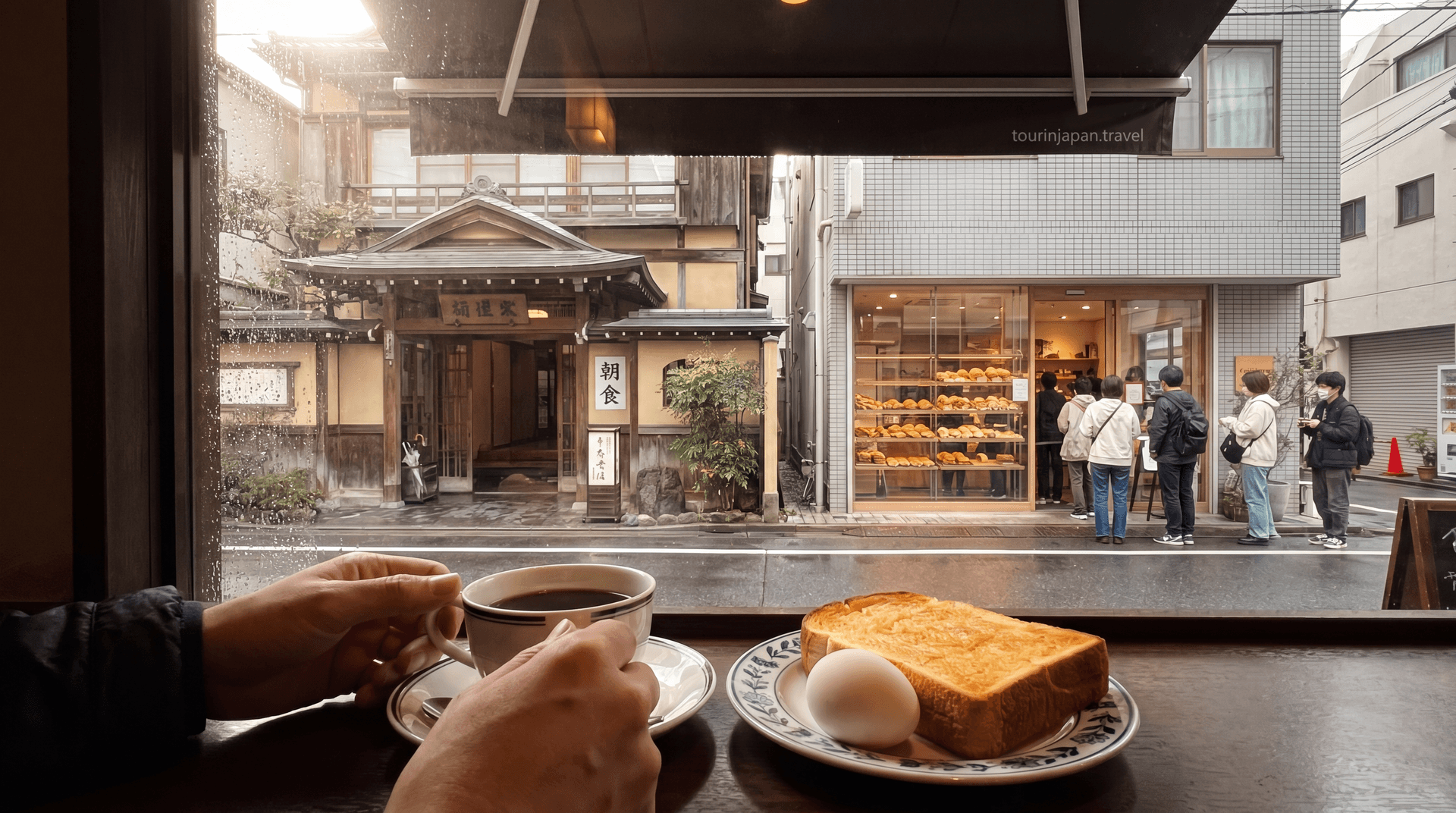
The kissaten — a traditional Japanese coffee shop — serves one of the most satisfying breakfasts in the city. The morning set (moening seto) typically costs 400 to 700 yen and includes a coffee or tea, a thick slice of toasted shokupan (Japanese milk bread), and a choice of hard-boiled egg or small salad. Some establishments add soup or yogurt. The toast itself is an art form: sliced to 3 or 4 centimeters, perfectly browned, and often served with butter and jam.
Excellent kissaten can be found throughout the city. Kayaba Coffee in Yanaka (open since 1938) serves a legendary egg salad sandwich on thick toast. Sarutahiko Coffee in Ebisu is a modern kissaten with outstanding single-origin pour-overs. In Shimokitazawa, dozens of old-school kissaten open early and maintain the slow, contemplative atmosphere that makes mornings in Tokyo feel genuinely restorative.
Hotel Breakfast Sets: Washoku Mornings
A traditional Japanese hotel breakfast — the classic washoku morning set — is among the most beautiful meals in the country. At higher-end hotels and any ryokan-style accommodation, breakfast arrives as a tray with multiple small dishes: steamed rice, miso soup, grilled fish (usually salmon or saba mackerel), tamagoyaki (sweet rolled omelette), preserved vegetables, tofu, and natto (fermented soybeans). The entire experience is deeply nourishing and distinctly Japanese.
Several mid-range hotels in Tokyo offer excellent Japanese breakfast sets that are open to non-guests. The Hoshino Resorts OMO properties scattered across the city serve particularly good morning meals (around 2,000 yen per person). For a budget-friendly version of the same experience, Yayoiken and Ootoya restaurant chains open for breakfast and serve full teishoku sets for 700 to 900 yen.
Best Tokyo Bakeries for Morning Coffee
Tokyo's bakery scene has exploded in recent years, with a wave of Japanese bakers combining French technique with local ingredients and sensibilities. The result is some of the finest bread in Asia. Several neighborhoods have become pilgrimage destinations for bread lovers.
- Signifiant Signifie (Setagaya): Legendary natural-yeast sourdoughs and pastries. Queues form before 8 AM. Worth every minute of waiting.
- Boulangerie Seiji Aoyama (multiple locations): French-trained baker using Japanese flour. Croissants and pain au chocolat are outstanding.
- Viron (Shibuya): Authentic retrodor baguettes among the best in Tokyo. Their onsite cafe does excellent breakfast sets with house-made jam.
- Pelican (Asakusa): Open since 1942, famous for melon bread and thick-sliced toast. Buy a loaf and take it to the Sumida River.
- 365 Nichi (Yoyogi Uehara): Seasonal Japanese breads with ingredients like yuzu, black sesame, and red bean paste.
- Shirogane Bakery (Minami-Aoyama): Small-batch breads with a beautiful open kitchen. Arrive by 9 AM for the best selection.
- Maison Kayser (multiple Tokyo locations): French chain with genuinely high quality; reliable croissants and morning pastries from around 280 yen.
Neighborhood Breakfast Guides
In Yanaka, one of Tokyo's best-preserved old neighborhoods, the morning atmosphere is genuinely magical. The cemetery and temple grounds are peaceful at dawn, and small shops and cafes begin opening from 7 AM. The Yanaka Ginza shopping street has several small eateries serving traditional breakfasts to locals. Nearby Nezu and Sendagi have excellent alternative kissaten.
In Shimokitazawa, the morning before the vintage shops and music venues wake up is wonderfully calm. Kissaten like Bear Pond Espresso and Cafe Zenon open early. The Odakyu and Keio line commuters create a lively but unhurried early morning scene. For a full sit-down Japanese breakfast in a more central location, the underground food halls of department stores like Isetan in Shinjuku and Mitsukoshi in Ginza have standing breakfast counters serving excellent teishoku from 10 AM.
Stay Connected in Japan
Yesim eSIMs work on arrival — no physical SIM needed. Japan data plans from $5.