
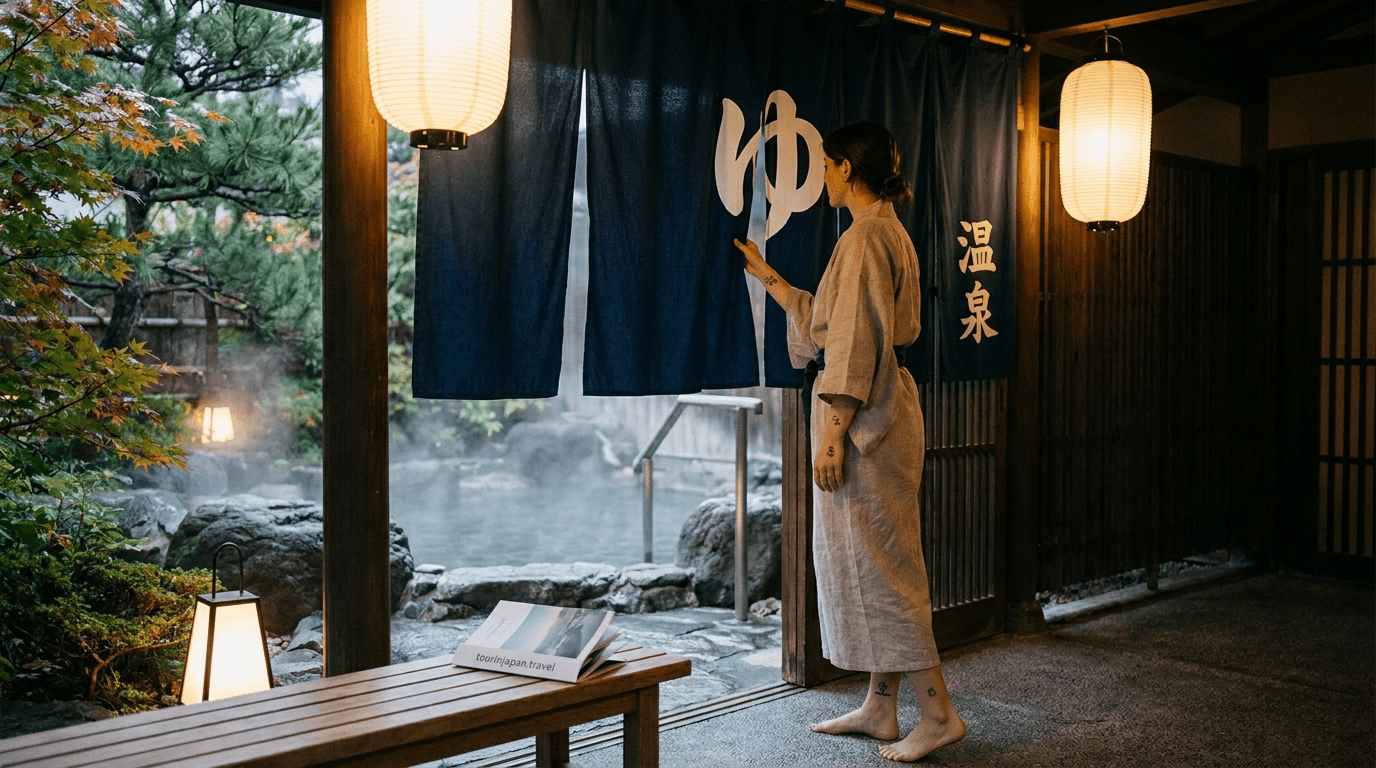
Tattoo-Friendly Onsen 2026: Which Hot Springs Now Accept Tattooed Visitors
By Tour in Japan editors · Updated
Japan's onsen tattoo ban has been softening since 2019. In 2026, many hot springs now welcome tattooed guests. Here's how to find them and what the rules are.
The tattoo-friendly onsen 2026 landscape in Japan has shifted significantly from just a few years ago. The traditional blanket ban on tattooed visitors at Japanese hot springs — rooted in the historical association between tattoos and organized crime (yakuza) — has been steadily softening as Japan's tourism industry grapples with the reality that a large percentage of international visitors have tattoos. Understanding which onsen accept tattooed guests and what the current rules are can save you significant frustration when planning your Japan trip.
Why Onsen Banned Tattoos and What Has Changed
The tattoo ban in Japanese onsen dates to policies implemented largely in the 1990s to keep yakuza gangs out of public baths. The ban was broadly effective in its original purpose but has become increasingly problematic as tattooing has become mainstream globally and Japanese society itself has become more open to tattoo culture through sports and entertainment. A government survey in 2019 found that 56% of surveyed onsen owners said they would consider admitting tattooed guests.
The Japan Tourism Agency has repeatedly encouraged onsen operators to relax tattoo restrictions to accommodate foreign tourists, issuing guidance in 2015 and again in 2021. While there is no national law mandating change, and individual facilities still set their own policies, the direction of travel is clearly toward greater acceptance.
Types of Tattoo Acceptance Policies in 2026
Onsen facilities in Japan fall into several categories regarding tattoo policies. Full acceptance with no restrictions: these facilities welcome tattooed guests in all public baths. Partial acceptance with waterproof seal cover: guests with small tattoos can cover them with provided patches and use public baths. Private bath (kashikiri) only: tattooed guests cannot use public pools but can rent a private bath for their group. Full ban: no tattooed guests permitted.
Many large resort hotels and tourist-oriented onsen in Hakone, Beppu, and Noboribetsu now offer at least private bath access for tattooed guests. Urban sento (public baths) in Tokyo and Osaka have been faster to adapt than traditional onsen ryokan in rural areas.
Best Resources and Places for Tattooed Visitors
- Tattoo-Friendly Japan website (tattoofriendly.jp) maintains an updated searchable database of accepting facilities
- Many Hakone ryokan: Gora Kadan, Hakone Ginyu, and Aura Tachibana explicitly welcome tattooed guests
- Beppu, Oita Prefecture: Japan's most prolific hot spring city has many modern facilities with updated policies
- Kusatsu Onsen (Gunma): some ryokan offer private baths with no tattoo restriction when booked in advance
- Urban super sento (theme bath complexes) like Spa World Osaka are generally more flexible than rural onsen
- Private kashikiri (reserved bath) is the universal workaround — most ryokan offer this for a fee of 2,000-5,000 yen
- Always call ahead and confirm current policy — websites are often not updated and staff give definitive answers
- Small tattoos that can be fully covered by patches are accepted at most facilities that offer the cover option
The tattoo situation at Japanese onsen is evolving fast. Younger Japanese onsen operators tend to be significantly more open, and tourist-oriented facilities have strong commercial incentive to welcome foreign visitors. If you have tattoos, don't let the old reputation deter you from onsen in Japan — with the right preparation and flexible booking, experiencing an authentic hot spring bath is absolutely achievable and well worth the effort.
Stay Connected in Japan
Yesim eSIMs work on arrival — no physical SIM needed. Japan data plans from $5.