
Sushi vs Sashimi vs Nigiri: The Complete Guide to Japanese Raw Fish
By Tour in Japan editors · Updated
The terminology around Japanese raw fish dishes confuses many first-time visitors. Sushi, sashimi, nigiri, maki, chirashi — they're all related but distinctly different. Understanding the differences will help you order with confidence and appreciate what you're eating.
The Core Differences
| Dish | Japanese | What It Is | Rice? | Raw Fish? |
|---|---|---|---|---|
| Sushi | 寿司 (すし) | Vinegared rice + toppings | ✅ Yes | Optional |
| Sashimi | 刺身 (さしみ) | Sliced raw fish/seafood | ❌ No | ✅ Yes |
| Nigiri | 握り (にぎり) | Hand-pressed rice + fish | ✅ Yes | ✅ Yes |
| Maki | 巻き (まき) | Rolled sushi in seaweed | ✅ Yes | Optional |
| Chirashi | ちらし | Scattered sushi bowl | ✅ Yes | ✅ Yes |
| Temaki | 手巻き | Hand-rolled cone | ✅ Yes | Optional |
Sushi ≠ Raw Fish
Important: Sushi literally means "vinegared rice." The fish is secondary. You can have sushi without any fish at all — cucumber sushi (kappa maki), egg sushi (tamago nigiri), or even natto sushi.
Types of Sushi in Detail
Nigiri (握り)
A slice of fish or seafood placed over a small mound of vinegared rice. This is the purest form of sushi and what most people picture.
How it's made:
- Chef forms rice by hand (takes years to master)
- Fish is sliced and placed on top
- A dab of wasabi is usually between rice and fish
- Some pieces get a brush of soy sauce (nikiri)
Price range: ¥200–¥1,000 per piece depending on fish
Maki (巻き)
Rice and fillings rolled in nori (seaweed) using a bamboo mat.
| Type | Description | Size |
|---|---|---|
| Hosomaki (細巻き) | Thin rolls, single ingredient | Small |
| Futomaki (太巻き) | Thick rolls, multiple ingredients | Large |
| Uramaki (裏巻き) | Rice on outside (Western style) | Medium |
Temaki (手巻き)
Hand-rolled cone of nori with rice and fillings. You should eat these immediately — the nori gets soggy quickly.
Chirashi (ちらし)
A bowl of sushi rice with various fish "scattered" on top. Like a deconstructed sushi platter. Common in Osaka and casual restaurants.
Gunkan (軍艦)
"Warship" sushi — nori wrapped around rice to form a cup, topped with soft ingredients like uni (sea urchin) or ikura (salmon roe).
Fish Guide: What to Order
Classic Nigiri Fish
| Fish | Japanese | Flavor | Texture | Price | Best Season |
|---|---|---|---|---|---|
| Maguro (Tuna) | マグロ | Rich, meaty | Firm | ¥300–¥800 | Year-round |
| Sake (Salmon) | サーモン | Buttery, mild | Soft | ¥200–¥500 | Year-round |
| Hamachi (Yellowtail) | ハマチ | Rich, fatty | Creamy | ¥300–¥700 | Winter |
| Tai (Sea Bream) | タイ | Delicate, sweet | Firm | ¥250–¥600 | Spring |
| Unagi (Eel) | ウナギ | Sweet, rich | Soft | ¥300–¥600 | Summer |
| Ebi (Shrimp) | エビ | Sweet, briny | Firm | ¥200–¥400 | Year-round |
| Tamago (Egg) | タマゴ | Sweet, custardy | Soft | ¥100–¥200 | Year-round |
Premium Fish
| Fish | Japanese | Flavor | Price | Notes |
|---|---|---|---|---|
| Otoro (Fatty Tuna) | 大トロ | Extremely rich | ¥800–¥2,000 | Best part of tuna |
| Uni (Sea Urchin) | ウニ | Briny, creamy | ¥500–¥1,500 | Acquired taste |
| Ikura (Salmon Roe) | イクラ | Bursting, salty | ¥300–¥800 | Magnificent on rice |
| Anago (Sea Eel) | アナゴ | Light, sweet | ¥300–¥600 | Simmered, not grilled |
| Hirame (Flounder) | ヒラメ | Delicate, clean | ¥400–¥900 | Premium white fish |
| Kohada (Gizzard Shad) | コハダ | Vinegary, fishy | ¥300–¥600 | Nigiri purists love this |
Where to Eat Sushi in Japan
Conveyor Belt Sushi (回転寿司 / Kaiten Sushi)
The most affordable and fun way to eat sushi. Dishes rotate on a conveyor belt; grab what looks good or order from a tablet.
Best chains:
| Chain | Price Range | Quality | Notes |
|---|---|---|---|
| Sushiro (スシロー) | ¥100–¥500/plate | Good | Largest chain, app ordering |
| Kura Sushi (くら寿司) | ¥100–¥500/plate | Good | GMO-free, fun gacha system |
| Hamazushi (はま寿司) | ¥100–¥500/plate | Good | Buffet option available |
| Muten Kura (無添くら寿司) | ¥100–¥400/plate | Good | Budget-friendly |
| Genki Sushi (元気寿司) | ¥110–¥600/plate | Good | Fast delivery system |
Budget: ¥1,000–¥2,500 per person for a full meal
Sushi Counter (寿司カウンター)
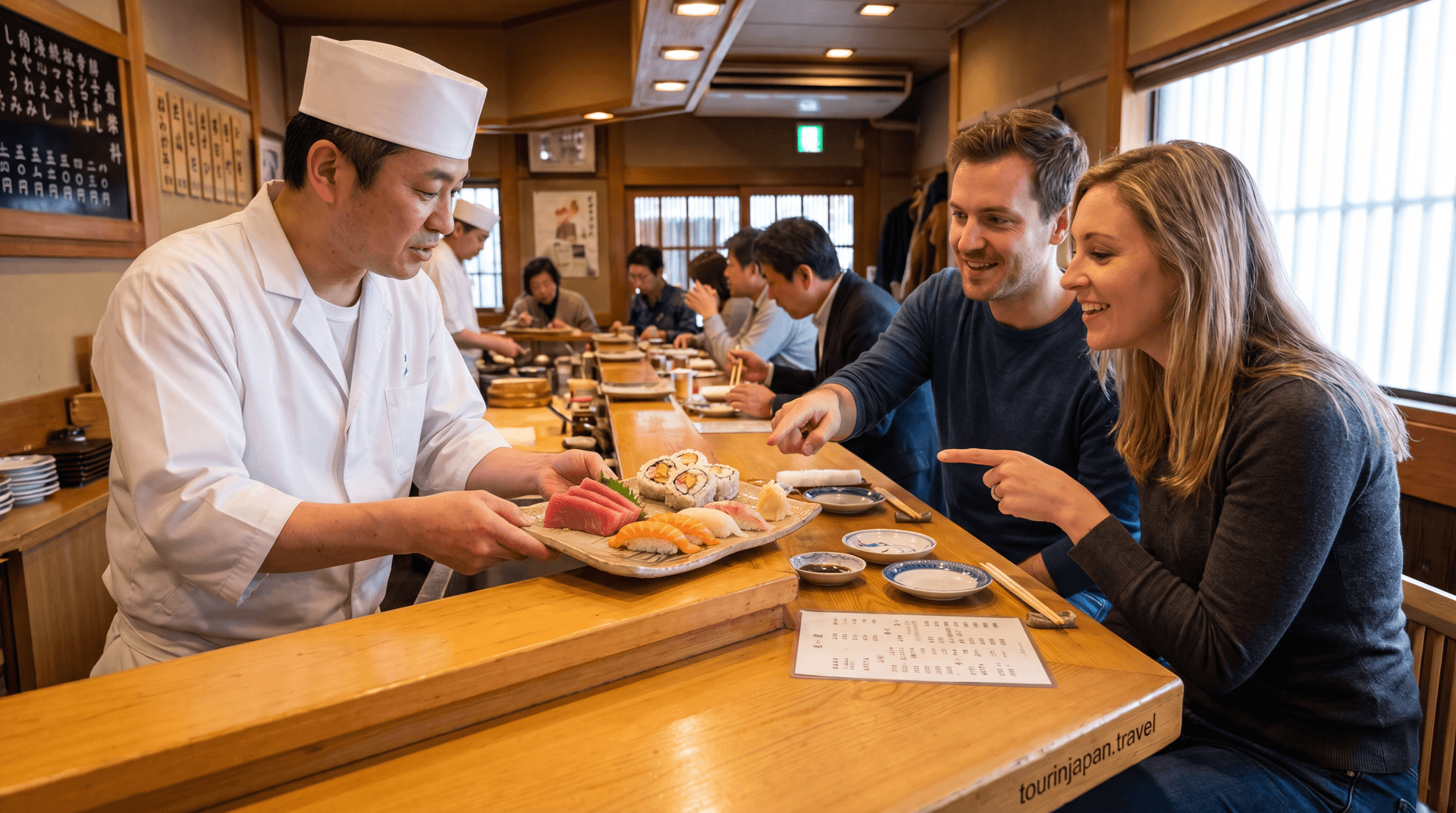
Sit at the counter and watch the chef work. More expensive but a completely different experience.
Best areas:
- Tsukiji Outer Market: Tourist-friendly, fresh fish
- Ginza: High-end, traditional
- Nihonbashi: Serious sushi district
- Kichijoji: Local favorite spots
Budget: ¥3,000–¥10,000 per person
High-End Omakase (おまかせ)
Chef's choice — you sit, they serve. The ultimate sushi experience.
Price range: ¥10,000–¥50,000+ per person Book in advance: Most require reservations weeks or months ahead
Department Store Sushi (デパート寿司)
Surprisingly good and affordable. department store basements (depachika) often have excellent sushi counters.
Budget: ¥1,500–¥3,000 for lunch
How to Order Sushi
At Conveyor Belt Sushi
- Sit down — your table number is on the screen
- Order via tablet — touch screen, select items
- Grab plates — anything on the belt is fair game
- Eat soon — fresh is better
- Stack plates — staff count them when you're done
- Pay at register — scan your plate color code
At a Sushi Counter
- Sit down — usually 8–12 seats at the bar
- Order omakase or à la carte — ask for "omakase de" (おまかせで)
- Eat each piece immediately — it's served at the perfect temperature
- Don't douse in soy sauce — the chef has already seasoned it
- Eat with hands — it's acceptable (and traditional) at counters
Japanese Phrases
| Japanese | Pronunciation | Meaning |
|---|---|---|
| おまかせでお願いします | Omakase de onegai shimasu | "Chef's choice, please" |
| おすすめは何ですか? | Osusume wa nan desu ka? | "What do you recommend?" |
| 新鮮なものは? | Shinsei na mono wa? | "What's fresh today?" |
| サーモンをお願いします | Sāmon wo onegai shimasu | "Salmon, please" |
| マグロのトロお願いします | Maguro no toro onegai shimasu | "Fatty tuna, please" |
| お飲み物は? | Omimono wa? | "Drinks?" |
| お勘定お願いします | Okanjō onegai shimasu | "Check, please" |
Sushi Etiquette
Do's
- ✅ Eat nigiri in one bite
- ✅ Use hands or chopsticks — both are acceptable
- ✅ Eat ginger (gari) between different fish — it cleanses the palate
- ✅ Say "itadakimasu" before eating
- ✅ Thank the chef when leaving ("gochisōsama deshita")
Don'ts
- ❌ Don't mix wasabi into soy sauce (insults the chef)
- ❌ Don't dip rice-side into soy sauce (falls apart)
- ❌ Don't leave sushi sitting — eat it fresh
- ❌ Don't use too much wasabi — chef already applied it
- ❌ Don't take photos without asking at high-end places
Budget Guide
| Type | Price Range | What You Get |
|---|---|---|
| Conveyor belt | ¥1,000–¥2,500 | Fun, casual, filling |
| Mid-range restaurant | ¥3,000–¥6,000 | Quality fish, skilled chef |
| High-end counter | ¥8,000–¥20,000 | Premium fish, master chef |
| Omakase | ¥15,000–¥50,000+ | Ultimate experience |
Related Articles
Stay Connected in Japan
Yesim eSIMs work on arrival — no physical SIM needed. Japan data plans from $5.