
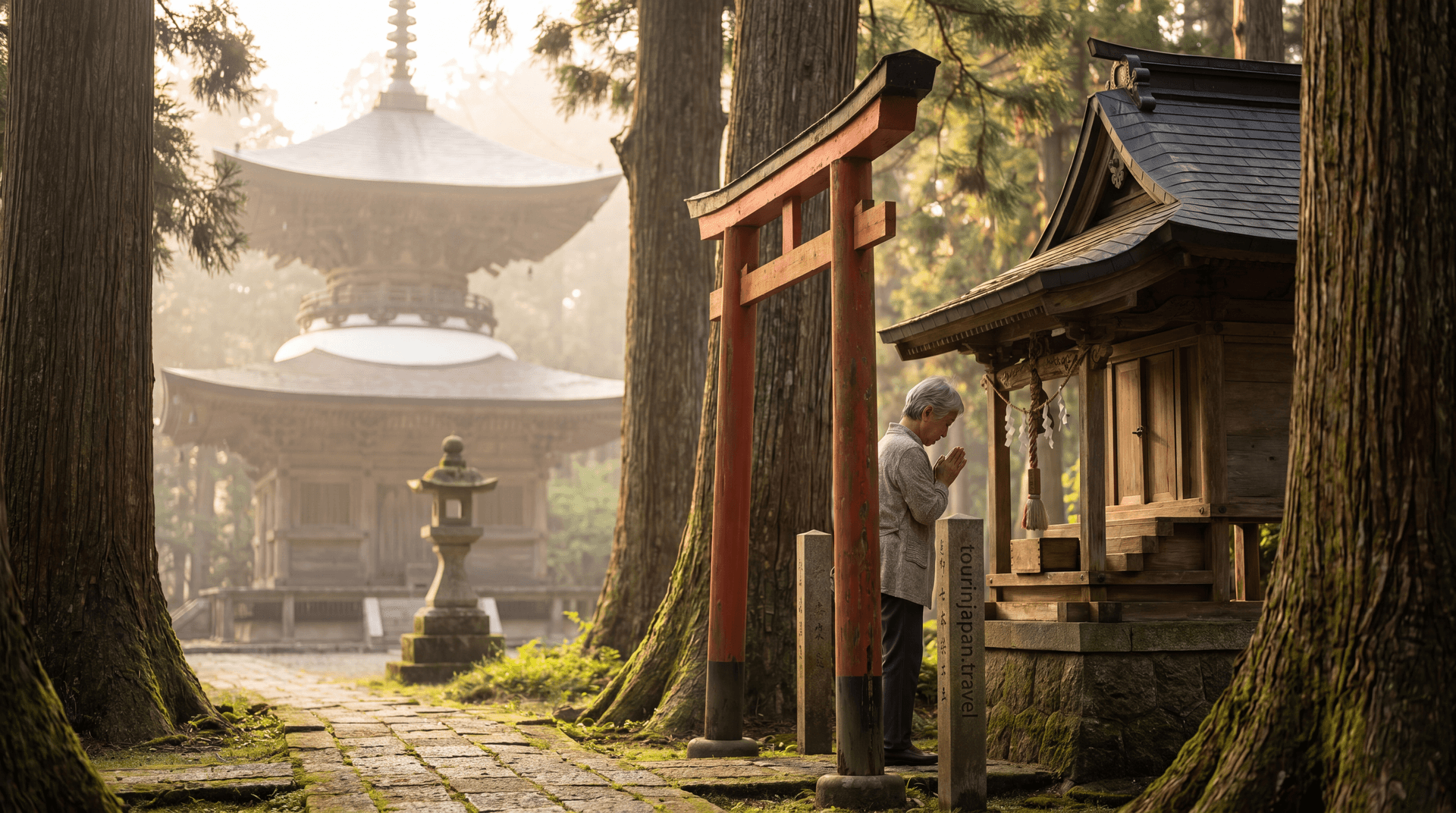
Shinto vs Buddhism in Japan: Two Religions, One Country
By Tour in Japan editors · Updated
Japan has two major religions — Shinto and Buddhism. Understanding them enriches your temple and shrine visits.
Japan has two major religions — Shinto and Buddhism. Understanding them enriches your temple and shrine visits.
Overview
| Aspect | Shinto | Buddhism |
|---|---|---|
| Origin | Japan (indigenous) | India → Japan |
| Focus | Nature, spirits | Enlightenment, afterlife |
| Places | Shrines (神社) | Temples (お寺) |
| Symbol | Torii gate | Pagoda |
| Gods | Kami (spirits) | Buddhas, bodhisattvas |
| Rituals | purification, festivals | meditation, prayer |
Shinto (神道)
What Is Shinto?
Shinto is Japan's indigenous religion — a belief in kami (spirits) that inhabit nature, ancestors, and sacred places.
Key Features
| Feature | Details |
|---|---|
| Kami | Spirits in nature, ancestors |
| Purification | Water, salt, hand washing |
| Festivals | Matsuri, portable shrines |
| Marriage | Shinto wedding ceremonies |
| Life events | Birth celebrations |
Shrines (神社)
| Feature | Details |
|---|---|
| Entrance | Torii gate (red) |
| Purification | Water basin (temizuya) |
| Prayer | Bow twice, clap twice, bow once |
| Ema | Wooden wish plaques |
| Omamori | Charms for protection |
Buddhism (仏教)
What Is Buddhism?
Buddhism came to Japan from India via China in the 6th century. It focuses on enlightenment, reincarnation, and the afterlife.
Key Features
| Feature | Details |
|---|---|
| Buddha | Enlightened one |
| Dharma | Teachings |
| Karma | Actions have consequences |
| Reincarnation | Cycle of rebirth |
| Meditation | Path to enlightenment |
Temples (お寺)
| Feature | Details |
|---|---|
| Entrance | Sanmon gate (not torii) |
| Main hall | Worship hall |
| Pagoda | Multi-story tower |
| Graveyard | Ancestor graves |
| Incense | Burning incense for prayer |
How to Tell Them Apart
| Feature | Shrine (Shinto) | Temple (Buddhist) |
|---|---|---|
| Gate | Torii (red) | Sanmon (ornate) |
| Name | Ends in "jinja" | Ends in "ji" or "tera" |
| Garden | Open, natural | Designed, rock garden |
| Prayer | Clap hands | Fold hands |
| Offering | Coins | Incense |
How They Coexist
Buddhist-Shinto Fusion
- Many Japanese practice both — Shinto for life events, Buddhism for death
- Shared festivals — New Year involves both
- Temple-shrine combinations — some sites have both
- Syncretic practices — mixed rituals
Tips for Visitors
- Purify at the entrance — wash hands, mouth
- Bow before entering — at the gate
- Follow the ritual — at the main hall
- Don't be loud — these are sacred spaces
- Take photos — but be respectful
- Buy ema — write a wish
- Try omikuji — fortune slips
- Enjoy the peace — both are serene places
📱Get a Japan eSIM
Stay Connected in Japan
Yesim eSIMs work on arrival — no physical SIM needed. Japan data plans from $5.