
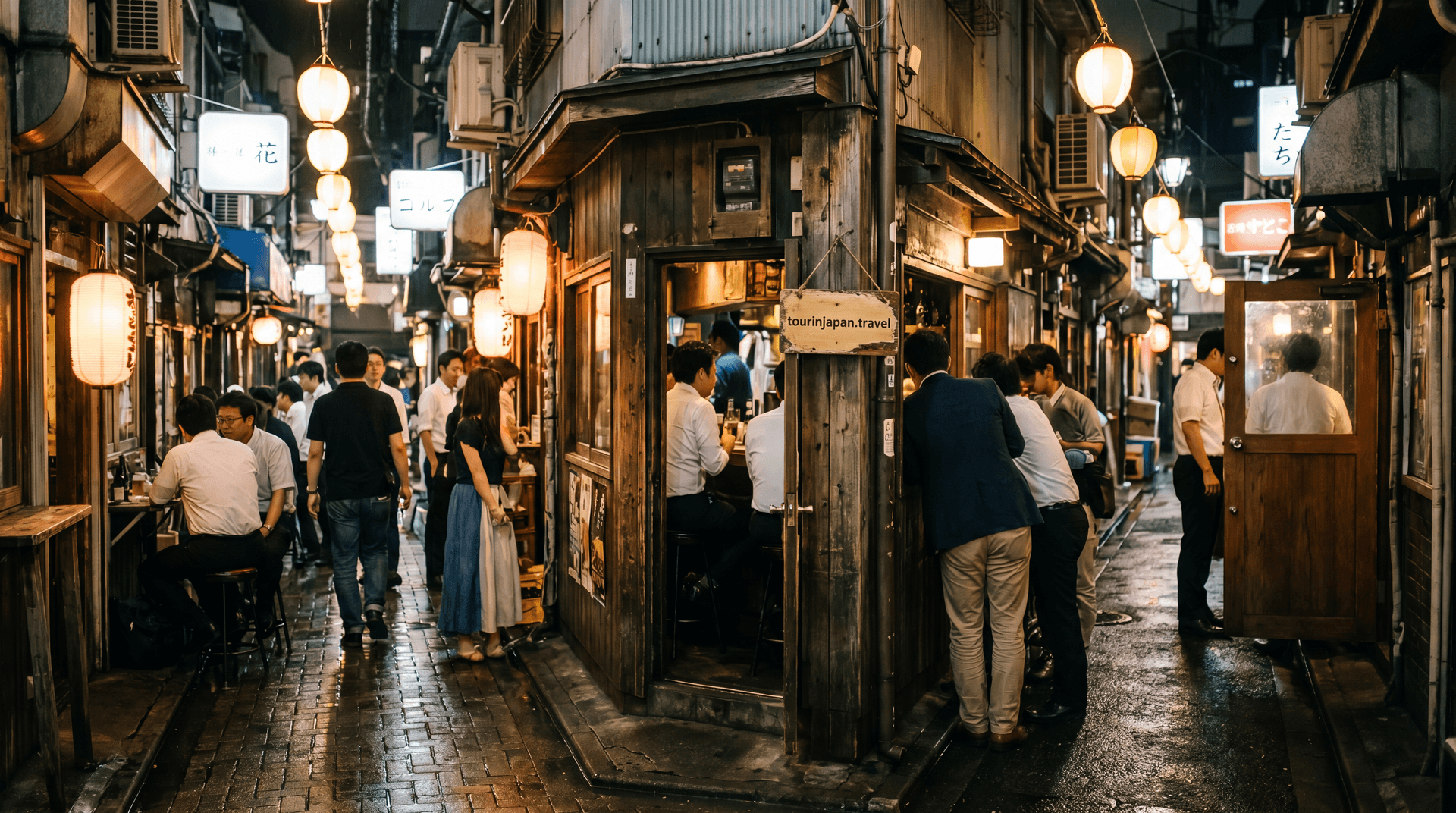
Shinjuku Golden Gai: 200 Tiny Bars, One Unforgettable Night
By Tour in Japan editors · Updated
Golden Gai is six narrow alleys packed with 200 bars seating five to ten people each, unchanged since the 1950s. Here is how to navigate it without embarrassing yourself.
Shinjuku Golden Gai is one of the last unreconstructed commercial clusters in central Tokyo, six alleys the width of a bicycle containing approximately 200 bars in wooden buildings that have not been significantly altered since the area's postwar black market origins. The Shinjuku Golden Gai guide begins with a reality check: each bar seats five to ten people, many have cover charges, some specifically cater to Japanese-speaking regulars and will politely decline to serve foreigners. None of this should discourage you. For every closed door there are ten bars that welcome strangers, and an evening here is one of the most memorable social experiences available in any city in the world.
What Golden Gai Is and How It Survived
Golden Gai occupies land that was cleared after the 1945 firebombing and quickly occupied by black market vendors who built small wooden stalls. As the postwar economy recovered, the stalls became bars and the bars became cultural institutions. Filmmakers, novelists, musicians, and politicians drank together in spaces barely larger than a closet. The area survived multiple urban renewal attempts because residents collectively refused to sell, and a 1987 arson attack inspired such public outrage that the neighborhood became effectively protected by cultural significance. It is now a legally designated area with restrictions on demolition.
Each bar reflects the personality of its owner-operator. One bar specializes in film noir. Another serves only shochu and plays old jazz. A third is covered floor to ceiling with vintage boxing photographs. The range of themes, drink selections, and clientele across 200 establishments in a space the size of a city block is staggering.
How to Navigate: Rules and Etiquette
Most bars charge a cover fee (otoshi) of 500 to 1,500 yen per person. This is not optional. The cover typically comes with a small snack. Drinks cost 600 to 1,500 yen each. The small size of each bar means that if it is full when you peek in the door, it is genuinely full and the bartender will politely indicate this. Do not stand in the doorway deliberating; look in, assess, decide quickly. The most foreigner-friendly bars often have English menus in the window or English words in their name.
Recommended Entry Points and Notable Bars
Bar Albatross is the most internationally famous Golden Gai bar and the easiest entry point for first-timers: three floors, English menus, an extraordinary collection of antiques covering every surface, and staff accustomed to foreign visitors. It gets crowded early; arrive before 9:00 PM for a seat. Deathmatch in Hell is a rock bar with English-speaking staff and a collection of rock memorabilia. Film Bar Tollywood is the place to go if cinema is your subject. Arrive at Golden Gai around 8:00 PM for the best selection; after midnight the atmosphere shifts and bars that were quiet earlier become full of after-hours regulars.
- Getting there: 5-minute walk from Shinjuku Station east exit, behind Kabukicho entertainment district
- Active from 7 PM to 3 AM or later; 8 PM to 11 PM is the prime window
- Cover charge (otoshi): budget 500 to 1,500 yen per bar entry, standard practice everywhere
- Bar Albatross: best first stop, English menus, multilevel, covers 700 yen, closes around 5 AM
- Budget 5,000 to 8,000 yen for three to four bars including covers and drinks
- Do not take photographs inside bars without asking; most owners have strong opinions about privacy
- Pair with dinner at Omoide Yokocho (Memory Lane) next door: smoky yakitori stalls from 1950s era
A Golden Gai evening works best when you have no fixed plan and no time pressure. Arrive at 8:00 PM, walk the alleys once end to end to get a feel for the landscape, then choose your first bar based on the quality of the music coming through the door. Stay one drink at each until you find somewhere that draws you back. The magic of Golden Gai is in the conversations that happen when ten strangers share a space no larger than a kitchen. It is the best argument for small bars in a world that keeps building large ones.
Stay Connected in Japan
Yesim eSIMs work on arrival — no physical SIM needed. Japan data plans from $5.