
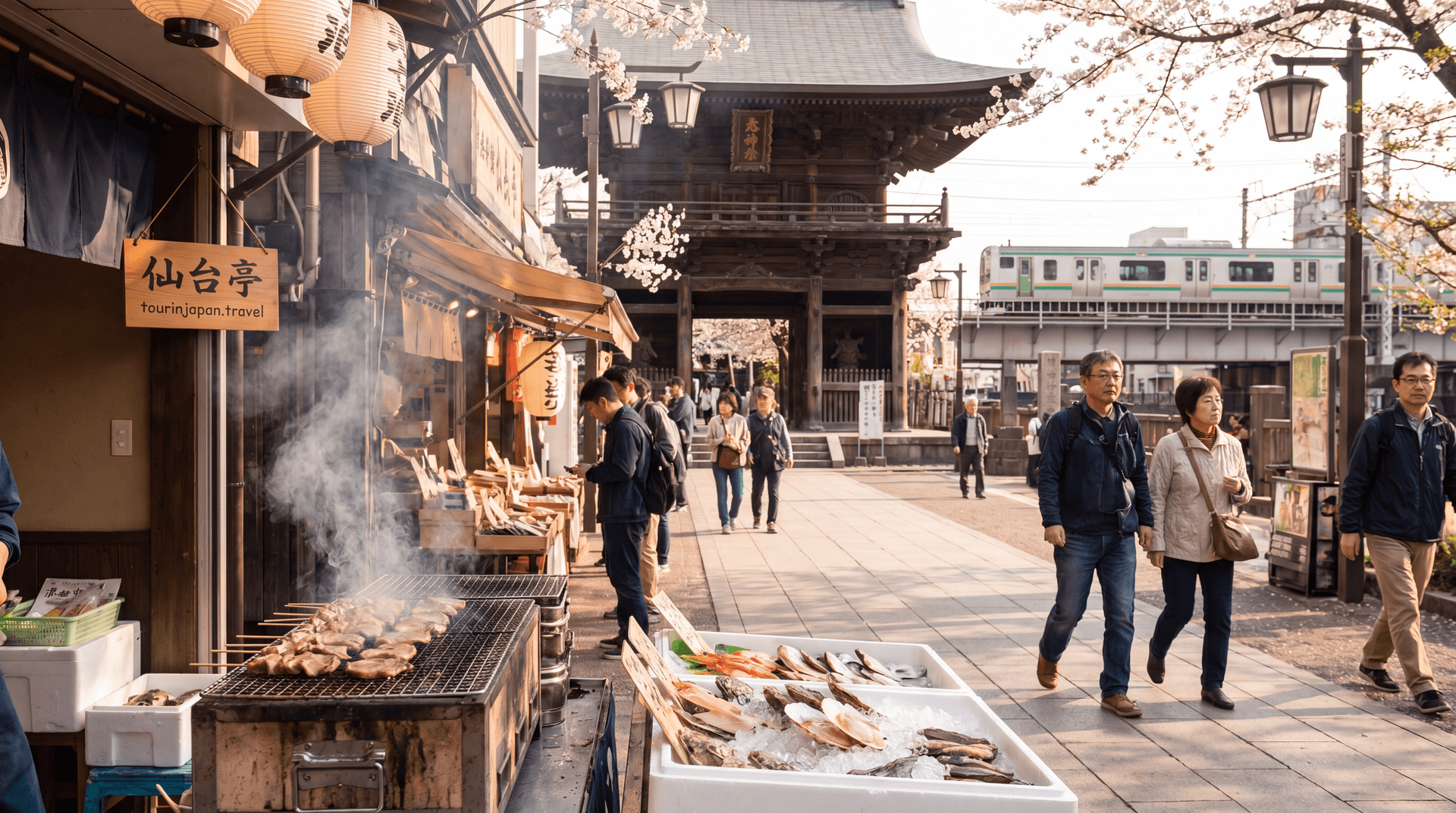
Sendai Food Guide: Gyutan Beef Tongue and Seafood
By Tour in Japan editors · Updated
Sendai is the gateway to Tohoku and home to Japan's greatest beef tongue culture, plus some of the Pacific coast's finest seafood and oysters.
Sendai is the largest city in the Tohoku region and the gateway to northern Honshu, and its food scene punches above its size. The Sendai food scene centers on gyutan — beef tongue — which the city has elevated to an art form: grilled thick-cut over charcoal, salty and charred on the outside, chewy and deeply flavorful within. Gyutan teishoku (set meal) with barley rice and oxtail soup is Sendai's defining meal. But the city's proximity to the Pacific coast also means extraordinary seafood, including oysters, sea urchin, and some of the country's best sasa-kamaboko (grilled fish cakes).
Gyutan: Sendai's Signature Dish
Gyutan culture in Sendai began in 1948 when a chef named Keishiro Sano started serving beef tongue grilled over charcoal, inspired by the French tradition of using the whole animal. The dish became wildly popular and now nearly 30 dedicated gyutan restaurants cluster around Kokubuncho district and the Sendai Station Ichibancho area. The standard preparation is thick-cut slices (around 1cm), salted, and grilled over bincho charcoal until lightly charred. The set meal includes mugi-meshi (barley rice), oxtail or tongue stew (tails no longer attached), and pickled vegetables. Expect to pay 1,500-2,500 yen for a full set.
The most famous gyutan restaurants are Rikyu and Tasuke, both with multiple locations in Sendai and outposts at Sendai Station. Queue times of 20-40 minutes are normal at peak times. If you prefer no wait, the basement floor of Sendai Station's AER building has several gyutan restaurants accessible early evening before the dinner rush.
Sendai Seafood and Regional Specialties
Sendai's position on Miyagi Prefecture's coastline means access to Sanriku seafood — one of the richest fishing grounds in the Pacific. Sanriku oysters are among Japan's finest; the cold nutrient-dense waters of the Sanriku Coast produce oysters with a clean, briny sweetness. They are available raw and grilled at fish markets and restaurants throughout the city. Matsushima Bay, 30 minutes from Sendai by train, is famous for its oyster farms and the boat tours that pass through the pine-covered islets.
Sendai food highlights to seek out
- Gyutan teishoku: thick-cut beef tongue set with barley rice and oxtail soup, the essential Sendai meal
- Sasa-kamaboko: fish cake shaped like a bamboo leaf, grilled over charcoal — a Sendai street food eaten from a stick
- Matsushima oysters: best enjoyed raw or grilled at the Matsushima Pier fish stalls (30 min by train from Sendai)
- Zunda mochi: sticky rice cakes coated in sweet edamame (green soybean) paste — the most popular Tohoku sweet
- Sendai miso: Sendai produces a distinctive light-colored miso used in Sendai-style miso soup, sweeter than Nagoya hatcho
- Kokubuncho district: Sendai's entertainment and restaurant district with hundreds of izakaya, gyutan restaurants, and seafood bars
- S-PAL Sendai Station food basement: the most convenient place for gyutan and Sendai souvenir foods including zunda sweets and sasa-kamaboko
Sendai Tanabata Festival in August — one of Japan's three great Tanabata festivals — is the busiest food event in the Tohoku calendar, with street stalls and restaurants doing special menus throughout the city. Outside festival season, Sendai is an excellent day trip or overnight stop on a Tokyo-Tohoku route, and its compact downtown means most food sights are within walking distance of the JR Sendai Station. The gyutan restaurants around Higashi-Nibancho street are slightly less touristy than the station-area options.
Stay Connected in Japan
Yesim eSIMs work on arrival — no physical SIM needed. Japan data plans from $5.