
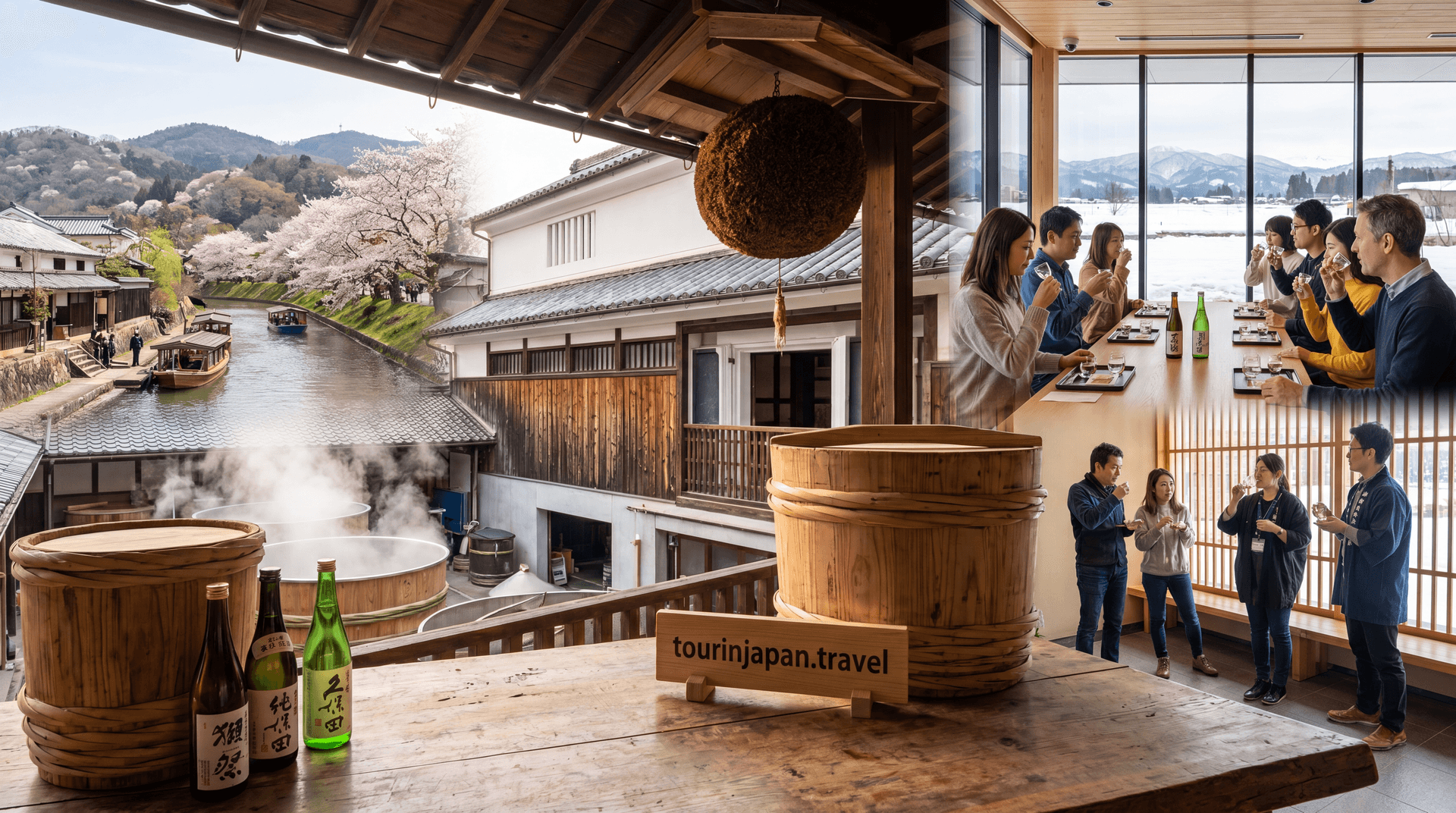
Sake Brewery Tours in Japan: Nada (Kobe), Fushimi (Kyoto), and Niigata
By Tour in Japan editors · Updated
Japan's three great sake regions — Nada in Kobe, Fushimi in Kyoto, and Niigata — all welcome visitors for brewery tours. Here is how to plan the perfect sake trip.
Sake brewery tours offer an intimate look at one of Japan's oldest and most technically demanding crafts. The sake brewing process — converting starch to sugar to alcohol through the controlled action of koji mold and yeast, all in the bitterly cold winter months from October to March — is as fascinating to observe as it is difficult to master. Japan's three most celebrated sake regions each have a distinct character shaped by their water sources, climate, and brewing traditions. Sake brewery tours in Japan are among the country's most underappreciated travel experiences, typically far less crowded than temple circuits and wine regions elsewhere in the world, and often free or very low cost to visit.
Nada (Kobe): Japan's Largest Sake District
The Nada district in Kobe produces more sake by volume than anywhere else in Japan, accounting for approximately 25% of the country's total output. The area stretches along the coast between Kobe and Nishinomiya and is home to dozens of major breweries, many of which have been operating since the Edo period. The secret of Nada sake lies in miyamizu — a local spring water unusually rich in minerals that produces a drier, more robust sake style compared to the softer waters of Fushimi.
The Nada-Gogou (Five Villages of Nada) area is easily reached from Kobe's Hanshin train line, and several breweries cluster close enough to walk between them. Hakutsuru Sake Brewery Museum is among the most visitor-friendly, with free entry, English explanations, and a tasting room. Kikumasamune Sake Brewery Museum and Sawanotsuru Museum are similarly accessible. Budget a full afternoon and enjoy sake with a bento lunch in Kobe before or after.
Fushimi (Kyoto): The Soft Water Breweries
Fushimi, in southern Kyoto, is home to Japan's second great sake district and is celebrated for its gokosui — extremely soft water that produces a smooth, delicate sake style ideal for the refined tastes of Kyoto's traditional dining culture. Fushimi's canal-lined streets feel genuinely historic, and the brewery district sits a short walk from Fushimi Inari Shrine, making a sake tour easy to combine with Japan's most iconic torii gate walk.
Gekkeikan Okura Sake Museum is the essential Fushimi stop — a beautifully preserved 150-year-old warehouse complex with comprehensive displays on brewing history and technique, ending with a tasting of three sakes for 600 yen. Kizakura Kappa Country offers a similar experience with an excellent beer and sake restaurant attached. The brewery boat tours (fune yuba) that depart from the canal are a particularly memorable way to experience the district at dusk.
Niigata: Snow Country Sake
Niigata Prefecture on the Sea of Japan coast is Japan's snow country, and the combination of abundant pure snowmelt water, cold winters ideal for slow fermentation, and locally grown Koshihikari rice (also used for the region's legendary rice) creates sake with exceptional clarity and a distinct dry, clean profile called tanrei karakuchi. Niigata's sake culture is deeply embedded in local identity — per capita sake consumption in the prefecture is among the highest in Japan.
- Ponshukan sake museum at Niigata Station: 96 sake dispensers with coin tokens (500 yen for 5 tokens). The most efficient way to sample the breadth of Niigata sake.
- Hakkaisan Brewery (Minami-Uonuma): Japan's most visitor-friendly large brewery with English tours, a snow-aged sake vault, and a ryokan on site.
- Imayo Tsukasa Sake Brewery (Niigata City): Right in the city, this atmospheric Meiji-era brewery runs English-language tours by appointment.
- Niigata Sake no Jin festival (second weekend of March): The largest sake festival in Japan, with 90+ breweries. Book accommodation months ahead.
- Nishikawa sake district cycling route: 15km loop past seven breweries through snowmelt rice paddies. Best in late March when fields are flooded.
Planning Your Sake Brewery Trip
The best time to visit sake breweries is from late October through March when brewing is active — you can see the actual fermentation process in progress. Summer visits are fine for museum and tasting room visits but the breweries themselves are quiet. Most brewery museums are free or charge under 500 yen, though guided tours (which offer much more depth) range from 1,000 to 3,000 yen. Call or email ahead for English-language tours, as these often need advance arrangement even at larger facilities.
Stay Connected in Japan
Yesim eSIMs work on arrival — no physical SIM needed. Japan data plans from $5.