
Sado Island: Gold Mines, Earth Celebration Festival, and Noh Theater
By Tour in Japan editors · Updated
Sado Island off Niigata combines a fascinating history of gold mining and political exile with the world-famous Kodo taiko drum festival and living Noh theater traditions.
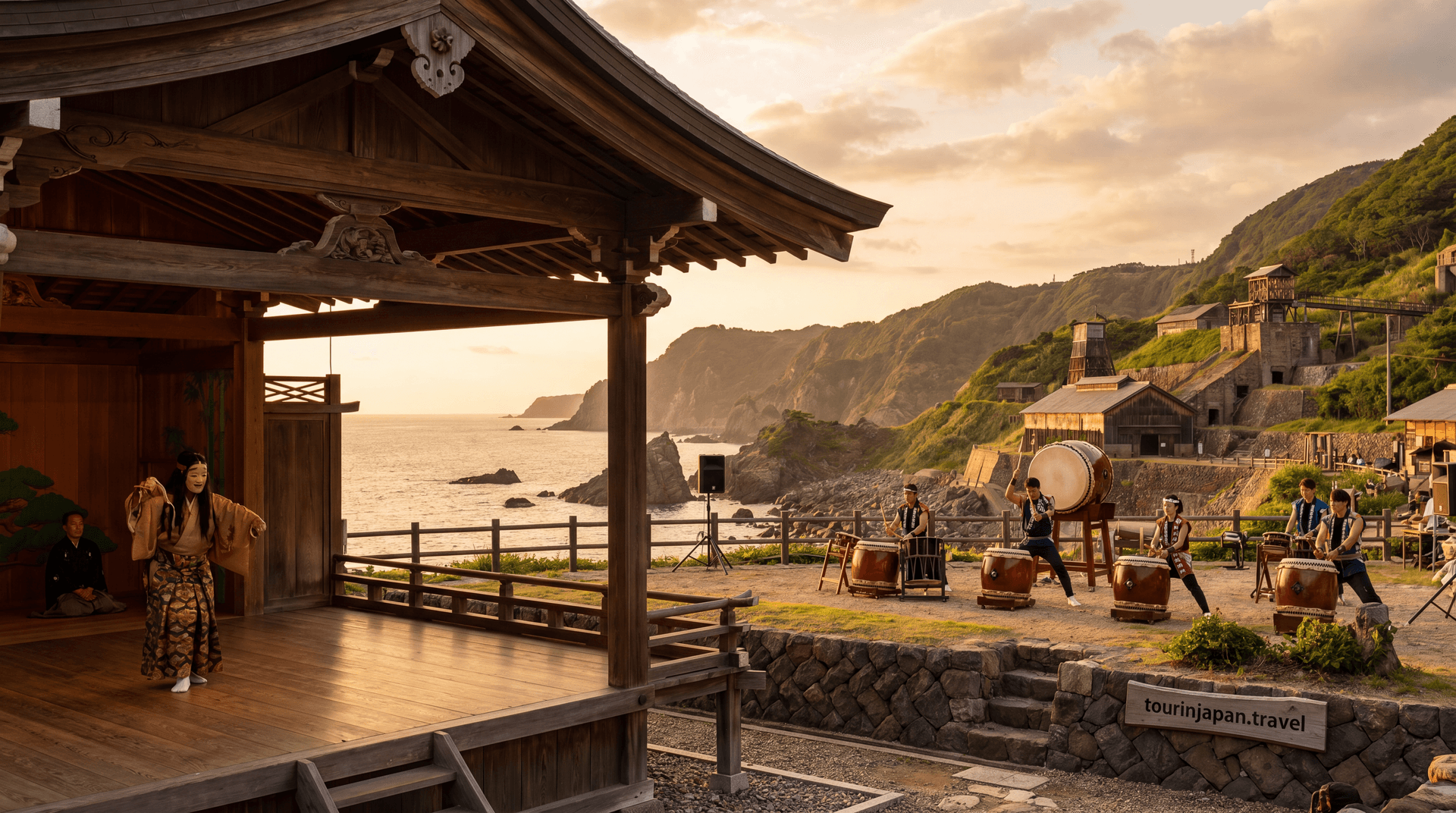
Sado Island sits in the Sea of Japan off Niigata Prefecture, a place of dramatic contradictions: once Japan's richest gold mine and simultaneously a dumping ground for political exiles and criminals, today it is best known for the pounding of the Kodo taiko drum group and a folk art tradition of Noh theater that has survived here more intact than almost anywhere else in Japan. The Sado Island gold mine alone produced over 400 tonnes of gold and 2,300 tonnes of silver before closing in 1989, helping fund the Tokugawa shogunate for two and a half centuries. Among those exiled here were the Buddhist monk Nichiren, the former emperor Juntoku, and the Noh theater founder Zeami Motokiyo—the cultural legacy these exiles left behind shapes the island's character to this day. Sado is Japan's fifth-largest island and largely undiscovered by international tourism.
Sado Kinzan: Touring the Gold Mine
Sado Kinzan gold mine near Aikawa is the island's premier historical attraction, with two distinct tour routes. The Dohyu-no-Warito route passes through the original open-pit mine and explains gold extraction at an industrial scale. The Sodayu route takes visitors into the original mine tunnels where animatronic figures recreate the labor of Edo-period miners, many of them convicts who rarely survived more than three years in the shafts. Entry to the mine is 900 yen for one route or 1,550 yen for both.
The adjacent Sado Gold Museum offers gold panning experiences for 700 yen where visitors can keep whatever gold dust they collect. A small amount is placed in the pan to guarantee some success, making it a satisfying souvenir activity. Nearby Kitazawa Flotation Plant, a hulking industrial ruin used for ore processing until 1952, is one of Japan's most atmospheric industrial heritage sites and can be explored for free.
Earth Celebration: Kodo Drum Festival
The Kodo taiko drumming group established their commune on Sado's Ogi Peninsula in 1981 and have since become one of Japan's most internationally recognized performing arts groups. Their annual Earth Celebration festival, held every August in Ogi town, draws several thousand visitors for three days of taiko performance, world music, and community events. Kodo drumming at full intensity, with bass drums so large two people play them driven at the physical limit of human endurance, is one of the most viscerally powerful live music experiences in Japan. Tickets sell out months in advance; check the Kodo website in spring.
Noh Theater, Tub Boats, and Island Life
Sado has over 30 Noh stages, more than any other region in Japan, and amateur Noh performances are held at village shrines throughout the year. The form was brought to the island by exiled aristocrats who taught their art to local farmers, creating a grassroots theater tradition that has persisted for 600 years. The Sado Performing Arts Museum near Honma can arrange Noh viewing experiences. The tarai-bune round tub boats, traditionally used by local women to gather shellfish from the rocky coastline around Ogi, offer short rides for 600 yen and are one of the island's most photographed curiosities.
- Getting there: 2.5-hour ferry from Niigata (2,540 yen second class) or 65-minute jetfoil (6,890 yen)
- Getting around: rent a car at Ryotsu port (3,500 yen/day) to reach the mine, Ogi, and scenic routes
- Toki crested ibis: once extinct in Japan, reintroduced on Sado; good sighting chances in rice paddy areas
- Best season: May-October; winter is cold and sea crossings can be rough
- Sado seafood: fresh crab, sea urchin, and yellowtail are island specialties; restaurant lunch sets from 1,500 yen
- Senkaku Bay cruise: dramatic rocky coastline at the island's north, 1-hour boat tour costs 1,500 yen
- Minimum stay: 2 nights to cover the mine, Ogi, and a scenic drive without rushing
- Combine with Niigata city: excellent sake museums and Niigata rice cuisine before the ferry crossing
Sado is a slow island that rewards curious travelers willing to dig into its unusual history. The combination of industrial heritage, performing arts, wildlife, and dramatic Sea of Japan scenery makes it one of Japan's most genuinely distinctive island destinations, yet it sees only a fraction of the visitors drawn to more famous islands further south.
Stay Connected in Japan
Yesim eSIMs work on arrival — no physical SIM needed. Japan data plans from $5.