
Retro Tokyo: Showa-Era Arcades, Kissaten, and Nostalgia Tourism
By Tour in Japan editors · Updated
Old Tokyo is hiding in plain sight. This guide to retro Tokyo covers Showa-era arcades, vintage kissaten cafes, shotengai shopping streets, and nostalgia districts.
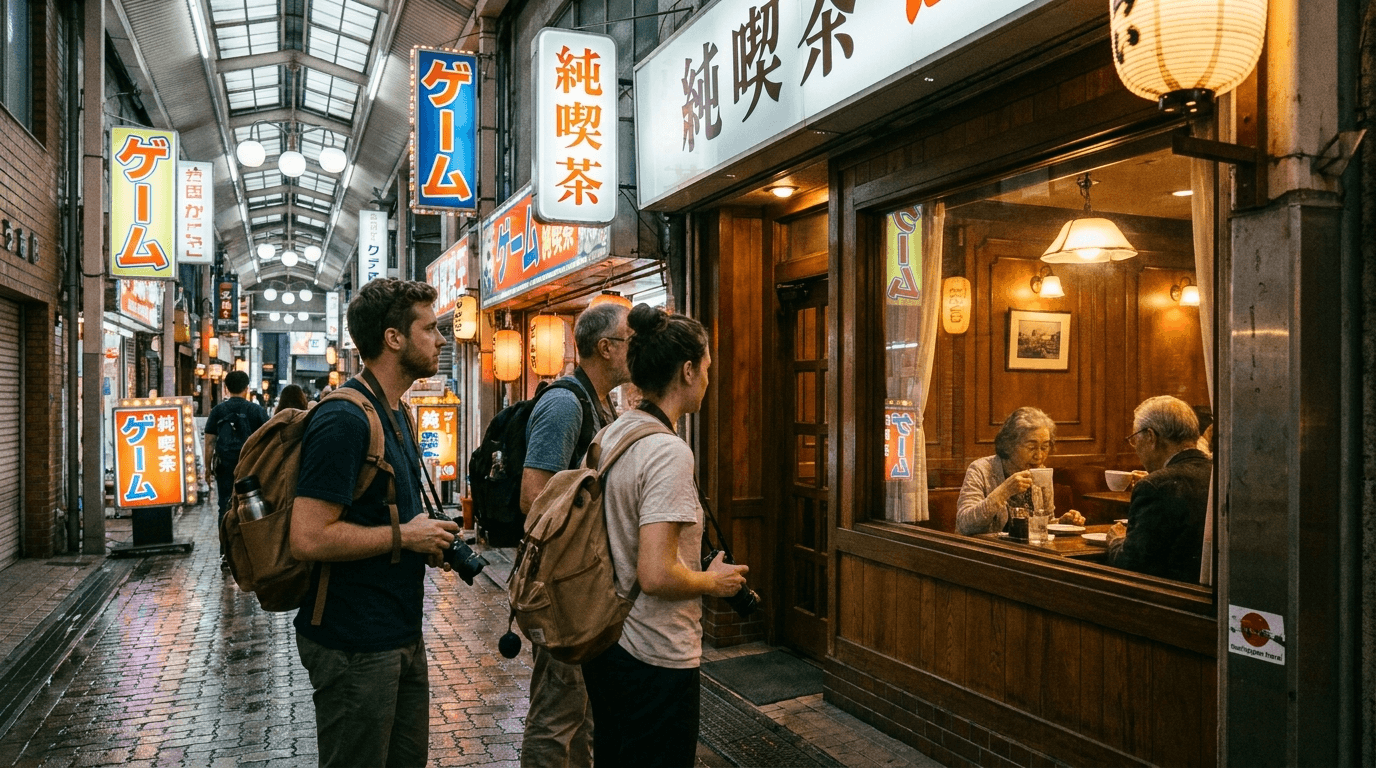
Retro Tokyo — the city's Showa-era (1926-1989) streetscapes, institutions, and culture — is one of travel's great hidden layers. The retro Tokyo Showa guide below navigates you through neighborhoods and experiences that feel unchanged since the 1960s and 70s: underground arcade game halls that still run pinball and electromechanical games, kissaten (old-school Japanese coffee shops) where the record collection outweighs the menu, covered shotengai shopping arcades with independent shopkeepers who have occupied the same stall for 50 years, and golden-era Tokyo entertainment districts.
Kissaten: Japan's Vintage Coffee Culture
A kissaten is a traditional Japanese coffee shop, distinct from modern chain cafes, where classical music or jazz plays on vinyl, the furniture is heavy wood and leather, and a single cup of siphon-brewed coffee (600-900 yen) occupies your afternoon. Tokyo has hundreds of surviving kissaten from the 1960s-80s. Kanda Jinbocho — Tokyo's used bookshop district — has the highest concentration of still-operating authentic kissaten in the city, including Lion (1926, classical music on a pipe organ) and Sabouru (opened 1955, red brick walls and jazz).
The Nishi-Ogikubo neighborhood in western Tokyo is another kissaten stronghold, with over a dozen vintage cafes within walking distance of the station. Many double as antique shops or used jazz record stores.
Shotengai and Old Market Streets
Shotengai — covered shopping arcades — were Japan's commercial arteries before supermarkets and malls. The surviving ones offer a window into post-war consumer Tokyo. Togoshi Ginza in Shinagawa is the longest shotengai in Japan at 1.3 km, still operating with butcher shops, tofu sellers, and old-fashioned sweets stores. Yanaka Ginza in Taito-ward is more famous with tourists, maintaining its shitamachi (old downtown) character with wooden shopfronts and atmospheric alleyways.
Retro Tokyo Must-Visit Spots
- Kissaten Lion, Kanda Jinbocho — opened 1926, classical music on pipe organ speaker
- Yanaka Ginza shotengai — shitamachi character, wooden shopfronts, cats
- Togoshi Ginza — Japan's longest shotengai at 1.3km in Shinagawa
- Asakusa underground area — 1960s shotengai beneath Nakamise-dori approach
- Koenji retro shopping street — vintage clothes, old bars, live music venues
- Nishi-Ogikubo — antique stores, jazz kissaten, used record shops
- Super Potato Akihabara — retro game shop preserving 1980s-90s gaming culture
- Edo-Tokyo Open Air Architectural Museum — relocated Meiji and Taisho buildings
Showa Nostalgia and Themed Experiences
The Showa Retro market genre has spawned themed museums and restaurants across Japan. Shin-Yokohama Ramen Museum recreates a 1958 underground ramen alley. Namja Town in Ikebukuro Sunshine City has a Showa-era festival food section. The Edo-Tokyo Open Air Architectural Museum in Koganei Park (west Tokyo) preserves relocated buildings from the Meiji through early Showa periods in an open-air format.
Anime has contributed to Showa nostalgia tourism through titles like Showa Genroku Rakugo Shinju, Sakura Wars, and multiple Ghibli films that depict mid-century Japan with exquisite detail. Visiting the neighborhoods above while watching relevant anime creates a layered experience where fictional and real Showa Tokyo overlap.
Stay Connected in Japan
Yesim eSIMs work on arrival — no physical SIM needed. Japan data plans from $5.