
Renting a Car in Japan: Rules, Roads, and Everything You Need to Know
By Tour in Japan editors · Updated
Renting a car in Japan opens up rural mountain towns, hidden onsens, and scenic coastal drives impossible to reach by train. Here is everything you need to know about driving licenses, navigation, and road rules.
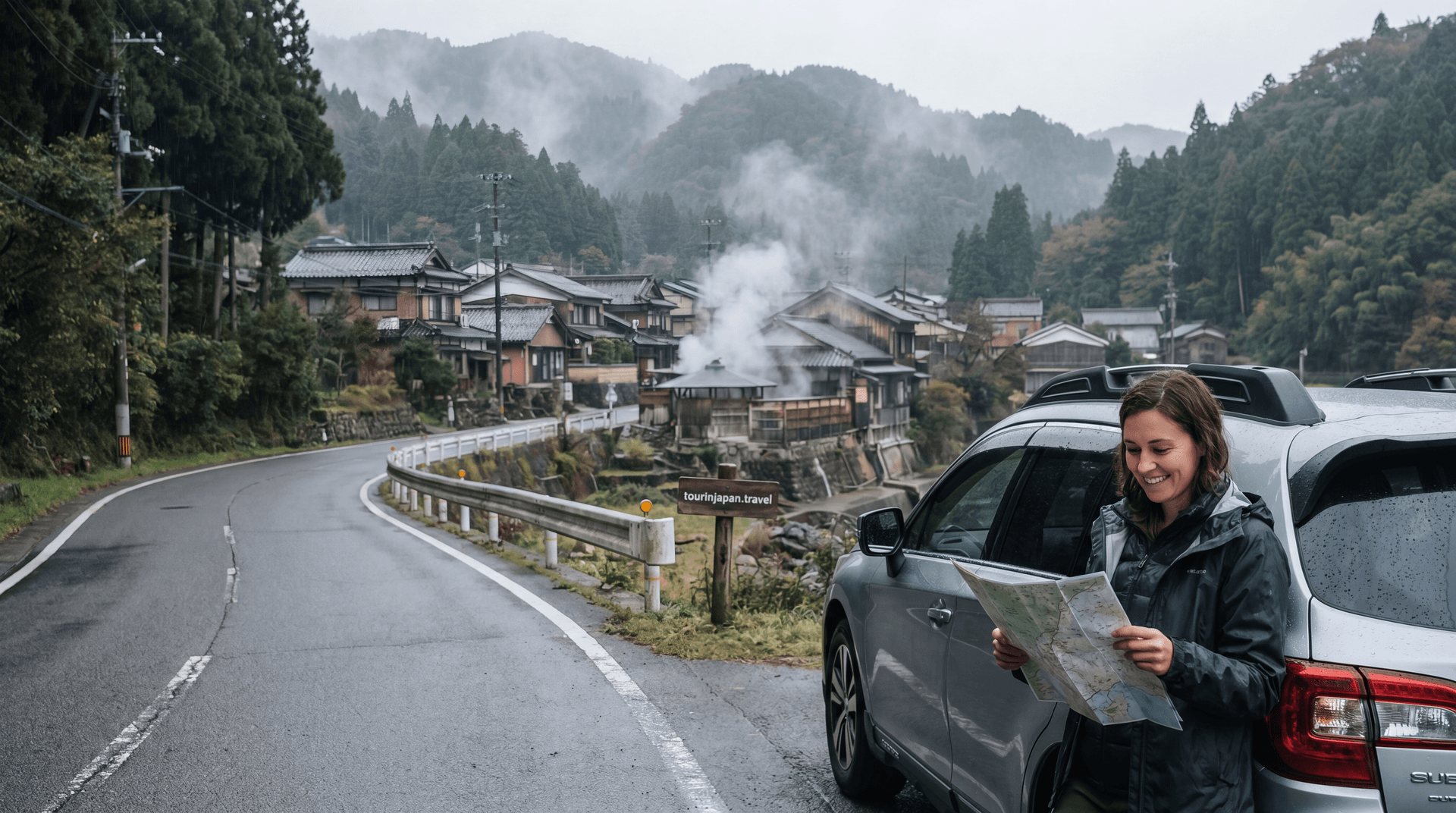
Renting a car in Japan opens up the country's best-kept secrets: the isolated hot spring inns in mountain valleys, the gassho farmhouse villages in the Japanese Alps, the scenic coastal roads of the Noto Peninsula and the Sanin coast, and the rural Tohoku and Hokkaido landscapes that public transport barely touches. Japan driving requires adjustment—the roads are narrow by Western standards, navigation is in Japanese, and traffic rules have some Japan-specific quirks—but the country is extremely well-organized for drivers, signage follows international conventions, and toll roads are excellent quality. With an International Driving Permit and your home country license, most visitors can rent a car legally. This guide covers the complete process.
License Requirements and International Driving Permit
Japan accepts the International Driving Permit (IDP) based on the 1949 Geneva Convention alongside your home country license. Citizens of about 50 countries (including most of Europe, the US, Canada, Australia, and New Zealand) can rent and drive with the IDP. Notable exceptions: China, South Korea, Brazil, and several other countries whose IDPs Japan does not recognize—these visitors need a Japanese translation of their home license from the Japan Automobile Federation (JAF), obtained in Japan. Check the Japan Automobile Federation (jaf.or.jp) or your home country's automobile club for current requirements.
Get your IDP from your home country's automobile club before departing (typically takes 1-2 weeks and costs USD 20-30 in the US, GBP 5.50 in the UK). Bring both the IDP and your original home country license—you must carry both while driving. Rental companies will not rent without both documents.
Renting: Process, Costs, and Navigation
Major rental companies include Toyota Rent a Car, Nippon Rent a Car, Times Car Rental, and Orix. Book online before your trip for best prices; rates for a compact car start around 5,000-7,000 yen per day including basic insurance. Always add the CDW (collision damage waiver) and NOC (non-operation charge) waivers—together approximately 1,500-2,000 yen per day—because Japan's car return standards are strict and any scratch, regardless of fault, can cost several hundred thousand yen without coverage.
Navigation is one of the most important preparations for driving in Japan. Request a navigation system with English-language option from the rental company. Alternatively, Google Maps or Apple Maps works on your phone and offers Japanese road navigation in English. Japan uses a unique address system (block numbers rather than street names) that makes entering destinations by address difficult—use the phone number or the 'mapcode,' a Japanese GPS coordinate system that all navigation units accept.
Japanese Road Rules and Driving Tips
Japan drives on the left (same side as the UK, Australia). Speed limits are generally 40-60 km/h in cities, 80 km/h on national highways, and 100-120 km/h on expressways. Zero tolerance for drinking and driving (0.03% BAC limit, far lower than most countries). Expressways (highways) require a separate toll card—ETC cards are included in most rentals and deduct tolls automatically; without ETC pay at the toll gates with cash (keep 2,000-3,000 yen coins ready). Expressway tolls for Tokyo-Osaka run approximately 8,000-10,000 yen each way.
- Best regions for driving: Hokkaido (wide open roads), Okinawa islands (no trains), Iya Valley (mountain roads), Noto Peninsula
- Avoid driving in: Tokyo, Osaka, and Kyoto city centers where parking is scarce and traffic is slow
- Kei cars: Japanese micro-cars (660cc engine) are cheapest to rent; adequate for rural roads but slow on expressways
- Gas (petrol): self-service stations (serufu) are everywhere; full-service (man) is common in rural areas; fill up before mountain drives
- Parking apps: Times parking app (with IC card payment) and coin-operated meters are found in all urban areas
- Winter driving: Hokkaido and Tohoku require winter tires (usually fitted by rental company November-April; confirm when booking)
- One-way rental: most companies allow picking up in one city and returning in another for a 5,000-11,000 yen one-way fee
Renting a car in Japan is a genuinely different experience from the Shinkansen circuit—slower, sometimes frustrating when narrow mountain roads require reversing into passing places, but ultimately more revealing of the country's depth. The onsen towns accessible only by car, the ryokans in valleys with no bus service, and the freedom to stop at any roadside stand or viewpoint make it worth the planning effort for travelers who want to see beyond the famous cities.
Stay Connected in Japan
Yesim eSIMs work on arrival — no physical SIM needed. Japan data plans from $5.