
Best Photography Spots in Kyoto
By Tour in Japan editors · Updated
Kyoto is one of the world's most photographed cities. Here are the best locations — including the uncrowded hidden gems — for stunning photos of temples, geisha, and bamboo.
The best photography spots in Kyoto present a particular challenge: nearly every stunning location is also extremely crowded. Kyoto photography requires strategy — knowing when to arrive, where to stand, and which lesser-known sites offer equally beautiful images without the crowds. This guide covers both Kyoto's iconic must-photograph locations and the hidden alternatives that let you capture the city's timeless beauty with breathing room and personal space.
The Iconic Locations and When to Shoot Them
Fushimi Inari Taisha is Kyoto's most photographed location: thousands of vermilion torii gates winding up a forested mountain. The main path is photographable only before 8am on weekdays without crowds ruining the shot. A better strategy is to hike to the upper gates (30-45 minutes from the main hall) where crowds thin dramatically and the forest atmosphere is magical. Return via the back route through Fushimi Momoyama for a complete mountain circuit.
Arashiyama Bamboo Grove is extraordinary but almost impossible to photograph without other tourists in frame during daylight hours. The grove opens at dawn — arriving at 5:30-6am during summer gives you genuine solitude. The Kimono Forest at Sagano train station is an underrated photography spot: thousands of patterned cylinders illuminated at night create an ethereal light installation. Free to photograph, open until 11pm.
Hidden Photography Gems in Kyoto
Tofuku-ji in November becomes arguably the single most beautiful photography location in all of Japan during autumn foliage (momiji). The viewing bridge over the maple-carpeted valley is extraordinary, and unlike Arashiyama it remains manageable even at moderate visitor numbers. Book the opening hour slot (8:30am) online in advance. Entrance is 600 yen.
Nishiki Market's covered shopping street is excellent for detail photography: vivid food stalls, hanging lanterns, and close-up textures of tsukemono (preserved vegetables), sweets, and fresh seafood. Photographing the 16th-century Nijo Castle at dawn, when light rakes across the carved wooden facades at a low angle, gives museum-quality architectural images. The castle's garden is particularly beautiful in early morning mist.
Top Photography Spots in Kyoto by Season
- Spring (March-April): Maruyama Park, Heian Shrine garden, Philosopher's Path — cherry blossoms line the canal
- Summer (June-August): Kifune Shrine river lanterns, Kamo River at dusk, morning mist at Kinkaku-ji
- Autumn (November): Tofuku-ji, Eikan-do, Ryoan-ji — red and gold maple canopies
- Winter (December-February): snow on Kinkaku-ji, quiet Gion streets, Nijo Castle in frost
- Year-round: Gion at dusk for maiko sightings, Fushimi Inari upper gates at dawn
- Sagano train and Kimono Forest light installation — nighttime photography every season
- Ninna-ji — late cherry blossoms (Omuro zakura) bloom 2 weeks after Kyoto's main trees, walk-in temple garden
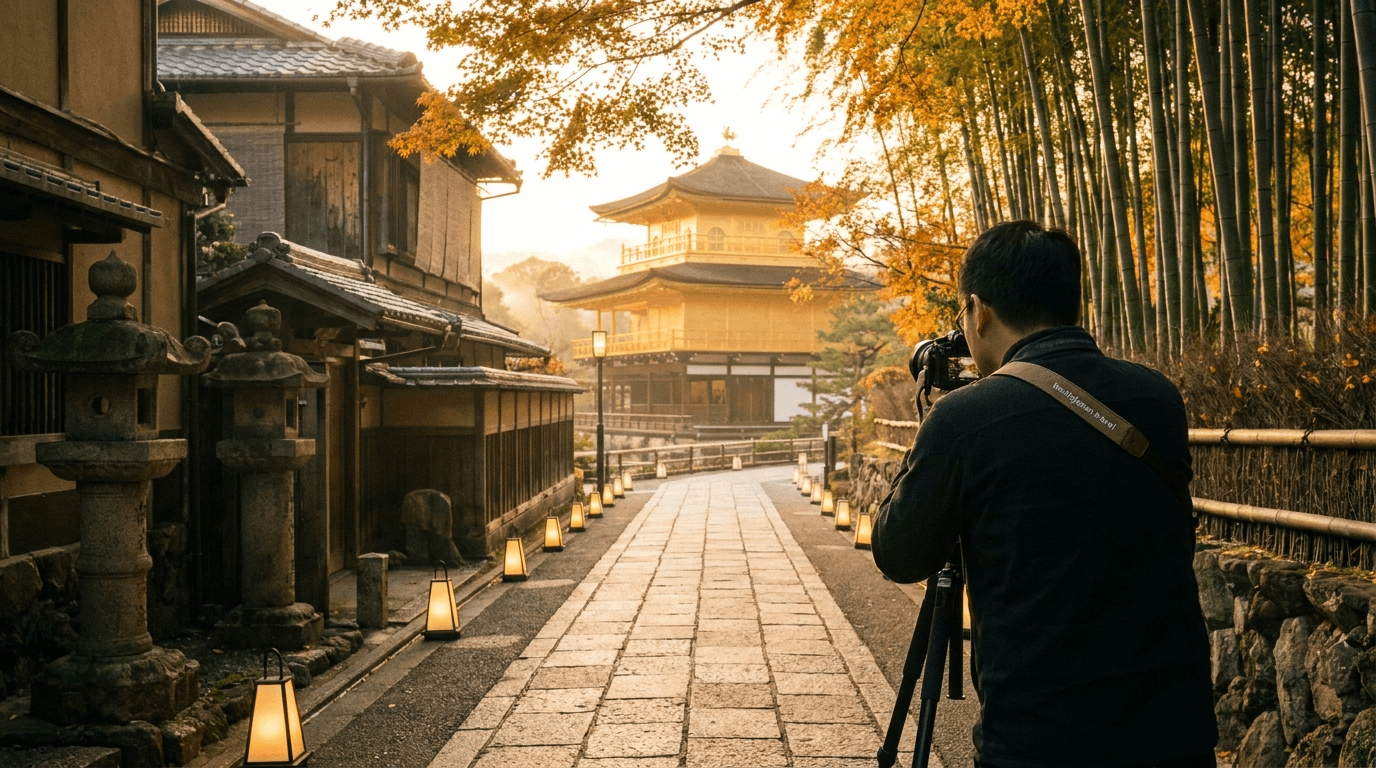
Kyoto's photography rewards the early riser and the patient observer above all. The 5-7am window at major sites gives you golden light, empty streets, and images that look nothing like the midday crowd shots that fill Instagram. A telephoto lens (85-200mm) is particularly useful in Kyoto for isolating architectural details, separating subjects from cluttered backgrounds, and photographing from a respectful distance in the Gion geisha district. Kyoto is a photographer's city in the deepest sense — it has been built and maintained for beauty, and almost every viewpoint rewards careful attention.
Stay Connected in Japan
Yesim eSIMs work on arrival — no physical SIM needed. Japan data plans from $5.