
Winter Illumination Guide
Plan a 3-day Osaka winter itinerary featuring the Osaka Castle historical illumination display, Dotonbori neon lights, and Kuromon Market. Budget approximately ¥18,000 / $125 USD daily for mid-range comfort, using IC cards for seamless transit between Namba and Chuo districts.
Affiliate link — we may earn a commission at no extra cost to you. Affiliate disclosure
Osaka Winter Illumination: A 3-Day Practical Guide for December and January
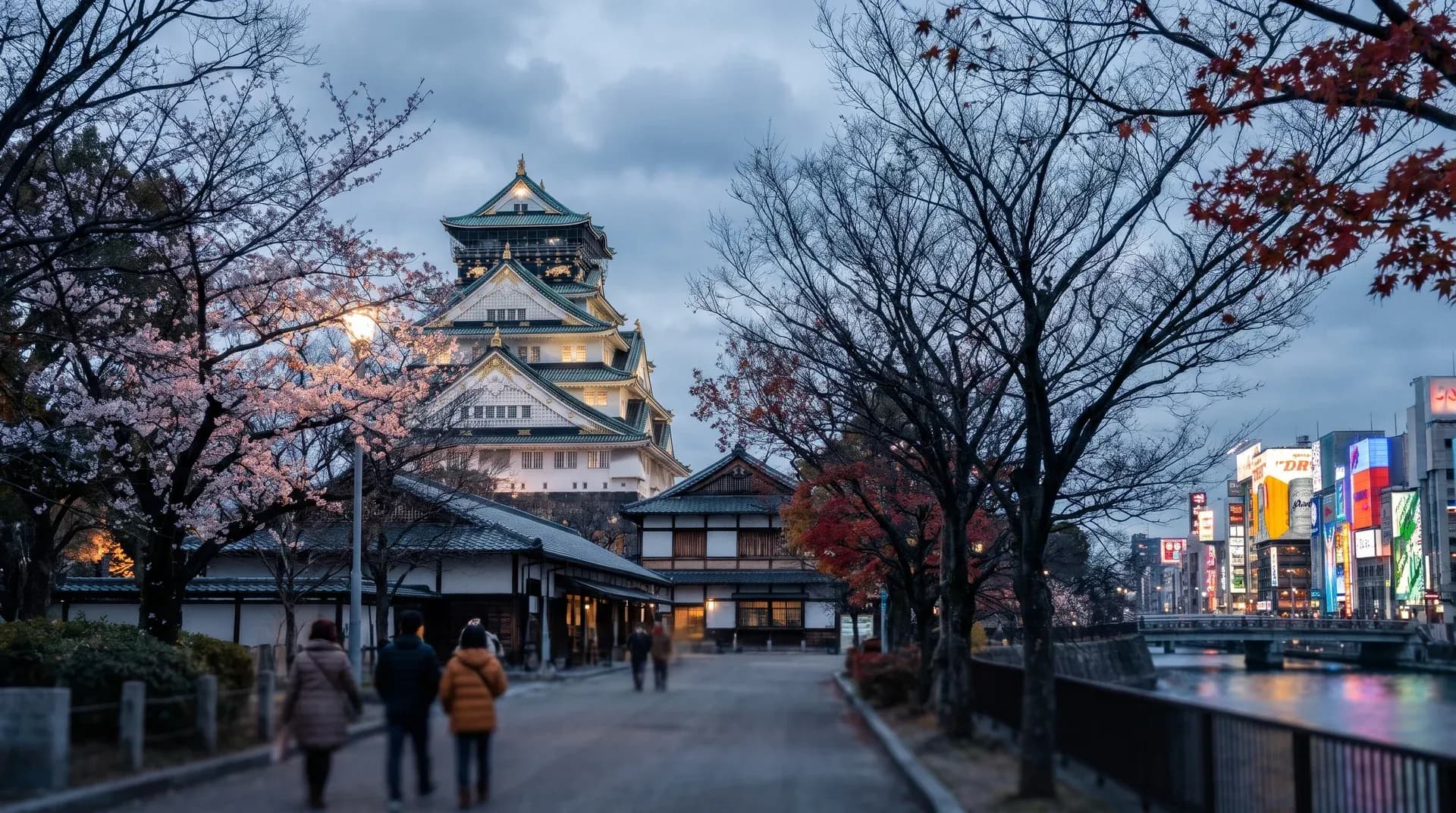
The first thing you notice when you step off at Osaka Station in December isn't the bustling crowd or the towering buildings—it's the glow. The Osaka Castle historical-themed illumination display bathes the moat in blue and gold, casting long shadows across the stone walls as commuters hurry past. This is what winter in Osaka feels like: layered light, crisp air, and the city itself becoming a kind of outdoor museum of color and history. For travelers planning a December or January visit, this three-day itinerary unlocks the city's most reliable winter experiences—illuminations, food markets, and neighborhood walks—all connected by a practical transit network that runs smoothly even when the temperature drops. This guide is for independent travelers who want to see Osaka's winter highlights without getting caught in the chaos of Golden Week crowds or the humidity of summer festivals. You'll need a Suica or Icoca card for seamless travel between the Osaka Loop Line and subway lines, and you'll want to book accommodation in Namba or Umeda to stay within walking distance of most attractions. The Osaka Castle illumination runs from late November through early February, typically 6 PM to 9 PM daily, with extended hours on weekends. Admission to the castle grounds is free, though the museum inside costs ¥600 / $4 USD.
Essential Highlights & Local Itinerary
Day 1: Osaka Castle and Northern Districts
Begin at Osaka-jo (Osaka Castle) in the Chuo ward. Take the JR Osaka Loop Line from Osaka Station (Platform 3 or 4, south side) directly to Osaka-jo Koen Station, a 7-minute ride. Upon arrival, use Exit 1 which leads directly to the castle's main approach. The illumination display wraps around the main keep and the reconstructed Nishinomaru Garden, with themed lighting that changes annually—2026's focus on historical figures and samurai armor. Allow 90 minutes for the walk and photo stops, beginning at the Nishinomaru Garden entrance where the moat reflects the blue-white lighting, then proceeding to the main keep where golden illumination highlights the architectural details. The castle grounds are open until 9 PM during illumination season, with the final lighting display beginning at 8:45 PM for a 15-minute finale.
From Osaka-jo Koen, take the subway Chuo Line (blue line) from the castle station back toward Sakaisuji-cho, transferring at Sakaisuji-cho to the Tozai Line and continuing to Nakanoshima. The total journey takes approximately 15 minutes. Walk to the National Museum of Art, Osaka (NMOA), which stays open until 8 PM on weekdays and offers free admission on the last Thursday of each month. The museum's contemporary Japanese art collection provides a quiet contrast to the evening's visual spectacle, and the café on the fourth floor serves hot matcha lattes perfect for warming up. Dinner at the underground food court in Nakanoshima Park Building: try the kushikatsu at Torikizoku (¥1,200 / $8 USD per serving) before heading back to your hotel via the JR Loop Line. Torikizoku's Namba location is at the Minami-Matsubara stop, accessible via the Sennichimae Line from Namba Station.
Day 2: Dotonbori and Southern Walls
Begin in the Minami district at Dotonbori. Take the subway Midosuji Line (red line) from your accommodation to Namba Station (Exit 5 will take you directly to the Shinsaibashi shopping arcade). Walk 5 minutes south to the canal district where the neon signs—especially the Glico Man and Kani Doraku crab—are most striking between 7 PM and 10 PM when the area reaches peak brightness. The intersection of Dōtonbori-dōri and Shinsaibashi-suji is particularly photogenic, with the crab sign's animated movements creating a unique backdrop for evening photos.
Plan 2 hours for the walk, photo stops, and a snack of takoyaki from a street vendor. The popular stalls along the canal sell takoyaki for ¥500 / $3.50 USD for three pieces, with crispy golden-brown exteriors and creamy interiors. Cross the bridge to the Shinsaibashi Shopping Arcade for dinner at Ura-Namba (underground dining area): ramen at Ichiran costs ¥890 / $6 USD, and yakitori at Torikizoku is ¥150 per skewer. Ichiran's Namba location operates until 11 PM on weekdays and offers a solo dining experience in private booths, perfect for unwinding after a day of walking.
Day 3: Kuromon Market and Umeda Sky
Take the subway Sennichimae Line (green line) from Namba Station to Kuromon Ichiba Market. The journey takes 8 minutes, arriving at the station within the market complex. Arrive by 9 AM to see the market in full swing—fishmongers cleaning tuna, vendors displaying wagyu beef, and the smell of grilled seafood in the air. The market operates daily except Sundays, with peak activity between 8 AM and 1 PM when the best selection of fresh seafood is available.
Budget 2 hours and ¥2,000 / $14 USD for sampling: try the uni Don bowl (¥1,800 / $13 USD) and grilled scallops (¥500 / $3.50 USD). The uni Don is typically served on the second floor of the market building, while the grilled scallops are sold from a stall near the entrance on the first floor. In the afternoon, take the JR Loop Line from Kuromon Station back to Osaka Station (12 minutes), then ride the Umeda Sky Building's Floating Garden Observatory (¥1,500 / $10 USD admission, open until 10 PM). The 360-degree observation deck on the 39th floor offers panoramic views of the city's winter skyline, especially beautiful after sunset when the illumination begins. The deck features heated glass panels and indoor seating areas for comfort during colder months.
Practical Details & Dual-Currency Budget
Best Season & Weather
Osaka's winter illumination season runs from late November through early February, with peak viewing from mid-December to mid-January. Average daytime temperatures range from 5°C to 10°C (41°F to 50°F), with occasional drops to 0°C (32°F) at night. This is high season for domestic tourists, especially during New Year's holidays, so book accommodation by early November. The illumination displays are most vibrant during clear nights, and you can check weather forecasts using the Japan Meteorological Agency app. Typhoon season ends in November, making this the driest period of winter, but rain is still possible—pack a waterproof jacket and consider visiting indoor attractions on wet days.
Budget Breakdown
For a mid-range traveler, expect daily costs of approximately ¥18,000 / $125 USD: accommodation at a business hotel like APA or Toyoko Inn runs ¥8,000–10,000 / $55–70 USD per night; meals average ¥4,000 / $28 USD per day (breakfast at hotel ¥1,000, lunch ¥1,500, dinner ¥1,500); transport via Icoca card costs ¥1,000 / $7 USD per day for subway and JR Loop Line trips; and incidentals like museum admissions or snacks total ¥2,000 / $14 USD. Budget travelers can reduce this to ¥12,000 / $85 USD by staying in hostels (¥4,000–5,000 / $28–35 USD), eating at convenience store onigiri (¥150 each) and noodle shops (¥800 / $5.50 USD), and using day passes. Many restaurants also offer set meals called 'teishoku' which include rice, miso soup, and main dishes for around ¥1,200–1,500.
Transit & Access
The Osaka Loop Line connects major districts in 30 minutes end-to-end and costs ¥230 / $1.60 USD per ride. Purchase an Icoca card (¥500 / $3.50 USD deposit, refundable) at any JR station for tap-and-go convenience. The card works on all JR lines, Osaka Metro subways, and most buses in the Kansai region. You can also use Suica cards from Tokyo, which are accepted on the same network. For longer stays, consider the Kansai One Pass which combines Icoca functionality with discounted fares for the Kinki International Airport Express and Nankai Railway. The Osaka Amazing Pass (1-day ¥2,800 / $20 USD, 2-day ¥4,000 / $28 USD) covers unlimited subway and Loop Line rides plus admission to 37 attractions—including the Umeda Sky Building and Osaka Castle Museum—making it cost-effective if you plan to visit three or more paid attractions. The pass can be purchased at major stations like Osaka, Umeda, and Namba, and is available in English.
Where to Eat & Local Food Secrets
Osaka is Japan's kitchen, and winter is when the food scene hits full stride. Start each morning with a visit to Kuromon Ichiba Market's seafood counters, where tuna livers (¥400 / $3 USD) and tamagoyaki (sweet omelet, ¥300 / $2 USD) are sold fresh from the early morning deliveries. The market's 'seafood capital' reputation means you'll find some of the freshest ingredients in western Japan, with vendors willing to slice otoro (fatty tuna) right in front of you for an additional charge.
For lunch, head to Shinsekai's Kushikatsu Daruma (multiple locations, ¥1,500 / $10 USD per set) for breaded meat and vegetable skewers—the restaurant's plasticine mascot is a good photo op. The original Daruma location is at 1-17-17 Dotonbori, Shinsekai, and operates until 10:30 PM. The restaurant maintains traditional kushikatsu preparation methods, double-dipping in flour, egg, and panko breadcrumbs before flash-frying. Dinner in Dotonbori offers endless choices: try the okonomiyaki at Mizuno (¥1,800 / $13 USD) or the grilled chicken skewers at Yakiniku Mugi (¥2,500 / $17 USD per person). Mizuno has been serving since 1945 and uses a cast-iron plate called 'teppan' for cooking, while Yakiniku Mugi offers premium wagyu beef cuts at reasonable prices compared to other establishments in the area.
Avoid tourist-trap restaurants that advertise 'all-you-can-eat' buffets without clear pricing—these often add ¥2,000–3,000 hidden service charges. Order water first at any restaurant; Japanese servers rarely bring it automatically, and asking for 'mizu' (water) prevents awkward moments. Many izakayas (Japanese pubs) offer 'nomihoudai' all-you-can-drink specials for ¥2,000–3,000 during lunch hours, which can provide excellent value if you're planning to stay for several hours.
Essential Traveler Checklist
- Pack layers and a waterproof jacket: Osaka winters are mild but damp, and indoor heating is often minimal in public buildings. Consider bringing a portable hand warmer, which you can purchase at convenience stores for ¥100.
- Download the Japan Transit Planner app and carry an Icoca card: subway stations lack English signage for ticket machines during rush hour. The app provides real-time train schedules and transfer guidance in English.
- Carry cash (¥10,000 notes) for markets and street food: many vendors don't accept cards, and ATMs at 7-Eleven accept foreign cards. It's also useful to have smaller denominations (¥1,000 and ¥5,000) for convenience store purchases.
- Cover shoulders and knees when visiting temples or shrines: Osaka Castle's outer grounds require respectful dress, though the illumination area is casual. The castle museum itself has no specific dress code restrictions.
- Learn three phrases: 'Sumimasen' (excuse me), 'Arigatou gozaimasu' (thank you), and 'Okanjou onegaishimasu' (check please, for restaurants). Adding 'Itadakimasu' (I humbly receive) before meals and 'Gochisousama deshita' (it was a meal) after shows appreciation to staff.
Osaka's winter illumination season transforms the city into a gallery of light and flavor, with the Osaka Castle display anchoring three perfect days of exploration. Book your accommodation early, grab an Icoca card at Kansai International Airport, and let the neon guide you through the streets. The city's compact layout and reliable transit mean you can walk between most attractions after dark, and the warmth of a hot bowl of ramen awaits every few blocks.
Frequently Asked Questions
What is Osaka winter illumination?
Osaka winter illumination refers to the seasonal lighting displays that transform the city's landmarks and streets into illuminated spectacles during the cold months from late November through early February. The most prominent display centers on Osaka Castle, where historical themes are brought to life through blue and gold lighting that highlights the architecture and gardens. Additional illuminations can be found in areas like Midosuji Boulevard, Universal CityWalk, and various shopping districts throughout the Kansai region.
How much does it cost to see Osaka Castle illumination?
Admission to the Osaka Castle illumination display is completely free. The castle grounds remain open to the public during illumination hours from 6 PM to 9 PM daily, with extended weekend hours. If you wish to visit the castle museum inside, that requires a separate ¥600 / $4 USD admission fee. The surrounding Nakanoshima area and its attractions, including the National Museum of Art, also offer free evening access during the illumination season, making it easy to combine multiple free experiences in one evening.
Are the Osaka Castle illumination displays worth visiting for first-time travelers?
Yes, especially in winter. The historical-themed lighting creates a unique atmosphere not found in summer's greenery, and the display runs consistently from November through February with minimal crowds before 6 PM. The illumination transforms the castle grounds into a photogenic landscape where the interplay of blue-white light on the moat and golden highlights on the architecture creates a distinctive winter experience. First-time visitors should combine it with nearby attractions like the National Museum of Art for a full afternoon, as the area offers both cultural and visual experiences.
What's the best IC card for Osaka transit?
The Icoca card is the primary IC card for Osaka and the Kansai region, working on all JR lines, Osaka Metro subways, and most buses. It's the Osaka equivalent of Tokyo's Suica and can be used interchangeably in Kyoto, Kobe, and other nearby cities. Purchase it at Kansai International Airport for ¥500 deposit plus ¥1,000 initial value. The card can be recharged at any convenience store, station kiosk, or ATM, and the deposit is fully refundable when you return the card. Suica cards from Tokyo are also accepted on the same network, providing flexibility if you're traveling between regions.
Can I use Agoda or Booking.com to book Osaka hotels for winter illumination season?
Yes, you can use Agoda or Booking.com to book Osaka hotels during winter illumination season, but verification is essential. Some listings inaccurately describe pool or buffet facilities that don't exist, particularly in business hotels. Book directly with the hotel chain when possible, or read recent guest reviews focusing on room photos and staff communication. The business hotels in the Umeda area tend to be newer and more modern than those in Namba, while Namba properties are often closer to nightlife districts. For winter visits, prioritize accommodations with good heating systems as indoor heating can be minimal in older buildings.
Is it safe to use My Number for hotel check-in in Japan?
Most international travelers don't need to provide My Number for standard hotel stays in Japan. However, if you're staying longer than 30 days or using certain services, you may be asked for your My Number card. Keep a copy of your passport handy as backup identification. Hotels typically request this information only for extended-stay accommodations or when registering guests staying beyond the standard 30-day limit. The My Number system has faced cybersecurity concerns, so understand your rights as a guest and provide information only when required by law.
Sources
- Amid questions over Japan's cybersecurity, just how safe is the My Number system?
- Historical-themed illumination display returns to Osaka Castle this winter
- Japanese drivers reminded to look out for drunk people passed out on the road this holiday season
- Agoda's Japan Hotel Listings Describe Pools and Buffets That Don't Exist
Related reading
- [Tokyo Forest Escape: From Imperial Palace Cafe to Ogasawara ](/blog/tokyo-forest-escape-imperial-palace-cafe-ogasawara)
- [Tokyo Tokyo: Tokyo's New Short-Term Rental Laws for 2026](/blog/tokyo-short-term-rental-laws-2026)
- [Tokyo November Travel Guide: Weather, Costs & Festival Logis](/blog/tokyo-november-travel-guide-weather-costs-festivals)
- [Tokyo Travel Guide: August 2026 Logistics and Updates](/blog/tokyo-travel-guide-august-2026)
- [Asuka Fujiwara UNESCO Itinerary: Heritage, Pop Culture, and ](/blog/asuka-fujiwara-unesco-itinerary)
Published: December 2026 | Updated: January 2027 | Author: Sarah Chen
Ready to explore Japan?
Browse tours and activities, or tell us what you're looking for and we'll suggest the best options.
Stay Connected in Japan
Airalo eSIMs work on arrival — no physical SIM needed. Data plans from $5 for 7 days.
Travel Insurance for Japan
Medical, trip cancellation, and adventure sports covered. Plans from $1.5/day.