
Omakase Dining in Tokyo: What It Is, How to Book, What It Costs
By Tour in Japan editors · Updated
Omakase (おまかせ) means "I'll leave it to you" — the chef chooses your meal. Here's how to experience the best sushi in the world.
Omakase (おまかせ) means "I'll leave it to you" — the chef chooses your meal. Here's how to experience the best sushi in the world.
What Is Omakase?
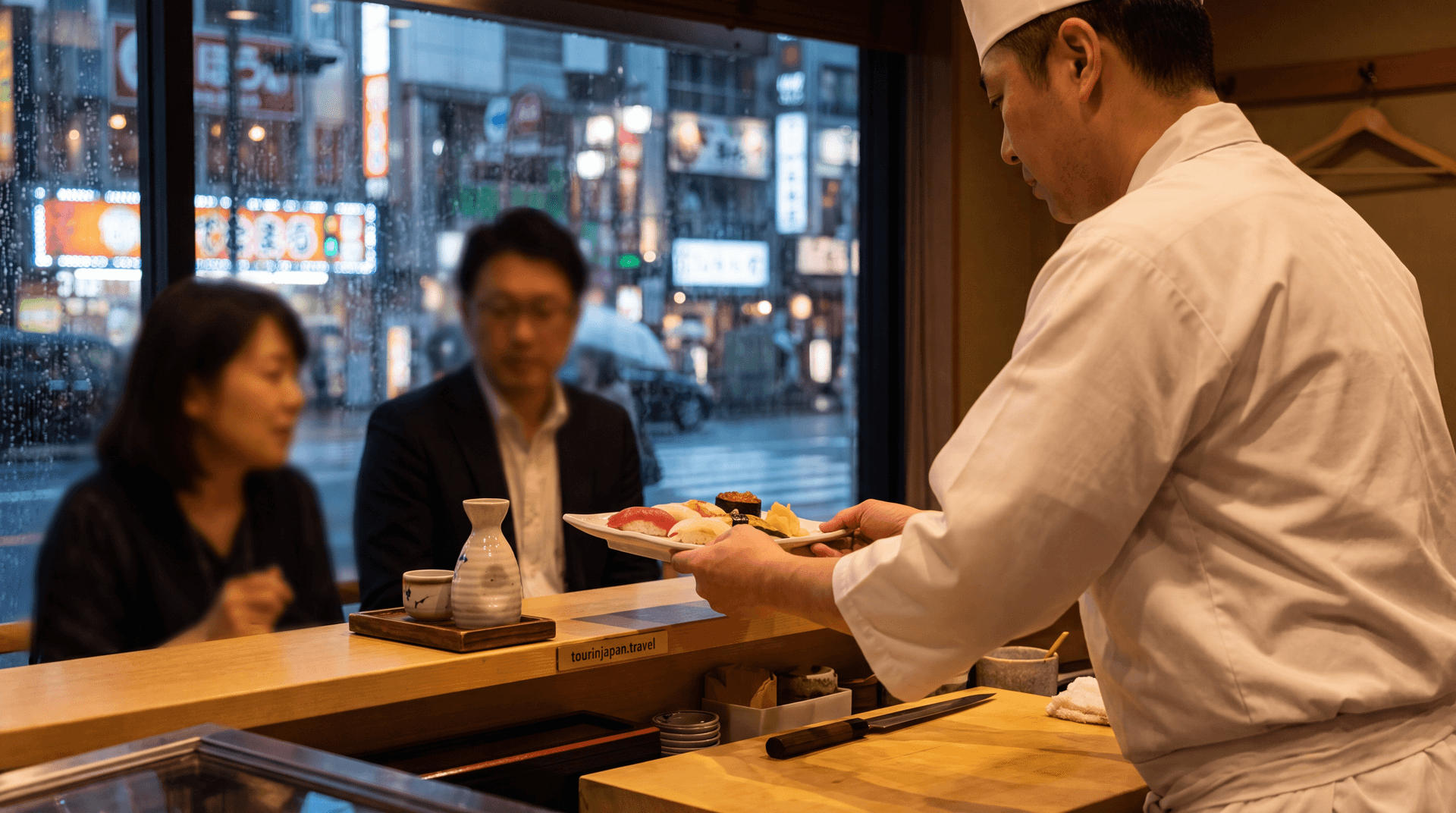
Omakase is a Japanese dining style where the chef decides what you eat. You sit at the counter, and the chef prepares a series of courses right in front of you. It's intimate, artistic, and unforgettable.
Types of Omakase
| Type | Courses | Price Range |
|---|---|---|
| Lunch omakase | 8–12 pieces | ¥10,000–20,000 |
| Dinner omakase | 15–20 pieces | ¥20,000–50,000 |
| Premium omakase | 20+ pieces | ¥50,000–100,000+ |
How to Book
Direct Reservation
- Call the restaurant — most require phone reservations
- Hotel concierge — can book difficult reservations
- Online platforms — Omakase, Tableall
Booking Platforms
| Platform | Notes |
|---|---|
| Omakase (omakase.in) | Best for Tokyo |
| Tableall | Premium restaurants |
| Pocket Concierge | Hotel-based |
| Tabelog | Japanese Yelp (check availability) |
Booking Tips
- Book 1–3 months ahead for popular restaurants
- Weekday lunch — easier to get reservations
- Bring your hotel's phone — they can call in Japanese
- Specify allergies — in advance
- Dress code — smart casual, no strong perfume
Top Omakase Restaurants
Tokyo
| Restaurant | Area | Price | Notes |
|---|---|---|---|
| Sukiyabashi Jiro | Ginza | ¥30,000+ | Legendary, from "Jiro Dreams of Sushi" |
| Saito | Roppongi | ¥40,000+ | 3 Michelin stars |
| Masa | Ginza | ¥30,000+ | 3 Michelin stars |
| Sushi Yoshitake | Ginza | ¥30,000+ | 3 Michelin stars |
| Sushi Dai | Toyosu Market | ¥5,000–8,000 | Budget-friendly, long lines |
Kyoto
| Restaurant | Area | Price | Notes |
|---|---|---|---|
| Nakamura | Central | ¥30,000+ | Kaiseki omakase |
| Hyotei | Near Nanzen-ji | ¥30,000+ | 400+ years old |
What to Expect
The Experience
- Arrive on time — 5 min early is ideal
- Sit at the counter — best seats are at the bar
- Let the chef guide you — trust their expertise
- Eat each piece quickly — temperature matters
- Don't add too much soy — chef seasons perfectly
- Express appreciation — "oishii" (delicious) or nod
- Thank the chef — "gochisōsama deshita" at the end
Etiquette
| Rule | Why |
|---|---|
| Eat immediately | Temperature and texture matter |
| Don't add extra soy | Chef seasons each piece |
| Don't take photos of every piece | Disrupts the flow |
| Don't wear strong perfume | Interferes with aroma |
| Sit quietly | Let the chef focus |
| Trust the chef | They know what's best |
Tips
- Book early — popular places fill up months ahead
- Lunch is cheaper — same quality, lower price
- Budget ¥20,000–50,000 for a proper dinner experience
- Try Toyosu Market — for budget omakase
- Don't skip dessert — often included
- Ask questions — chefs love explaining their craft
- Take notes — remember what you liked
- Have an open mind — try everything the chef offers
📱Get a Japan eSIM
Stay Connected in Japan
Yesim eSIMs work on arrival — no physical SIM needed. Japan data plans from $5.