
Obon Festival in Japan: Ancestor Rituals, Bon Odori, and Fireworks
By Tour in Japan editors · Updated
Obon is Japan's most spiritually significant summer festival, when ancestors return home. Bon Odori dances, floating lanterns, and fireworks mark this moving three-day celebration.
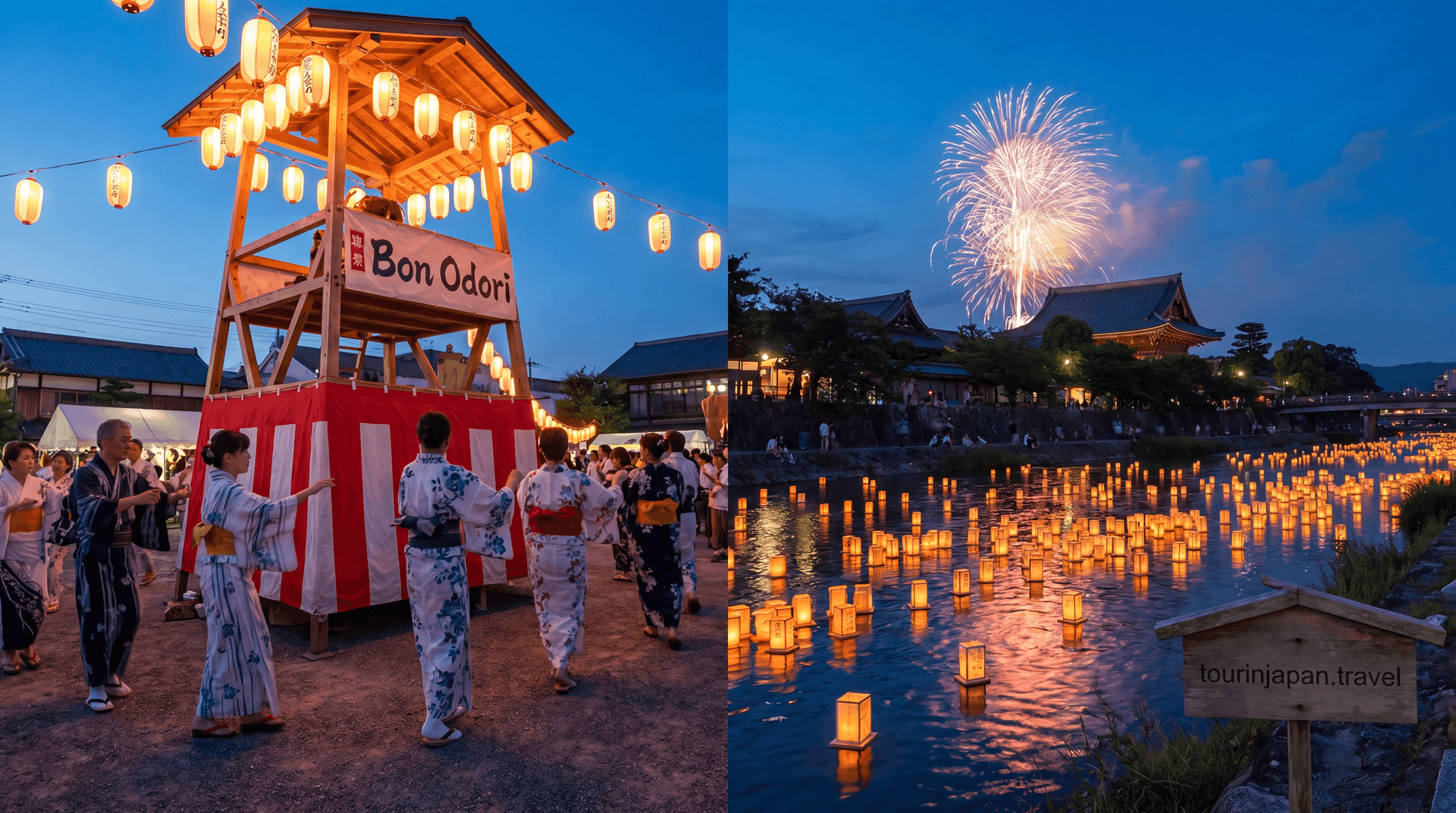
The Obon festival is Japan's annual event honoring the spirits of deceased ancestors, held over three days from August 13 to 15 in most of Japan (some regions observe it in July). According to Buddhist tradition, the spirits of the dead return to the living world during Obon to visit their families, and the festival involves welcoming them with special rituals, spending time together, then sending them off again with ceremonies involving fire and floating lanterns. The Obon festival is not a tourism event — it is a deeply observed cultural and spiritual practice that most Japanese families participate in regardless of their level of religious involvement. For travelers, Obon offers some of Japan's most visually spectacular and emotionally resonant experiences, from the hypnotic circular rhythms of Bon Odori folk dances to the heartbreaking beauty of toro nagashi lantern floating ceremonies.
Bon Odori: The Community Dance Tradition
Bon Odori dances are performed at local temples, parks, and community centers throughout August, and they are open to everyone including visitors. The dances vary significantly by region — the Awa Odori in Tokushima, Gujo Odori in Gifu, and Nishimonai Bon Odori in Akita are each distinct styles recognized as Important Intangible Cultural Properties of Japan. The common element is the circular or procession format, with participants moving in coordinated patterns around a central yagura tower where musicians and singers perform live. The dances are designed to be learnable by beginners, and many events have instructors or signage showing the steps.
The Gujo Odori in Gifu prefecture is one of the most intense Bon Odori experiences in Japan, running every night for approximately 30 nights from mid-July through early September, with all-night dancing on specific dates around August 13 to 16. Participants dance from evening until dawn, and the event is considered transformative by those who experience it. Gujo Hachiman, the castle town where it is held, is two hours from Nagoya by limited express train.
Toro Nagashi: Floating Lanterns for the Dead
On the final night of Obon, August 15th or 16th depending on the region, families gather at rivers, lakes, and ocean shores to float paper lanterns as a way of guiding ancestor spirits back to the spirit world. The toro nagashi ceremony turns waterways into rivers of soft light as hundreds or thousands of glowing lanterns drift gently downstream. The ceremony in Hiroshima has particular emotional resonance as it falls close to the August 6th atomic bombing anniversary, and the Peace Memorial Park hosts one of the most attended and moving lantern floating events in Japan.
Obon Travel Practicalities
- Obon dates: August 13-15 for most of Japan; July 13-15 in Tokyo and some other areas
- Shinkansen and expressways are extremely busy August 10-16; book tickets weeks in advance
- Many smaller businesses and restaurants close during the Obon holiday period
- Bon Odori events at local temples are free and open to visitors; watch or join
- Hiroshima toro nagashi: August 6th (Peace Memorial) and August 15th (Obon)
- Gujo Odori all-night dancing: August 13-16, accessible from Nagoya
- Awa Odori in Tokushima: August 12-15, the most famous Bon Odori event in Japan
- Accommodation in Tokyo and major cities is actually more available during Obon as many locals travel home to rural areas
Visitors to Japan during Obon should approach the festival with respectful curiosity. The Bon Odori dances welcome participation and the lantern floating ceremonies are open to all. If you encounter a neighborhood Bon Odori in a park or at a temple, you are welcome to watch from the sidelines and, in most cases, to join the outer circle of dancers as an observer-participant. The summer heat, the sound of taiko drums and flutes in the humid night air, and the sight of hundreds of people moving in slow unison is one of those Japan experiences that defies easy description but stays with you permanently.
Stay Connected in Japan
Yesim eSIMs work on arrival — no physical SIM needed. Japan data plans from $5.