
Noh Theater: Japan's Oldest Performing Art for First-Timers
By Tour in Japan editors · Updated
Noh theater is Japan's oldest performing art form, dating to the 14th century. Slow, mysterious, and profoundly beautiful, it rewards visitors who approach it with patience.
Noh (能) is Japan's oldest surviving theatrical art form — 650 years of masked dance, haunting music, and spiritual storytelling that's a UNESCO Intangible Cultural Heritage.
What Is Noh?
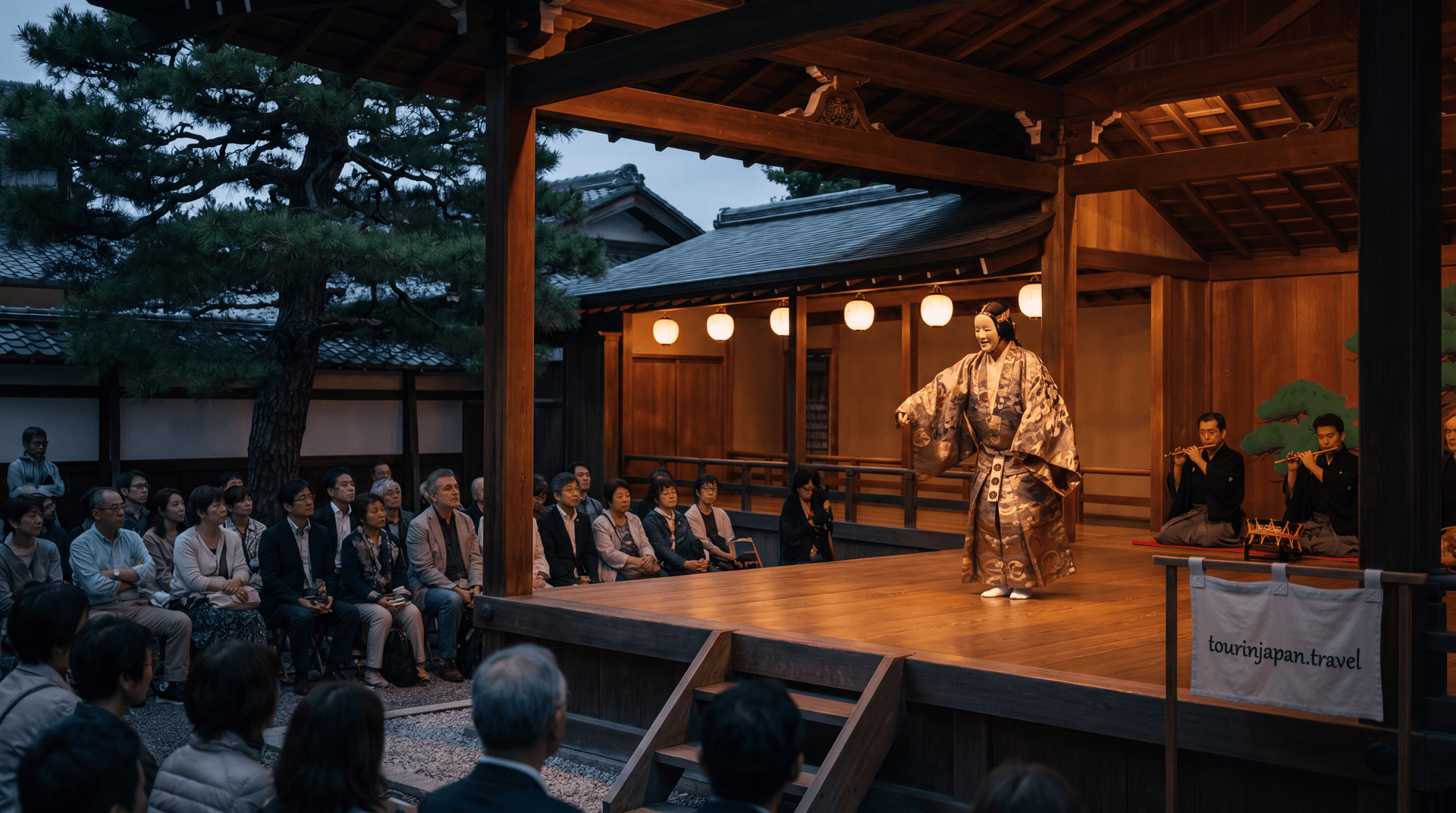
Noh is a classical Japanese masked musical drama that combines dance, music, poetry, and elaborate costumes. Performed on a bare cypress wood stage, Noh tells stories of gods, warriors, and spirits through highly stylized movements and haunting chants.
Noh vs Kabuki vs Bunraku
| Feature | Noh | Kabuki | Bunraku |
|---|---|---|---|
| Age | 650 years | 400 years | 350 years |
| Masks | ✅ Essential | ❌ Face paint | ❌ None (puppets) |
| Movement | Slow, deliberate | Dynamic, dramatic | Puppeteers visible |
| Music | Flute, drums | Shamisen, vocals | Shamisen |
| Stories | Spiritual, mystical | Historical, love | Romance, drama |
| Duration | 1–2 hours | 4+ hours | 3+ hours |
| UNESCO status | ✅ Yes | ✅ Yes | ✅ Yes |
History of Noh
Timeline
| Year | Event |
|---|---|
| 1333 | Kan'ami and Zeami develop Noh |
| 1374 | Ashikaga Yoshimitsu becomes patron |
| 1400s | Zeami writes Noh treatises |
| 1600s | Tokugawa shogunate supports Noh |
| 1868 | Meiji Restoration, patronage declines |
| 1957 | Designated Important Cultural Property |
| 2008 | UNESCO Intangible Cultural Heritage |
The Five Categories of Noh
1. Kami-mono (神物) — God Plays
- Theme: Divine beings, shrines, temples
- Masks: Young god, old god
- Mood: Auspicious, celebratory
- Example: "Takasago" (happy couple)
2. Shura-mono (修羅物) — Warrior Plays
- Theme: Fallen warriors, Buddhist redemption
- Masks: Ghostly warrior
- Mood: Tragic, spiritual
- Example: "Atsumori" (young warrior's ghost)
3. Katsura-mono (鬘物) — Woman Plays
- Theme: Female spirits, longing
- Masks: Young woman, old woman
- Mood: Elegant, melancholic
- Example: "Aoi no Ue" (jealous spirit)
4. Kyōran-mono (狂乱物) — Madness Plays
- Theme: Obsession, madness
- Masks: Various
- Mood: Intense, emotional
- Example: "Hannya" (jealous woman)
5. Kiri-mono (切物) — Demon/Final Plays
- Theme: Demons, supernatural beings
- Masks: demon, supernatural
- Mood: Dramatic, powerful
- Example: "Kurozuka" (demon transformation)
How to Watch Noh
Understanding the Performance
The Stage
- Raised cypress wood platform (4.6m × 5.4m)
- Hashigakari (bridgeway) for entrances
- Pine tree painting on back wall (kagami-ita)
- Band area (ensemble: flute + 3 drums)
The Performance Structure
| Part | Duration | What Happens |
|---|---|---|
| Jo (序) | 5–10 min | Introduction, character enters |
| Ha (破) | 30–60 min | Development, story unfolds |
| Kyū (急) | 5–10 min | Climax, often dance or revelation |
Key Elements
| Element | Description |
|---|---|
| Masks | Express emotions through angle and light |
| Dance | Highly stylized, symbolic movements |
| Chanting | Poetic recitation, often in archaic Japanese |
| Music | Flute (nohkan) + 3 drums (kotsuzumi, ōtsuzumi, taiko) |
| Costumes | Lavish, symbolic, hundreds of years old |
How to Attend a Noh Performance
Finding Performances
| Venue | Location | Notes |
|---|---|---|
| National Noh Theatre | Tokyo (Sendagaya) | Best for first-timers |
| Kanze Noh Theater | Tokyo (Kagurazaka) | Major school |
| Osaka Noh Theater | Osaka | Good selection |
| Kyoto | Various | Traditional venues |
Ticket Information
| Type | Price | Notes |
|---|---|---|
| Regular | ¥3,000–8,000 | Standard seating |
| Premium | ¥10,000–20,000 | Best views |
| First-timer | ¥2,000–3,000 | Discounted |
| Student | ¥1,000–2,000 | With ID |
Where to Buy
- Venue box office: Direct purchase
- Ticket Pia: Convenience stores
- Lawson Ticket: Convenience stores
- Online: Venue websites
Noh Etiquette
DO ✅
- Arrive 30 minutes early
- Turn off phone completely
- Don't eat or drink during performance
- Don't take photos or record
- Stay for the entire performance
- Applause after key moments (some schools)
DON'T ❌
- Don't talk during performance
- Don't leave during performance
- Don't use flash photography
- Don't record the performance
- Don't arrive late (no entry during performance)
What to Wear
- Smart casual is appropriate
- No specific dress code
- Some venues have traditional seating (bring socks)
Understanding Noh Masks
Common Masks
| Mask | Character | Emotion |
|---|---|---|
| Ko-omote | Young woman | Beauty, innocence |
| Hannya | Jealous woman | Anger, jealousy |
| Okina | Old god | Wisdom, benevolence |
| Deigan | Golden-eyed demon | Power, evil |
| Shikami | Fierce demon | Rage, destruction |
How Masks Work
- Angle changes expression: Tilt up = happy, down = sad
- Lighting affects appearance: Shadows create emotions
- Distance matters: Masks read differently from far away
- Actor's skill: Master performers bring masks to life
Where to See Noh
Tokyo
National Noh Theatre (国立能楽堂)
- Location: Sendagaya, Tokyo
- Capacity: 590 seats
- Website: ntj.jac.go.jp
- Tip: English subtitles available for some performances
Kanze Kaikan (観世会館)
- Location: Kagurazaka, Tokyo
- Capacity: 400 seats
- Tip: Major Noh school venue
Osaka
Osaka Noh Theater (大阪能楽堂)
- Location: Utsubo, Osaka
- Capacity: 500 seats
- Tip: Regular performances
Kyoto
Kongo Noh Theater
- Location: Various venues
- Tip: Traditional setting
Learning More
Books
| Title | Author | Notes |
|---|---|---|
| "Noh: The Classic Theater" | Various | Introduction |
| "Japanese Noh Drama" | Brecht/Various | Translations |
| "The Art of Noh" | Yasuo Inoue | Visual guide |
Online Resources
- National Noh Theatre: English resources
- NHK World: Noh documentaries
- YouTube: Performance excerpts
Budget Guide
Noh Experience in Tokyo
| Item | Budget | Mid-Range | Premium |
|---|---|---|---|
| Ticket | ¥2,000 | ¥5,000 | ¥15,000 |
| Program | ¥500 | ¥500 | ¥500 |
| Transport | ¥500 | ¥1,000 | ¥2,000 |
| Dinner | ¥2,000 | ¥5,000 | ¥10,000 |
| Total | ¥5,000 | ¥11,500 | ¥27,500 |
Frequently Asked Questions
Q: Can I watch Noh if I don't speak Japanese? A: Yes! The visual elements transcend language. Some venues offer English subtitles or programs.
Q: Is Noh boring for beginners? A: It's meditative and slow-paced. Approach it as an art experience, not entertainment.
Q: How long is a typical performance? A: 1–2 hours for a single play, 4+ hours for a full program.
Q: Can children attend? A: Yes, but it may be challenging for young children due to the slow pace.
Q: What's the best play for first-timers? A: "Okina" (神体) — a short, auspicious opening play that's visually striking.
Essential Japanese Phrases
| English | Japanese | Pronunciation |
|---|---|---|
| Noh theater | 能 | Nō |
| Mask | 能面 | Nōmen |
| Stage | 舞台 | Butai |
| Beautiful! | 素敵! | Suteki! |
| Traditional | 伝統的 | Dentōteki |
| Performance | 公演 | Kōen |
Noh theater offers a profound window into Japan's artistic soul — a 650-year tradition that continues to inspire and move audiences with its timeless beauty.
Stay Connected in Japan
Yesim eSIMs work on arrival — no physical SIM needed. Japan data plans from $5.