
Skiing Niseko 2025-2026: Snow Conditions, Runs, and Resort Guide
By Tour in Japan editors · Updated
Niseko is the powder skiing capital of Asia. This 2025-2026 season guide covers snow conditions, the four interconnected resorts, lift passes, and how to get there.
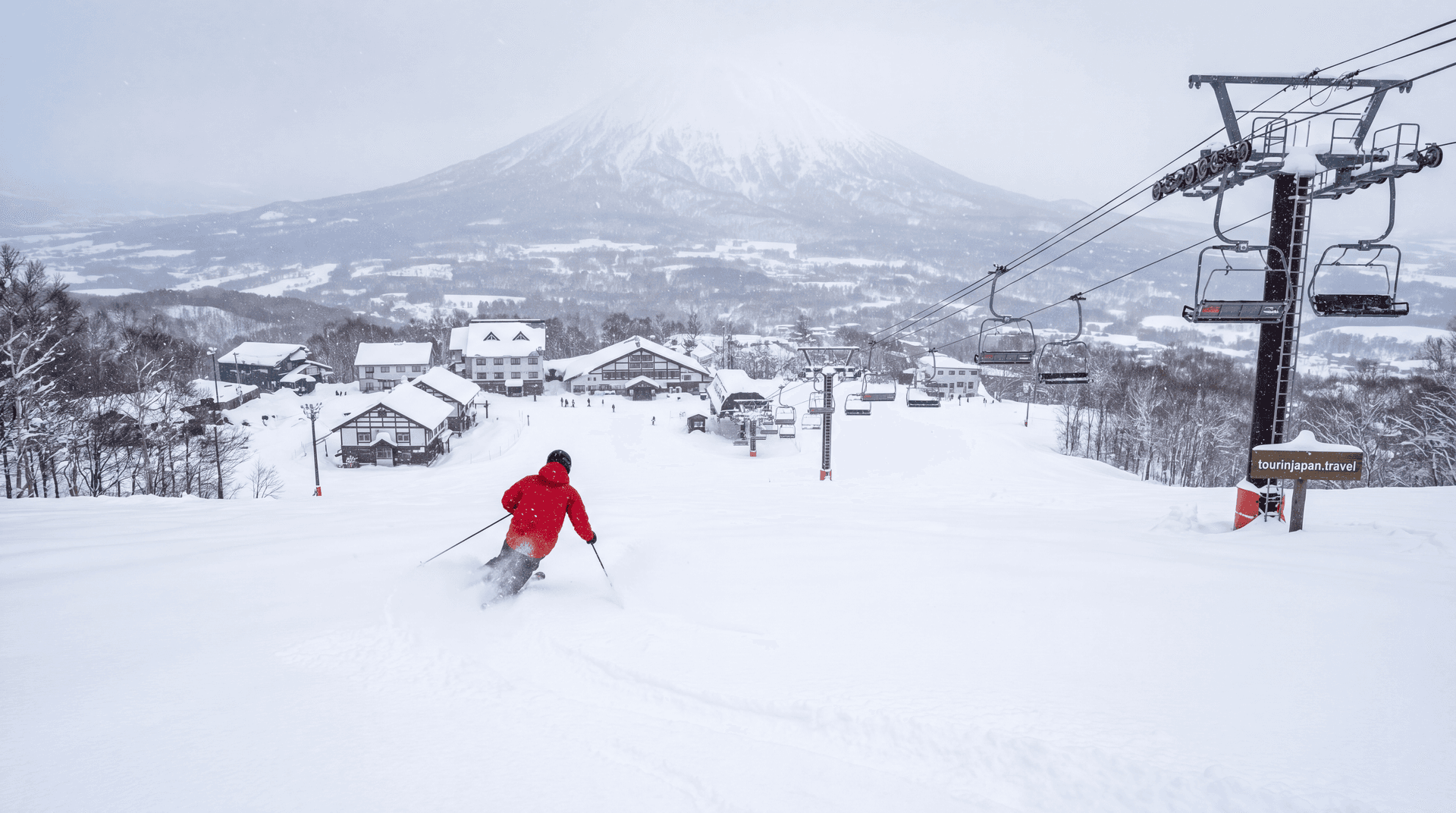
Skiing Niseko means skiing the finest powder snow in the world outside a handful of North American resorts — a claim backed by consistent meteorological data showing average annual snowfall of 15 meters on the higher peaks. The moisture-laden air masses that cross the Sea of Japan from Siberia pick up humidity over the water and deposit it as extraordinarily light, dry powder on the flanks of Mount Niseko-Annupuri in Hokkaido's Shiribeshi region. The result is the legendary japow — Japanese powder — that has made Niseko a global ski destination since the early 2000s.
The Four Resorts: Grand Hirafu, Hanazono, Annupuri, and Niseko Village
Niseko United is the collective name for four distinct ski resorts sharing a common mountain. Grand Hirafu is the largest and most international, with the most English-speaking visitors, the widest apres-ski scene, and the highest concentration of English-language restaurants and bars. Hanazono (operated by Park Hyatt) is the quietest and most powder-focused, with tree runs beloved by advanced skiers. Niseko Village has the best base facilities and the most family-oriented atmosphere. Annupuri is the least visited and often has the freshest untracked snow.
A single all-mountain pass covers all four resorts and costs approximately 8,000-10,000 yen per adult per day at the 2025-2026 rate. Night skiing is available at Grand Hirafu and Niseko Village until 8:30 PM — an excellent use of long winter evenings. Early bird tickets purchased online before the season are typically 10-15% cheaper.
Snow Conditions and Best Timing
The resort opens in late November with early season conditions and closes in early May. Peak powder season is January through mid-February, when storms arrive every few days and fresh snow is virtually guaranteed within any week-long trip. Mid-December is excellent for lighter crowds with already good coverage. March becomes spring skiing — warmer, groomed conditions, and often the best weather for clear days with Mount Yotei views — but powder days become rarer.
Accommodation and access options
- Ski-in/ski-out luxury hotels: Park Hyatt Niseko, Niseko Alpine Apartments from 50,000 yen per person per night in peak
- Hirafu condominiums: popular with Australians and Singaporeans, typically 20,000-40,000 yen per room per night
- Budget hostels in Hirafu: 6,000-10,000 yen per person in shared rooms; book months in advance for January
- Getting there: fly into New Chitose Airport (CTS, near Sapporo) then 2-hour bus transfer; direct bus services run from CTS with advance booking
- Equipment rental: widely available in Hirafu, full kit (skis/board, boots, helmet, poles) around 6,000-9,000 yen per day
- Ski school: lessons available in English, Mandarin, and Korean; half-day group lesson around 7,000-9,000 yen
Off-Piste and Backcountry Skiing
Niseko's gates system allows access to backcountry zones on all four mountains during open gate periods. Twelve gates lead to tree runs and open bowls beyond the roped boundary — skiers must carry avalanche safety equipment (transceiver, probe, and shovel are mandatory) and check gate status on the resort app before heading out. Guided backcountry tours are available through multiple operators in Hirafu for around 20,000-30,000 yen per person per day.
After skiing, the mandatory activity is onsen — virtually every hotel has hot spring access, and public baths in Niseko Town and Hirafu cost around 500-800 yen. The combination of deep powder skiing followed by a mineral spring soak followed by fresh Hokkaido seafood is the complete Niseko experience, and the reason most visitors return.
Stay Connected in Japan
Yesim eSIMs work on arrival — no physical SIM needed. Japan data plans from $5.