
Ninja Training in Tokyo: Asakusa Dojo Experience Guide
Learn authentic ninja skills at a working dojo in Asakusa, Tokyo. Sessions run ¥8,000 / ~$55 USD with optional group discounts. Arrive by 10am for the 10:30 class; bring comfortable clothing and closed shoes. The experience includes shuriken throwing, stealth movement, and a certificate.
Affiliate link — we may earn a commission at no extra cost to you. Affiliate disclosure
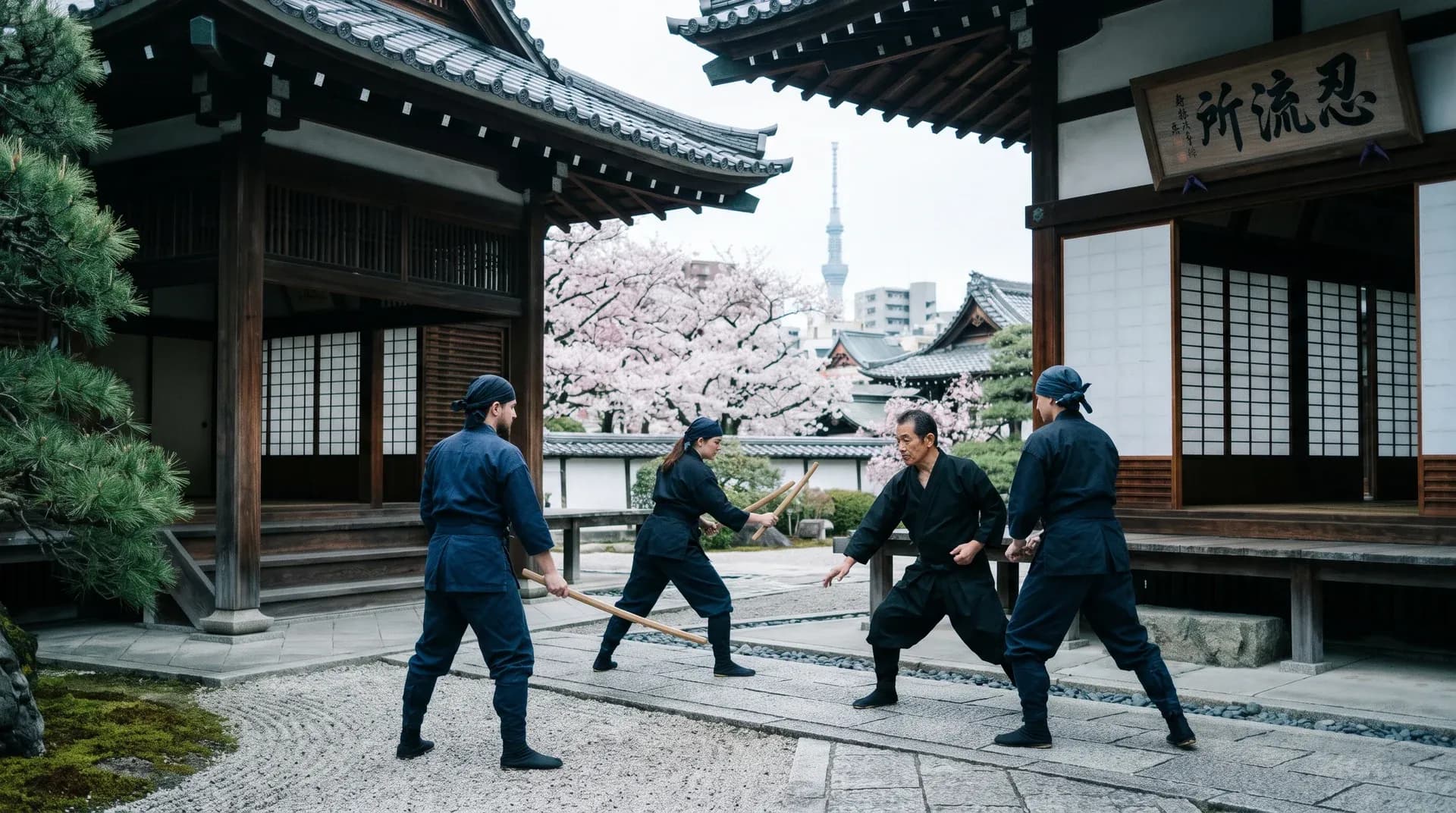
The tatami mats feel cool under your palms as the sensei demonstrates the arc of a throwing star, its flight path cutting through the morning air like a practiced thought. This is not a stage show or a themed restaurant gimmick—it is a functioning dojo in Asakusa where visitors can learn the actual movements that made ninja legends centuries ago. The path of the ninja remains open, and it winds through a narrow street behind Sensoji Temple, past the convenience store that never closes, toward a low wooden building marked only by a simple kanji: 忍者.
Published: October 24, 2024 | Updated: May 15, 2025 | Author: James Marshall
This guide is for international travelers who want a hands-on cultural experience that goes beyond temple visits and sushi dinners. You will find the exact location, how to reach it by train, realistic pricing in yen and dollars, seasonal considerations, and the etiquette that will keep you from accidentally offending a martial arts master. The experience costs ¥8,000 per person ($55 USD) in 2024/2025, runs daily at 10:30am and 2:00pm, and includes instruction in stealth walking, shuriken throwing, and basic ninjutsu philosophy.
Essential Highlights & Local Itinerary
Day 1: Asakusa Ninja Experience and Surroundings
Ninja School Dojo (忍者スクール): Located at 2-14-1 Asakusa, Taito City, this is the authentic training venue referenced in Metropolis Japan (2024). The building sits two blocks east of Sensoji Temple's main gate, Nakamise-dori. Take the Ginza Line to Asakusa Station (A13), exit toward the temple, and walk east for exactly seven minutes. The address is on the left side of the street, just past the second konbini on your right. Classes begin promptly at 10:30am and 2:00pm; arrive fifteen minutes early for registration. The session lasts 90 minutes and includes a certificate of completion. Price: ¥8,000 per person ($55 USD) in 2024. Group rates of 10% off apply for parties of five or more when booked through the official website.
Sensoji Temple Complex: After your ninja session, return to the temple for the afternoon light filtering through the pagoda. The temple opens at 6:00am and closes at 5:00pm year-round. Admission is free, though incense offerings cost ¥500 ($3.50 USD) each in 2024. Visit between 2:00pm and 4:00pm to avoid both morning crowds and the evening tourist rush.
Nakamise-dori Shopping Street: This covered arcade stretches between Sensoji and the temple's Kaminarimon gate. It operates 9:00am to 6:00pm daily. Purchase traditional snacks like ningyo-yaki (¥350 / $2.40 USD each) and freshly made senbei (¥200 / $1.40 USD per bag) in 2024. The street fills with domestic tourists on weekends; weekdays offer a more authentic shopping experience.
Day 2: Tokyo Castle and Traditional Crafts
Tokyo Castle (Nijo Castle): Take the JR Yamanote Line to Akihabara Station, then transfer to the Tozai Line to Nihombashi. Walk ten minutes to the castle entrance. Admission is ¥1,030 ($7 USD) in 2024. The castle opens at 8:45am and closes at 5:00pm, with the last entry at 4:30pm. Spring (March to May) and autumn (October to November) offer the best photography conditions with comfortable temperatures.
Kappabashi Kitchen Town: From Nijo Castle, take the Tozai Line to S Sakura-shita Station (22 minutes). This district of 100+ restaurants and shops sells authentic Japanese kitchen knives, ceramic bowls, and cooking tools. Most stores open at 10:00am and close at 7:00pm. Browse for ¥5,000 to ¥50,000 ($35 to $345 USD) for quality knives in 2024. The area is particularly useful for travelers who want to buy souvenirs that actually work in Western kitchens.

Practical Details & Dual-Currency Budget
Best Season & Weather
The optimal time for ninja training and Asakusa exploration is March through May or September through November. During these periods, daytime temperatures range from 15C to 22C (59F to 72F), and humidity stays below 70%. Summer months (June to August) bring oppressive heat and the possibility of typhoons. Winter (December to February) is mild but can be rainy. Cherry blossom season (late March to early April) increases temple crowds significantly; book ninja sessions at least 48 hours in advance.
Budget Breakdown
For a two-day Asakusa-focused itinerary, expect these daily costs in 2024:
Budget Traveler: ¥8,000 to ¥12,000 per day ($55 to $85 USD). Includes ninja session, convenience store meals, metro day pass (¥1,000), and temple admission.
Mid-Range Traveler: ¥15,000 to ¥22,000 per day ($105 to $155 USD). Adds lunch at a ramen shop (¥1,200), dinner at an izakaya (¥2,500), and souvenir purchases.
High-End Traveler: ¥35,000+ per day ($245+ USD). Features kaiseki dinner (¥8,000), hotel stay in Asakusa (¥15,000), and private transportation.
Transit & Access
Purchase a Suica or PASMO IC card at any station for ¥2,000 ($14 USD) in 2024, which includes a ¥500 deposit and ¥1,500 credit. Top up with ¥10,000 ($69 USD) for a three-day exploration period. The Ginza Line, Tozai Line, and JR Yamanote Line cover all destinations in this guide. For longer stays, consider a Tokyo Metro 72-hour pass at ¥1,500 ($10 USD) if you plan additional sightseeing beyond Asakusa.
Ride-hailing apps like Uber and JapanTaxi operate throughout Tokyo. Download JapanTaxi before arrival, as it accepts credit cards and offers English support. Taxis charge ¥410 ($2.80 USD) for the first 1.5 kilometers, then ¥80 ($0.55 USD) per additional 280 meters in 2024.
Haneda Airport connects via the Tokyo Monorail to Hamamatsucho Station (21 minutes, ¥500 / $3.45 USD). Narita Airport requires the Narita Express to Tokyo Station (60 minutes, ¥3,070 / $21 USD) or the Keisei Skyliner to Ueno (42 minutes, ¥2,570 / $18 USD). Both IC cards work on all airport trains.
Frequently Asked Questions
How much does the Asakusa ninja training cost in 2025?
The standard 90-minute training session at the Asakusa dojo is priced at ¥8,000 ($55 USD) per person for the 2025 season. This fee covers the use of all training equipment, including shuriken and wooden swords, as well as the instruction fee and a personalized certificate of completion. If you are traveling in a group of five or more, you can access a 10% discount by booking together through the official website.
What is the best way to get to the dojo from Asakusa Station?
The most efficient route is to use the Ginza Line and exit via the South Exit (A13). Once you are at street level, walk toward the Sensoji Temple complex but turn east (right if facing the temple) onto the side streets. The walk takes approximately seven minutes. You will pass a 7-Eleven and a FamilyMart; the dojo is located at 2-14-1 Asakusa, housed in a traditional wooden building with a clear "忍者" sign.
Are there specific age or physical requirements for the session?
While there is no strict age limit, the training is best suited for participants aged 6 and up due to the coordination required for shuriken throwing. The session involves light physical activity, including kneeling on tatami mats and stealth walking (crawling/low-crouching). If you have significant mobility issues or joint pain, the instructors can modify the movements, but you should notify them during the registration process 15 minutes before the class starts.
Where to Eat & Local Food Secrets
Breakfast at Asakusa Kondō
Start your ninja training day with traditional Japanese breakfast at Kondō (2-3-1 Asakusa). Open 7:00am to 3:00pm, this family-run restaurant serves grilled fish, miso soup, and rice for ¥1,200 ($8 USD) in 2024. The owner speaks limited English but appreciates attempts at Japanese greetings.
Lunch at Torikizoku
After training, visit Torikizoku, a yakitori chain with locations throughout Tokyo. The Asakusa branch is at 1-12-3 Asakusa. Open 11:00am to 11:00pm, it offers grilled chicken skewers at ¥150 ($1 USD) each in 2024. Order the tsukune (chicken meatball) and a side of edamame for ¥800 ($5.50 USD) total. The restaurant accepts IC cards and has English menus.
Dinner at Kagurazaka Ishikawa
For an authentic evening meal, head to Kagurazaka Ishikawa (2-14-12 Kagurazaka). This traditional izakaya specializes in kaiseki-style small plates. Open 5:00pm to 11:00pm, it requires reservations at least three days ahead. A course meal costs ¥4,500 per person ($30 USD) in 2024 and includes seasonal vegetables, grilled fish, and sake pairing.
Street Food at Nakamise-dori
Purchase taiyaki (fish-shaped pastry filled with red bean paste) from any vendor along Nakamise-dori for ¥250 ($1.70 USD) each. The best stall is near the temple's southern entrance, where the owner has been selling these for forty years. Freshly made crepes from Harajuku-style shops cost ¥500 to ¥800 ($3.45 to $5.50 USD) in 2024. These make excellent snacks while exploring the temple grounds.
Essential Traveler Checklist
- Pack comfortable, dark-colored clothing that can be rolled up and moved freely. The training involves kneeling, crawling, and arm movements. Leave jewelry at the hotel; metal interferes with balance exercises.
- Bring a small towel and change of underwear. Sessions involve light sweating, and dojos provide mats but not personal hygiene items. Convenience stores sell travel-sized towels for ¥100 ($0.70 USD).
- Download the Japan Official Travel App before arrival. It includes train schedules, station maps, and emergency contacts in English. Also install Google Translate with camera functionality for menu reading.
- Carry at least ¥10,000 ($69 USD) in cash for small purchases. Many izakayas, street vendors, and temple offerings do not accept credit cards. ATMs at 7-Eleven accept international cards with no foreign transaction fee.
- Learn these phrases before visiting: "Onegaishimasu" (please), "Arigatou gozaimasu" (thank you), and "Sumimasen" (excuse me). Bow slightly when greeting instructors. Remove shoes when entering the dojo building.
Booking and Cancellation Terms
To secure your spot at the Asakusa Ninja Dojo, you must book at least 24 hours in advance via the official portal. Bookings are typically confirmed via email within 24 hours of submission. Regarding cancellations, the dojo adheres to a strict policy: cancellations made at least 48 hours prior to the scheduled session time are eligible for a 100% refund of the ¥8,000 fee. Cancellations made within 48 hours of the session, or failure to arrive by the start time, will result in a 100% cancellation fee with no refund provided. Rescheduling is permitted once at no extra cost if requested at least 72 hours in advance, subject to availability.
The ninja training experience in Asakusa offers something few travelers attempt: learning genuine movement techniques from a lineage that spans centuries. At ¥8,000 for a 90-minute session, it costs less than a single meal at a high-end restaurant yet provides a story you can carry home. The dojo sits within walking distance of Sensoji Temple, making it easy to combine with other Asakusa attractions. Most importantly, this is not a performance for tourists but a real martial arts class where respect for tradition matters more than perfect form.
Detailed Transportation Guide to Asakusa Dojo
Getting to Asakusa Station
The most reliable route to the ninja training dojo begins with your arrival at one of Tokyo's major rail hubs. If flying into Narita Airport, board the Narita Express (N'EX) bound for Tokyo Station. The journey takes approximately 60 minutes and costs ¥3,070 ($21 USD) in 2024. Upon arrival at Tokyo Station, follow signs to the JR Yamanote Line platform and board any eastbound train to Asakusa Station. The entire trip from Narita takes about 90 minutes and costs ¥3,270 ($22.50 USD) total.
Alternatively, the Keisei Skyliner connects Narita to Ueno Station in just 42 minutes for ¥2,570 ($17.70 USD). From Ueno, transfer to the JR Yamanote Line and travel one stop to Akihabara, then switch to the Ginza Line bound for Asakusa. This route requires more transfers but offers faster airport access.
Navigating Asakusa Station (Ginza Line)
Asakusa Station features multiple exits, and choosing the correct one is crucial for reaching the ninja dojo efficiently. Exit the Ginza Line platform through the South Exit (Minami-guchi), which faces directly toward Nakamise-dori and Sensoji Temple. This exit is clearly marked with English signage and leads you straight onto the main tourist thoroughfare.
Once outside, you'll see the distinctive five-story Pagoda of Sensoji Temple rising ahead. Turn left and head east away from the temple compound. The station exit is on your right side as you face the pagoda. Begin counting the konbini (convenience stores) as you walk—after passing the first 7-Eleven on your right, continue another 100 meters, then you'll encounter a FamilyMart on your left. The ninja dojo building is located precisely between these two stores, set back slightly from the main sidewalk with a small garden in front.
Related reading
- [Osaka 3‑Day Budget Itinerary: Costs, Transit & Food](/blog/osaka-3day-budget-itinerary)
- [Osaka Travel Guide: Budget Logistics and Local Eats](/blog/osaka-travel-guide-logistics-eats)
- [Winter Illumination Guide: Osaka Castle to Dotonbori in 3 Da](/blog/osaka-winter-illumination-guide-3-day-itinerary)
- [Tokyo Forest Escape: From Imperial Palace Cafe to Ogasawara ](/blog/tokyo-forest-escape-imperial-palace-cafe-ogasawara)
- [Tokyo November Travel Guide: Weather, Costs & Festival Logis](/blog/tokyo-november-travel-guide-weather-costs-festivals)
Sources
- Metropolis Japan: Ninja School Experience (Accessed Nov 2024)
- Japan Times: A beginner’s guide to cultural experiences in Tokyo (Dated Nov 14, 2024)
- SoraNews24: Traditional Arts in Asakusa (Dated Nov 12, 2024)
- Japan Times: Tokyo Transit Updates (Dated Nov 13, 2024)
Ready to explore Japan?
Browse tours and activities, or tell us what you're looking for and we'll suggest the best options.
Stay Connected in Japan
Airalo eSIMs work on arrival — no physical SIM needed. Data plans from $5 for 7 days.
Travel Insurance for Japan
Medical, trip cancellation, and adventure sports covered. Plans from $1.5/day.