
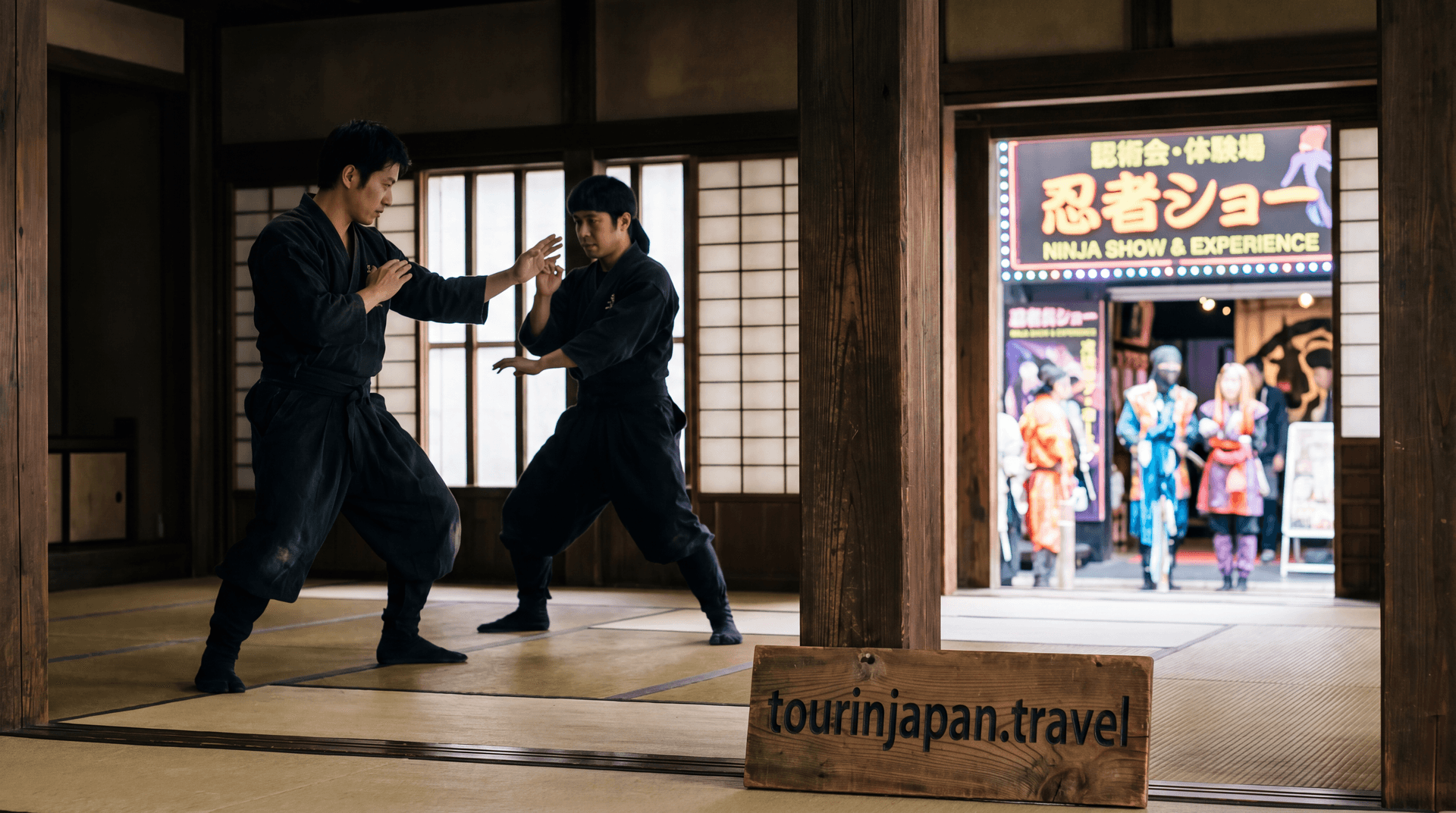
Ninja Experience Japan: Real Dojo Classes vs Tourist Traps
By Tour in Japan editors · Updated
Japan offers many ninja experiences — from theatrical tourist shows to genuine ninjutsu martial arts classes at traditional dojos. Here is how to tell the difference and find the real thing.
Ninja — the covert agents, spies, and unconventional warriors of feudal Japan — have captured global imagination far exceeding their actual historical numbers and influence. This has created a thriving industry of ninja experiences in Japan that ranges from genuinely excellent martial arts instruction at traditional ninjutsu dojos to elaborately staged tourist shows with little connection to historical reality. Navigating ninja experiences in Japan requires knowing what you are looking for: a theatrical costume photo experience is fine if that is what you want, but if you are hoping to learn actual ninjutsu techniques and engage with a living martial tradition, you need to seek out very different types of venues. This guide covers both, helping you choose the ninja experience in Japan that matches your expectations.
Real Ninjutsu: The Martial Arts Tradition
Ninjutsu as a martial art has several surviving schools (koryu) that trace their lineages to feudal ninja clans. The most widely practiced today is Bujinkan Budo Taijutsu, founded by Masaaki Hatsumi who learned from the last direct heir of several ninja traditions. Bujinkan classes are available worldwide, but training in Japan — particularly at the Bujinkan Honbu Dojo in Noda, Chiba Prefecture — carries obvious authenticity and the opportunity to train with senior Japanese instructors.
A Bujinkan class teaches unarmed body movement (taijutsu), weapon handling (shuriken throwing, staff, short sword, chain weapons), and the philosophical principles underlying the tradition. It is demanding, methodical, and deeply Japanese in its emphasis on correct body structure and intent over speed and strength. Visitors with any martial arts background will find the class immediately challenging and interesting; complete beginners are also welcome but should expect a steep initial learning curve.
Tourist Ninja Experiences: What to Expect
- Ninja theme parks (Nikko Edo Mura, Toei Kyoto Studio Park): Large entertainment parks with ninja shows, costume rentals, shuriken throwing ranges, and obstacle courses. Fun for families, limited martial arts content. Admission 2,500-3,000 yen.
- Ninja-themed restaurants (Tokyo Shinjuku, Osaka): Theatrical dinner experiences in ninja-decorated environments with costumed servers. The food is decent; the entertainment value is high for children.
- Iga Ninja Museum (Iga City, Mie): Genuine historical context about the Iga ninja tradition, with shuriken throwing range and performance shows. Worth visiting for historical interest. Admission 800-1,500 yen.
- Togakushi Ninja Village (Nagano): Near a genuine historical ninja stronghold area, with museum and experiential activities. Combines well with visiting the Togakushi Shrine complex.
- Shuriken throwing ranges (multiple Tokyo locations): 30-minute sessions learning to throw shuriken at targets. Genuinely fun and surprisingly difficult to do correctly. Around 1,500-2,500 yen.
Iga and Koka: The Ninja Heartlands
The two regions historically associated with ninja clans are Iga (Mie Prefecture) and Koka (Shiga Prefecture), both mountainous areas providing ideal terrain for the covert reconnaissance and guerrilla tactics that ninja specialized in. Iga City is the more developed for tourism: the Iga Ueno Castle houses a ninja museum in its grounds, the surrounding area has multiple ninja heritage sites, and the city embraces its ninja identity enthusiastically. Koka is quieter but has the Koka Ninja Village (Koka no Sato Ninjutsu Mura) with martial arts demonstrations and a historical ninja house with secret passages and trick mechanisms.
For the most authentic engagement with ninja culture, combining a visit to Iga Ninja Museum with a day at the Bujinkan Honbu Dojo provides both historical context and living practice. The Dojo is open to visitors who can demonstrate basic martial arts etiquette and sincerity of interest — contact them in advance to confirm your visit. The contrast between the theatrical museum and the austere, undecorated practice hall of the dojo tells the real story of how ancient skills pass through generations.
Stay Connected in Japan
Yesim eSIMs work on arrival — no physical SIM needed. Japan data plans from $5.