
Nikko Autumn Foliage: Japan's Most Dramatic Temple-and-Leaf Combo
By Tour in Japan editors · Updated
Nikko's gilded shrines and UNESCO temples surrounded by fiery maples create Japan's most photogenic autumn scene. Here's when to visit and what not to miss.
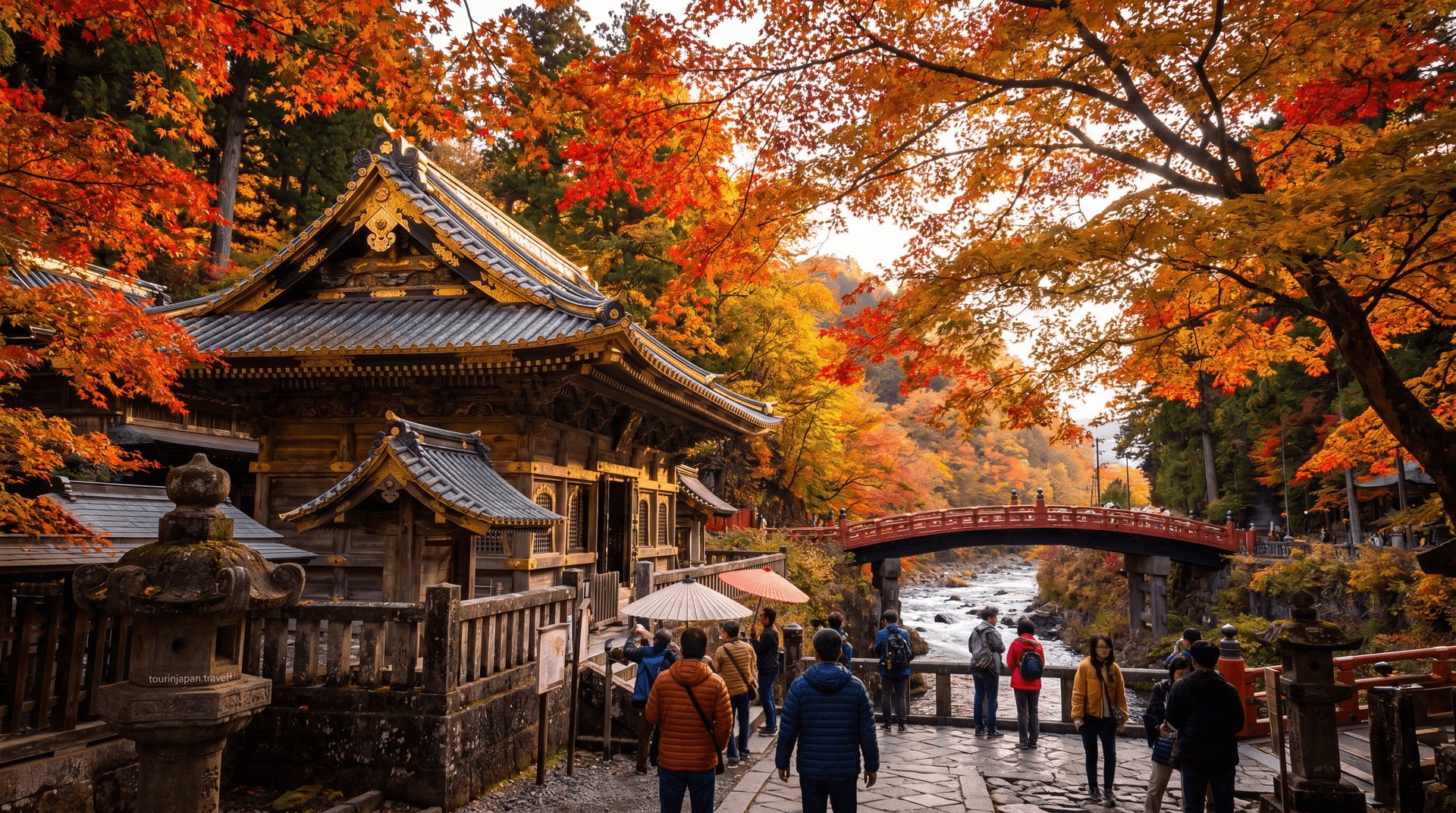
Nikko autumn foliage combines two of Japan's greatest visual spectacles: the ornate gold and crimson architecture of the Toshogu shrine complex and the blazing maple and zelkova trees that surround it. Few places in Japan manage to layer so much beauty into a single frame, and during peak foliage in mid to late October, the whole mountain valley transforms into something extraordinary. Set just two hours by direct express from Tokyo's Asakusa station, Nikko is one of the most accessible autumn destinations in the country, making it a perennial favorite for both domestic day-trippers and international tourists. The contrast between the forest's natural scarlets and the shrine's man-made lacquered reds creates a visual harmony that photographers spend entire mornings chasing.
The Toshogu Shrine Complex in Autumn
Toshogu enshrines Tokugawa Ieyasu, the first shogun of the Edo period, and its buildings are among the most elaborately decorated in Japan. The famous Yomeimon Gate, covered in over 500 intricate carvings, becomes even more spectacular when viewed against a canopy of orange and red maples in October. The approach from the five-story pagoda through the towering cryptomeria cedar avenue creates a dramatic entrance even before you reach the main shrine. Entry to the main Toshogu area costs 1,300 yen, with an additional 520 yen to enter the inner Nemuri-neko carving and Ieyasu's mausoleum.
Rinno-ji temple, a short walk from Toshogu, has a garden called Shoyoen where you can experience a more intimate autumn foliage setting. The garden pond reflects the changing maples, and entrance costs 300 yen separately from the main temple. Arrive at Toshogu before 9 AM to experience the quiet of the cedar approach before the tour buses arrive.
Nikko National Park: Ryuzu Falls and Lake Chuzenji
Above the shrine complex, the mountain road climbs through twenty hairpin bends to the Okunikko highland plateau at 1,270 meters elevation. This area typically peaks one to two weeks before the town below, meaning you can experience two distinct foliage peaks by timing your visit carefully. Ryuzu Falls, where the water cascades over volcanic rock shelves, is framed by maples that turn deep scarlet in early to mid-October. The viewing terrace and tea house at the falls base is a classic Nikko autumn photograph.
Lake Chuzenji sits at the top of the Irohazaka mountain road and is surrounded by a ring of mixed forest that delivers stunning reflections on calm mornings. Kegon Falls, Japan's most famous waterfall, drops 97 meters from the lake's outflow and is framed by autumn color from the observation deck. An elevator descends to a lower observation platform for an additional 570 yen and gives a view looking up at the falls through the foliage.
Senjogahara Marshland Hiking
The Senjogahara plateau, a volcanic marshland at 1,400 meters, offers some of the most peaceful autumn walking in Nikko. The marshland grasses turn golden and rust while the surrounding larch and birch trees provide contrasting yellows. A well-maintained boardwalk trail covers the full 3.8 kilometers from Yudaki Falls to Akanuma, taking about two hours each way. Combine this with a return bus to make a comfortable half-day loop. The area feels completely different from the crowded shrine precincts below and rewards those willing to explore beyond the main tourist sites.
Nikko Autumn Visit Essentials
- Okunikko and Senjogahara: peak color early to mid-October
- Nikko shrine town and lower slopes: peak color mid to late October
- Tobu Nikko Limited Express from Asakusa: 1 hour 50 minutes, around 1,400 yen
- The Tobu Nikko Pass covers trains and local buses for two days, good value for exploring Okunikko
- Toshogu admission: 1,300 yen for main area plus 520 yen for inner mausoleum
- Kegon Falls elevator fee: 570 yen for lower observation deck
- Stay overnight to avoid day-tripper crowds; Nikko has onsen ryokan from around 15,000 yen per person
- Weekdays are significantly less crowded than weekends during peak foliage
Nikko rewards an overnight stay more than almost any other day-trip destination from Tokyo. After the tour buses leave in the late afternoon, the cedar avenues and shrine precincts take on a golden, hushed quality that day visitors never experience. Many ryokan in the area serve kaiseki dinners featuring Nikko yuba, a local tofu skin specialty, alongside craft sake from the region. Booking a Friday or Sunday night instead of Saturday can significantly reduce costs while still placing you in the middle of the foliage season.
Stay Connected in Japan
Yesim eSIMs work on arrival — no physical SIM needed. Japan data plans from $5.