
Nebuta Festival Aomori: Giant Lantern Floats and Drumming Parades
By Tour in Japan editors · Updated
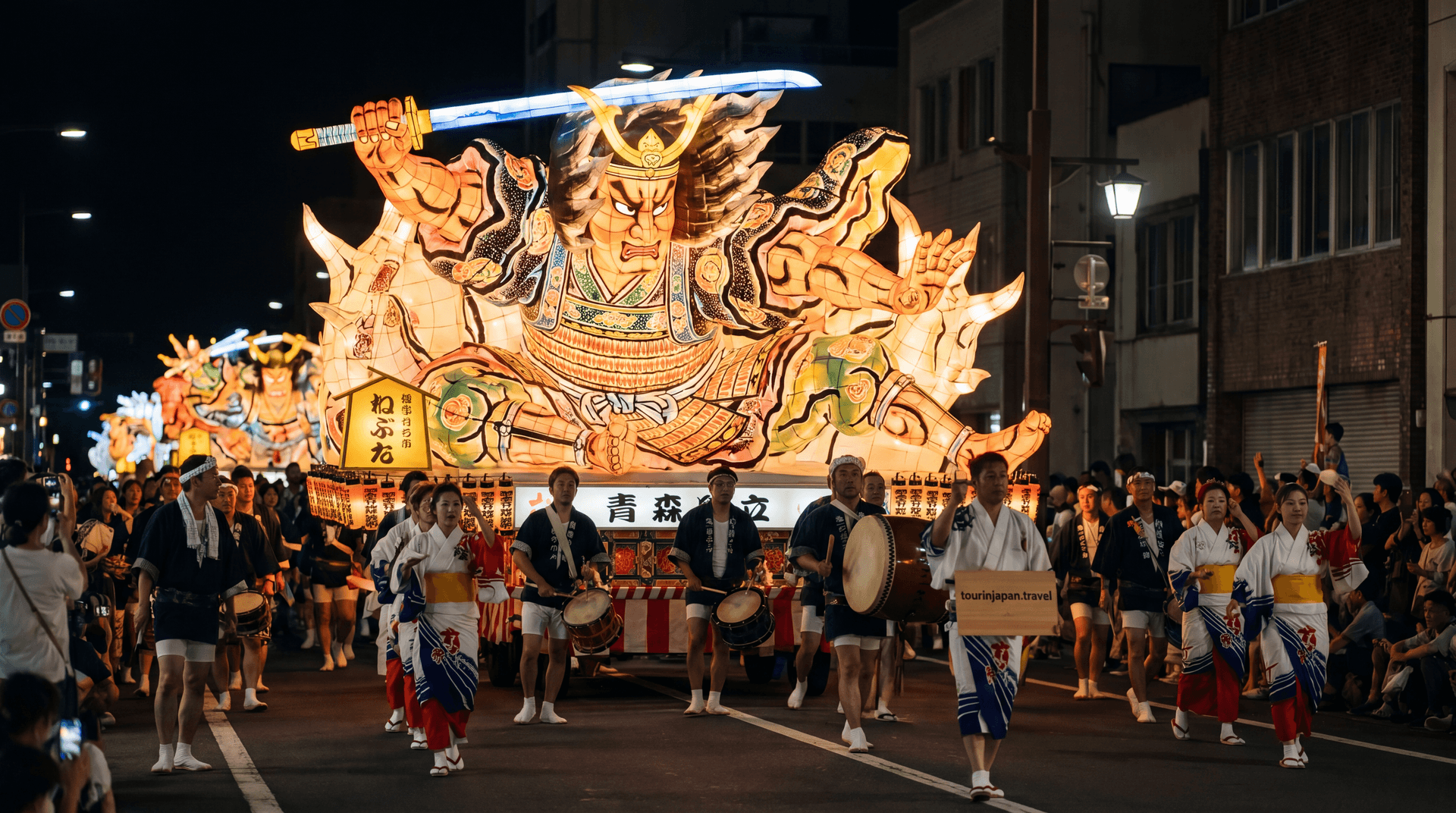
The Nebuta Matsuri (ねぶた祭り) is Aomori's legendary summer festival — one of Japan's most spectacular events. For five nights in early August, massive illuminated floats (nebuta) depicting warriors, kabuki actors, and mythological figures are paraded through the city streets while hundreds of dancers (haneto) leap and chant around them. It's an explosion of light, sound, and energy.
What is Nebuta?
| Feature | Details |
|---|---|
| What it is | Giant illuminated paper-mâché floats |
| Size | Up to 9 meters wide, 5 meters tall |
| Weight | Up to 4 tons |
| Lighting | 300–500 light bulbs inside each float |
| Number | 20–25 floats per night |
| Duration | 5 nights (August 2–6) |
The Name "Nebuta"
The word "nebuta" (ねぶた) likely comes from:
- Nemutai (眠たい) — "sleepy" (the festival wakes people up for harvest)
- Nebuta (寝仏) — "sleeping Buddha" (ritual purification)
- Nepputa (熱風) — "hot wind" (summer heat)
Festival Schedule
Main Nights (August 2–6)
| Night | Date | Theme | Notes |
|---|---|---|---|
| Night 1 | August 2 | Opening | First parade, most exciting |
| Night 2 | August 3 | Main night | Largest crowds |
| Night 3 | August 4 | Family night | Slightly less crowded |
| Night 4 | August 5 | Competition | Judging night |
| Night 5 | August 6 | Finale | Fireworks, last parade |
Daily Schedule
| Time | Event |
|---|---|
| 1:00 PM | Road closures begin |
| 1:30 PM | Yotaka (night hawk) parade — smaller floats |
| 5:00 PM | Main nebuta parade begins |
| 5:00–9:00 PM | Floats parade through city streets |
| 9:30 PM | Final float passes |
| 9:45 PM | Fireworks (August 6 only) |
How the Floats Are Made
Construction Process
| Step | Time | Details |
|---|---|---|
| Design | 1–2 months | Artist sketches the theme |
| Wire frame | 2–3 weeks | Metal wire skeleton built |
| Papering | 2–3 weeks | Washi paper applied |
| Painting | 2–3 weeks | Vibrant colors added |
| Lighting | 1 week | 300–500 bulbs installed |
| Testing | 1 day | Final illumination test |
Float Themes
Each float depicts a scene from:
- Japanese mythology — gods, demons, heroes
- Kabuki theater — dramatic poses, colorful costumes
- Historical figures — samurai, warriors
- Fantasy — dragons, sea creatures
- Modern themes — anime characters, pop culture
How to Experience Nebuta
1. Watch the Parade (Free)
The parade is free to watch from the streets. Just show up and find a spot.
Best viewing spots:
- Omachi Street — Wide street, good views
- Aomori Station area — Central, accessible
- Kanchogai Avenue — Narrow street, intimate atmosphere
- Municipal Stadium — End point, less crowded
2. Dance as Haneto (¥500–¥1,000)
Join the dancers! Rent a haneto costume and dance alongside the floats.
How to join:
- Rent costume — Available at tourist info centers
- Learn the dance — Simple steps, easy to follow
- Join a group — Follow a float and dance
- Chant "Rassera, rassera!" — The festival chant
Costume includes:
- Happi coat (半被) — Festival jacket
- Headband (鉢巻) — White headband
- Straw sandals (草鞋) — Traditional footwear
- Towel — For sweating
3. Ride a Float (Limited)
Some floats allow visitors to ride. Ask at the festival information center.
4. See Floats Up Close (Free)
Visit the float exhibition area to see nebuta up close before the parade.
Viewing Tips
Best Spots
| Spot | Pros | Cons |
|---|---|---|
| Omachi Street | Wide, good views | Crowded |
| Kanchogai Avenue | Narrow, intimate | Very crowded |
| Aomori Station | Accessible | Crowded |
| Back streets | Less crowded | Smaller floats |
| Roof top bars | Great views | Expensive |
Timing
- Arrive early (3–4 PM) — Get a good spot
- Stay late — Best atmosphere after dark
- August 6 — Fireworks at the end
- Weekdays — Slightly less crowded than weekends
What to Bring
- Camera — Obviously
- Cash — For food stalls and drinks
- Portable chair — Optional but comfortable
- Water — Stay hydrated
- Fan — It's hot and humid
- Rain gear — Just in case
Food at the Festival
Festival Stalls (屋台 / Yatai)
| Food | Description | Price |
|---|---|---|
| Aomori apple products | Apple pie, candy, juice | ¥300–¥500 |
| Yakitori | Grilled chicken skewers | ¥200–¥400 |
| Takoyaki | Octopus balls | ¥400–¥600 |
| Kakigōri | Shaved ice | ¥300–¥500 |
| Beer | Cold draft beer | ¥500–¥700 |
| Nebuta beer | Festival exclusive | ¥600–¥800 |
Accommodation
Book early! Aomori fills up completely during Nebuta.
| Type | Price | Availability |
|---|---|---|
| Hotels | ¥15,000–¥30,000 | Book 6+ months ahead |
| Ryokan | ¥10,000–¥25,000 | Book 3+ months ahead |
| Hostels | ¥3,000–¥6,000 | Book 2+ months ahead |
| Capsule hotels | ¥3,000–¥5,000 | Book 1+ months ahead |
Alternative: Stay in Hirosaki (30 min by train) — easier to find rooms.
Getting There
| Transport | Route | Time | Cost |
|---|---|---|---|
| Shinkansen | Tokyo → Aomori | 3h 10min | ¥17,000 |
| Plane | Tokyo → Aomori | 1h 15min | ¥20,000 |
| Night bus | Tokyo → Aomori | 9h | ¥5,000–¥8,000 |
| Car | Tokyo → Aomori | 6h | ¥10,000+ tolls |
Budget Summary
| Category | Budget | Mid-range | Premium |
|---|---|---|---|
| Transport | ¥5,000 (bus) | ¥17,000 (shinkansen) | ¥25,000 (flight) |
| Accommodation | ¥4,000 (hostel) | ¥15,000 (hotel) | ¥30,000 (ryokan) |
| Food | ¥2,000 | ¥4,000 | ¥8,000 |
| Haneto costume | ¥500 | ¥1,000 | ¥1,500 |
| Total/day | ¥11,500 | ¥37,000 | ¥64,500 |
Tips for First-Timers
- Book accommodation immediately — it fills up months ahead
- Arrive early for viewing — good spots fill by 4 PM
- Try being a haneto — it's the most fun way to experience it
- Stay for the fireworks — August 6 finale is spectacular
- Eat festival food — yatai stalls are part of the experience
- Bring cash — many stalls don't take cards
- Wear comfortable shoes — you'll be standing and walking
- Combine with Hirosaki — beautiful castle town nearby
Japanese Phrases
| Japanese | Pronunciation | Meaning |
|---|---|---|
| ねぶた祭りを見に来ました | Nebuta matsuri wo mi ni kimashita | "I came to see the Nebuta festival" |
| はんと踊りたいです | Hanto odoritai desu | "I want to dance as haneto" |
| らっせら、らっせら! | Rassera, rassera! | Festival chant |
| このfloatはなんですか? | Kono furōto wa nan desu ka? | "What is this float?" |
| ごちそうさまでした | Gochisōsama deshita | "Thank you for the meal" |
Related Articles
Stay Connected in Japan
Yesim eSIMs work on arrival — no physical SIM needed. Japan data plans from $5.