
Naoshima Art Island: Yayoi Kusama, Tadao Ando, and Contemporary Japan
By Tour in Japan editors · Updated
Naoshima transformed from a declining industrial island into Japan's premier contemporary art destination, with Tadao Ando-designed museums and Yayoi Kusama's polka-dot pumpkins on the beach.
Naoshima is one of modern Japan's great success stories: a small, aging island in the Seto Inland Sea that was slowly depopulating until the Benesse Corporation began transforming it into a world-class contemporary art destination in the 1990s. The Naoshima art island experience is now built around a remarkable collaboration between art, architecture, and landscape—specifically the vision of architect Tadao Ando, whose concrete museums seem to grow organically from the hillside terrain, and artists like Yayoi Kusama, James Turrell, and Walter De Maria whose permanent installations blur the line between art object and living space. Today, Naoshima draws over 600,000 visitors a year to a 14-square-kilometer island with a permanent population of just 3,000. The result is an unlikely pilgrimage site that feels unlike any other cultural destination in the world.
Benesse House and the Art House Project
Benesse House, Tadao Ando's masterpiece building where museum and hotel occupy the same Ando-designed structure, anchors the southern Honmura area. Permanent installations here include Bruce Nauman's light corridors, Jasper Johns sculpture, and rooms by Richard Long. The hotel rooms contain original artworks—sleeping inside an installation is an experience worth the premium price (from 30,000 yen per person including meals and museum access).
The Art House Project in the historic Honmura village has converted seven old houses and a shrine into permanent art installations. Minamidera by Tadao Ando and James Turrell requires visitors to stand in complete darkness while their eyes adjust to an almost-invisible light work—an experience that is genuinely disorienting and unforgettable. Go-o Shrine by Hiroshi Sugimoto wraps an ancient wooden shrine in a glass staircase that descends underground.
Chichu Art Museum and Lee Ufan Museum
Chichu Art Museum, entirely underground except for skylights that Ando designed to let natural light fall on the artworks, houses just five works by three artists: Claude Monet's enormous Water Lilies, James Turrell's Open Sky (a room open to the sky above), and Walter De Maria's Time/Timeless/No Time, a massive sphere hovering in a shaft of light. Entry costs 2,100 yen and reservations are recommended. The museum is closed on Mondays.
The Lee Ufan Museum, also by Ando, is dedicated to the Korean-born minimalist sculptor whose stone and steel works dialogue with the concrete architecture and landscape. Less visited than Chichu, it offers a meditative counterpoint. Entry 1,050 yen. Together with Benesse House, these three museums form a circuit that most visitors complete in a full day.
Yayoi Kusama's Pumpkins and Practical Tips
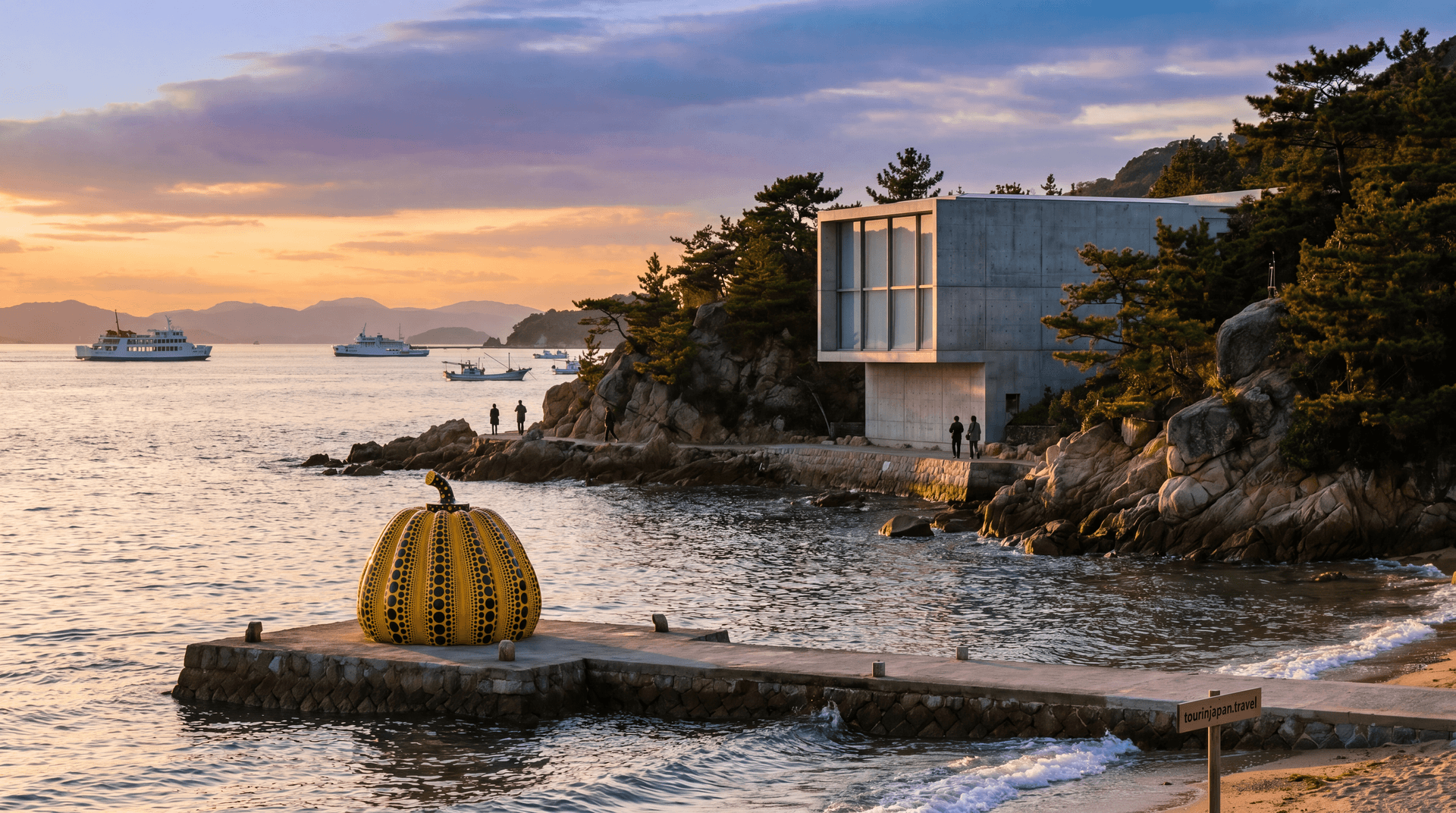
Kusama's polka-dotted pumpkin sculpture on the Benesse House pier has become the iconic image of Naoshima—the yellow pumpkin with black dots sitting on a wooden jetty overlooking the Seto Sea. The original was swept away by a typhoon in 2021 and replaced with a new version in 2022. It is free to view from the outside. Kusama's red pumpkin at Miyanoura port, larger and more accessible, is the first artwork visitors encounter when arriving by ferry.
- Getting there: ferry from Uno Port (35 min, 240 yen) or from Takamatsu (50 min, 1,220 yen)
- Getting around: rent a bicycle at Miyanoura port (1,000-3,000 yen/day) or use the island shuttle bus
- Museum pass: Chichu + Lee Ufan + Benesse combined tickets save money; book Chichu online in advance
- Most museums closed Monday; Art House Project houses have varying closing days—check the Naoshima website
- Stay overnight: island transforms after day-trippers leave; evening walk past illuminated installations is magical
- Budget accommodation: Naoshima no Yado guesthouse from 7,000 yen/night; camp at Tsutsuji-so from 2,000 yen
- Combine with Teshima: neighboring island with Teshima Art Museum and rice terrace landscapes
- Setouchi Triennale: international art festival held every three years (next edition 2025); island at its busiest
One night on Naoshima is the minimum to appreciate the island properly—morning museum visits, afternoon Art House exploration, and an evening watching the light change over the Seto Inland Sea. Day trips from Okayama or Takamatsu are feasible but rushed. The island pairs naturally with Teshima and Inujima for a two or three-day Setouchi art island circuit.
Stay Connected in Japan
Yesim eSIMs work on arrival — no physical SIM needed. Japan data plans from $5.