
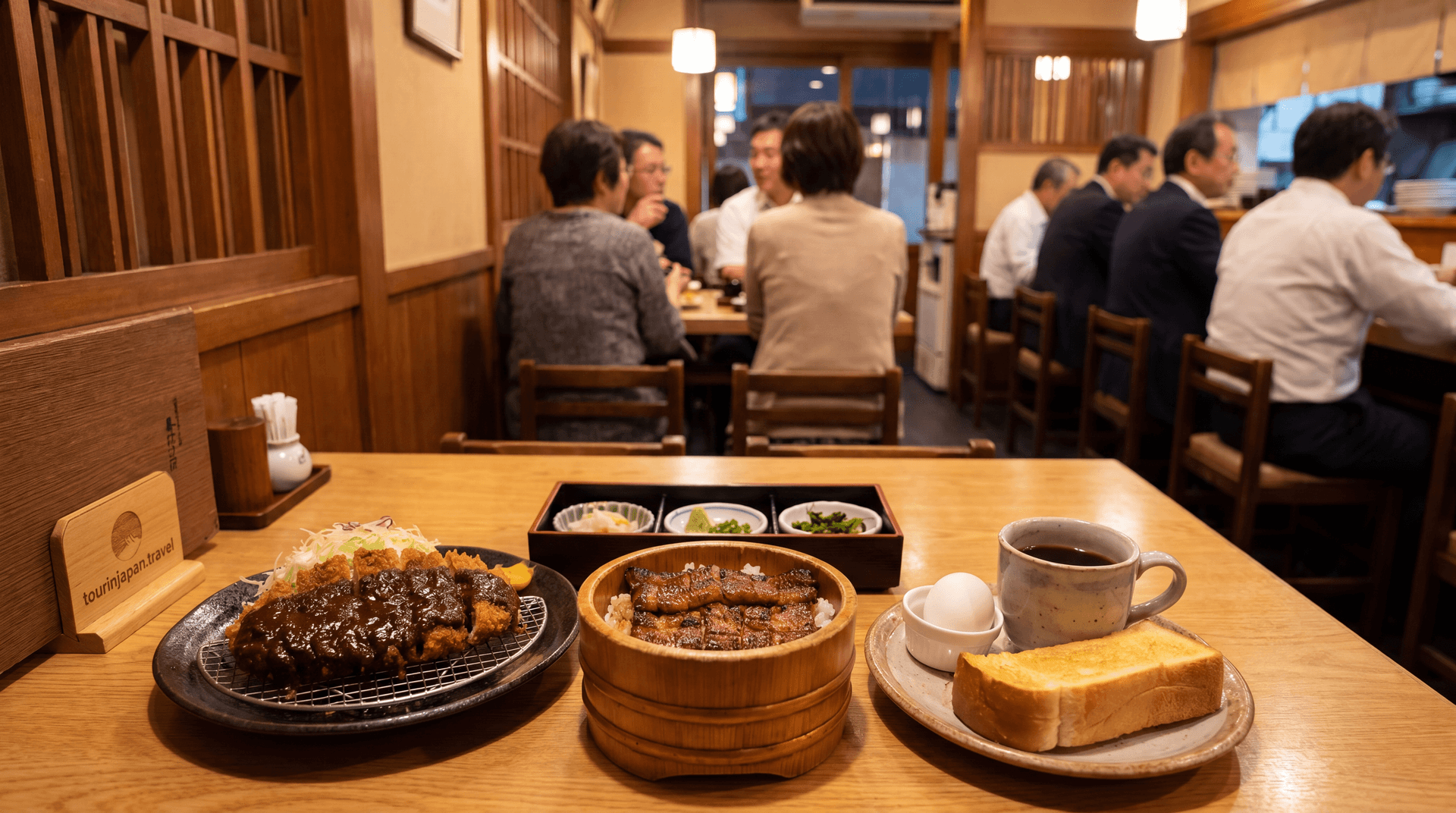
Nagoya Food Guide: Miso Katsu, Hitsumabushi, and Morning Sets
By Tour in Japan editors · Updated
Nagoya (名古屋) is Japan's most underrated food city. While Tokyo, Osaka, and Kyoto get all the attention, Nagoya has developed a completely unique food culture — centered around rich red miso (味噌 / miso), grilled eel (うなぎ / unagi), and distinctive "morning sets" that you won't find anywhere else. This is food that Nagoyans are fiercely proud of.
What Makes Nagoya Food Unique
| Factor | Impact |
|---|---|
| Red miso (赤味噌) | Rich, fermented soybean paste unique to region |
| Unagi tradition | Nagoya-style grilled eel since Edo period |
| Morning culture | Unique breakfast set menus |
| Merchant heritage | Hearty, filling food for workers |
| Local pride | Nagoyans love sharing their food with visitors |
Essential Nagoya Foods
1. Miso Katsu (味噌カツ)
Nagoya's most iconic dish
| Feature | Details |
|---|---|
| What it is | Tonkatsu (pork cutlet) with red miso sauce |
| Sauce | Thick, sweet red miso glaze |
| Price | ¥1,000–¥1,800 |
| Where | Yabaton, Atsuta Hōraiken, Misen |
How it differs from regular tonkatsu: The sauce is made with Nagoya's signature red miso — darker, richer, and more complex than regular tonkatsu sauce. It's a completely different experience.
Best shops:
- Yabaton (矢場とん) — Since 1947, multiple locations
- Atsuta Hōraiken (熱田蓬莱軒) — Originator, since 1907
- Misen (味園) — Budget-friendly, near station
2. Hitsumabushi (ひつまぶし)
Nagoya's grilled eel masterpiece
| Feature | Details |
|---|---|
| What it is | Grilled eel (unagi) over rice in three styles |
| Serving | Lacquered box with rice and eel |
| Price | ¥2,500–¥4,500 |
| Where | Atsuta Hōraiken, Shinsuke, Yamanaka |
How to eat hitsumabushi (three ways):
- First: Eat as-is — grilled eel with rice
- Second: Add condiments (wasabi, nori, green onion)
- Third: Pour dashi broth over it (ochazuke style)
This three-stage eating is what makes hitsumabushi special — each way reveals different flavors.
Best shops:
- Atsuta Hōraiken (熱田蓬莱軒) — Since 1907, the original
- Shinsuke (しんすけ) — Popular with locals
- Yamanaka (やまなか) — Excellent quality
- Obata (尾張鰻) — Budget-friendly option
3. Nagoya Meshi (名古屋めし)
The concept of "Nagoya food"
Nagoya Meshi refers to the city's collection of unique local dishes:
| Dish | Description | Price |
|---|---|---|
| Miso katsu | Pork cutlet with red miso | ¥1,000 |
| Hitsumabushi | Grilled eel, three ways | ¥2,500 |
| Miso nikomi udon | Udon in red miso broth | ¥900 |
| Kishimen | Flat noodles in dashi broth | ¥800 |
| Tebochi | Chicken wings, grilled | ¥500 |
| Ogura toast | Red bean paste on toast | ¥300 |
| Morning set | Breakfast combo | ¥500–¥1,000 |
4. Miso Nikomi Udon (味噌煮込みうどん)
Nagoya's comfort food
| Feature | Details |
|---|---|
| What it is | Thick udon noodles simmered in red miso |
| Noodles | Extra thick, chewy |
| Toppings | Egg, green onion, kamaboko |
| Price | ¥800–¥1,200 |
| Where | Yamamotoya, Hayashi |
5. Kishimen (きしめん)
Flat noodle soup
| Feature | Details |
|---|---|
| What it is | Flat, wide noodles in dashi broth |
| Texture | Thin, slippery, delicate |
| Price | ¥700–¥1,000 |
| Where | Station platforms, restaurants |
Famous as a train station food — you can buy it at JR Nagoya Station.
6. Morning Sets (モーニングセット)
Nagoya's unique breakfast culture
| Feature | Details |
|---|---|
| What it is | Free breakfast with coffee order |
| Includes | Toast, egg, salad, sometimes more |
| Price | Free with coffee (¥300–¥500) |
| Where | Kissaten (traditional cafés) |
How it works: Order a coffee and get a free breakfast set. It's a Nagoya tradition dating back to the 1950s.
Best kissaten for morning sets:
- Charm (チャーム) — Since 1948, thick toast
- Komeda Coffee (コメダ珈琲店) — Chain, consistent quality
- Dynamic (ダイナミック) — Large portions
- Café Laboratory — Modern take on tradition
7. Tebasaki (手羽先)
Nagoya-style chicken wings
| Feature | Details |
|---|---|
| What it is | Deep-fried chicken wings, sweet-savory |
| Sauce | Soy sauce + honey glaze |
| Price | ¥400–¥800 |
| Where | Sekai no Yamachan, Furaibo |
Best chains:
- Sekai no Yamachan (世界の山ちゃん) — The most famous
- Furaibo (風来坊) — Slightly different recipe
Best Restaurants
Nagoya Station Area
| Restaurant | Type | Specialty | Price |
|---|---|---|---|
| Atsuta Hōraiken | Eel | Hitsumabushi | ¥3,000 |
| Yamamotoya | Udon | Miso nikomi udon | ¥900 |
| Kishimen stall | Noodles | Flat noodle soup | ¥800 |
| Komeda Coffee | Kissaten | Morning set | ¥500 |
Sakae Area
| Restaurant | Type | Specialty | Price |
|---|---|---|---|
| Yabaton | Tonkatsu | Miso katsu | ¥1,200 |
| Sekai no Yamachan | Chicken | Tebasaki | ¥600 |
| Charm | Kissaten | Morning set | ¥500 |
| Misen | Tonkatsu | Budget miso katsu | ¥900 |
Atsuta Area
| Restaurant | Type | Specialty | Price |
|---|---|---|---|
| Atsuta Hōraiken | Eel | Original hitsumabushi | ¥3,500 |
| Atsuta Shrine | Street food | Various | ¥500 |
How to Eat Hitsumabushi
Step-by-Step Guide
Step 1: Eat As-Is (前半 / Zenhan)
- Take a small portion of rice and eel
- Eat it plain to appreciate the grilling flavor
- Notice the smoky, sweet glaze
Step 2: Add Condiments (中盤 / Chūban)
- Add wasabi, nori (seaweed), and green onion
- Mix slightly
- The condiments add freshness and complexity
Step 3: Ochazuke (後半 / Kōhan)
- Pour dashi broth over the remaining rice and eel
- The broth creates a rice soup (ochazuke)
- This is the most comforting way to finish
Pro tip: Don't pour all the broth at once — add a little at a time until you find the right balance.
Budget Guide
| Category | Budget | Mid-range | Luxury |
|---|---|---|---|
| Miso katsu | ¥900 | ¥1,500 | ¥2,000 |
| Hitsumabushi | ¥2,500 | ¥3,500 | ¥5,000 |
| Morning set | ¥300 (free with coffee) | ¥500 | ¥1,000 |
| Tebasaki | ¥400 | ¥600 | ¥1,000 |
| Miso nikomi udon | ¥800 | ¥1,000 | ¥1,500 |
Tips for First-Timers
- Try hitsumabushi — it's Nagoya's most unique dish
- Order a morning set — it's free with coffee at kissaten
- Eat tebasaki — chicken wings are addictive
- Try miso nikomi udon — comfort food at its best
- Visit Atsuta Shrine — combine with food pilgrimage
- Buy kishimen at the station — train station specialty
- Don't skip the morning — Nagoya's breakfast culture is unique
- Try red miso everything — it's the flavor of Nagoya
Japanese Phrases
| Japanese | Pronunciation | Meaning |
|---|---|---|
| ひつまぶしをお願いします | Hitsumabushi wo onegai shimasu | "Hitsumabushi, please" |
| 味噌カツお願いします | Miso katsu onegai shimasu | "Miso katsu, please" |
| モーニングセットはありますか? | Mōningu setto wa arimasu ka? | "Do you have morning sets?" |
| おすすめは何ですか? | Osusume wa nan desu ka? | "What do you recommend?" |
| ごちそうさまでした | Gochisōsama deshita | "Thank you for the meal" |
Related Articles
Stay Connected in Japan
Yesim eSIMs work on arrival — no physical SIM needed. Japan data plans from $5.