
Mount Fuji Photography: Best Viewpoints, Times of Day, and Gear
By Tour in Japan editors · Updated
Mount Fuji is Japan's most photographed natural landmark. Here are the best viewpoints, optimal times of day, weather conditions, and gear for stunning Fuji shots.
Mount Fuji photography is one of the great challenges and rewards of shooting in Japan. The mountain appears deceptively simple — a near-perfect cone visible from enormous distances — but capturing a truly great Fuji image requires understanding weather patterns, seasonal conditions, time of day, and foreground composition. This Mount Fuji photography guide covers the best viewpoints around the mountain, the optimal conditions for clear views, seasonal variations, and the gear that makes the difference.
Best Viewpoints for Mount Fuji Photography
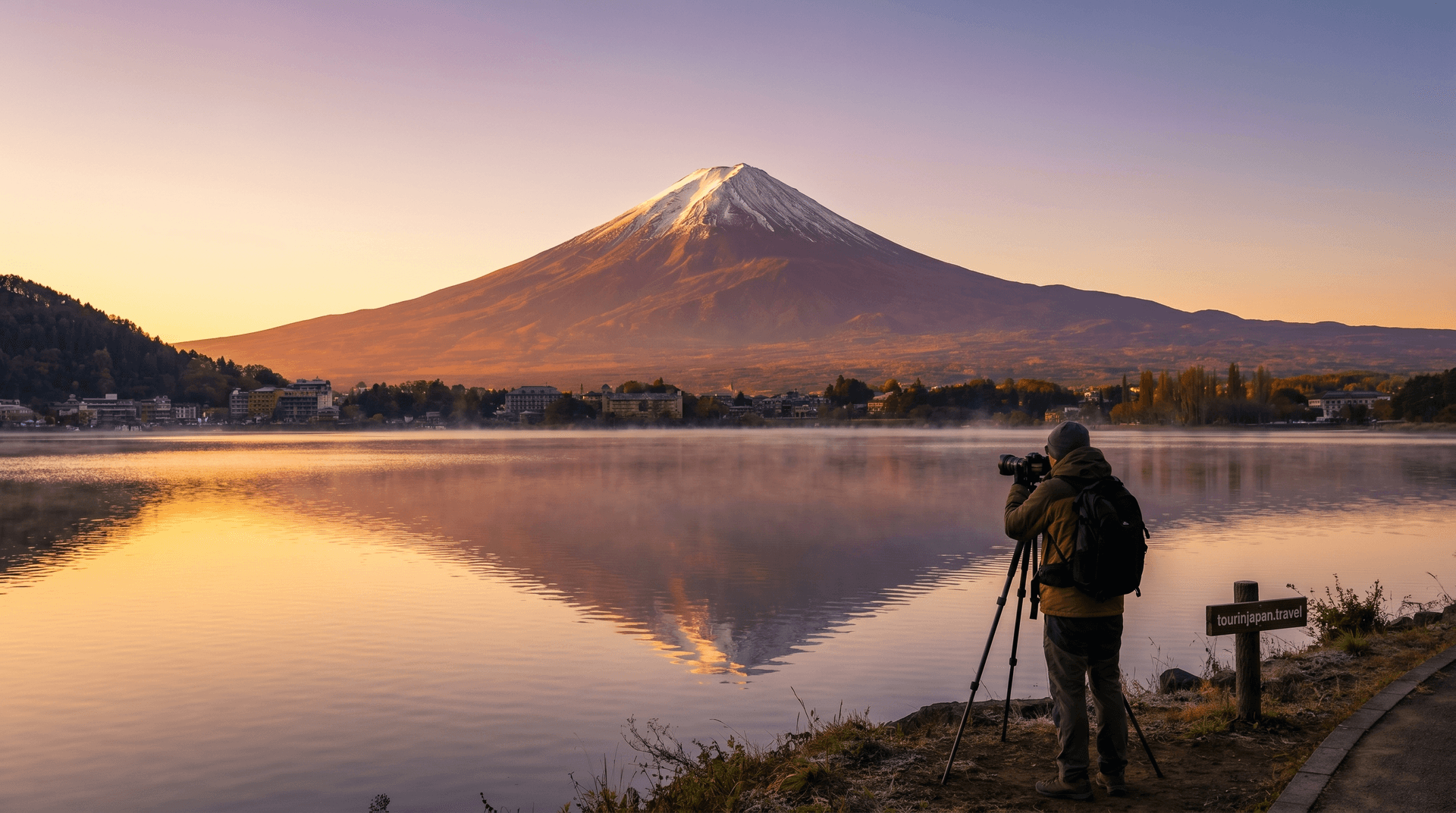
Lake Kawaguchi (Kawaguchiko) is the classic Fuji viewpoint, accessible 90 minutes from Tokyo by Fuji Tozan bus or express train. The northern shore of the lake gives the best reflected-Fuji shots — a perfectly still morning can produce a mirror reflection of the mountain in the lake's surface. Autumn brings red maples framing the reflection; winter gives the clearest air and snow-capped summit.
Chureito Pagoda at Arakura Sengen Shrine is perhaps the single most sought-after Fuji composition: a five-story red pagoda in the foreground with Fuji rising behind it. The pagoda requires climbing 398 steps from the base — arrive before dawn to be at the top for sunrise. Cherry blossom season (late March to early April) around the pagoda and shrine creates Japan's most iconic spring image.
When Fuji is Visible: Weather and Seasons
Mount Fuji is only clearly visible on approximately 100 days per year from Tokyo, and visibility varies at all viewpoints. The clearest conditions occur in winter (December to February) when cold, dry air reduces haze and the mountain is fully snow-capped. Summer is the worst time for clear views from a distance — July and August have high humidity and haze that obscures the mountain even on sunny days, though the climbing season peaks then.
The best time of day for Fuji photography is the first 60-90 minutes after sunrise. As the morning progresses, heat haze increases and contrast between the mountain and sky softens. Evening light from the west can produce golden hour Fuji shots, but the mountain is typically in silhouette. Days before a weather front passes can produce Fuji views of exceptional drama, with cloud bands layering around the summit.
Top Mount Fuji Photography Locations and Gear Tips
- Lake Kawaguchi north shore — lake reflections, best in still morning air before 7am
- Chureito Pagoda — 398-step climb, dawn arrival for sunrise behind the mountain, cherry blossoms in April
- Oshino Hakkai springs — traditional thatched farmhouses with Fuji backdrop in the Fuji Five Lakes region
- Shinkansen window — Tokyo-Osaka route passes near Fuji; right side seats heading west around Shizuoka station
- Hakone Owakudani valley — Fuji framed by volcanic steam vents, dramatic even in cloudy conditions
- Gear: telephoto lens (200-400mm) compresses distance and emphasizes Fuji's scale; polarizing filter for blue sky contrast
- Winter tip: Fuji is clearest December-February from Tokyo — on clear winter days visible from Shinjuku rooftop decks
- App Fujisan Live Camera shows real-time visibility — check before traveling 90 minutes from Tokyo
Patience is the essential ingredient for great Fuji photography. Many photographers visit Lake Kawaguchi for three or four mornings before getting the combination of clear sky, still water, and ideal light that makes the definitive image. Staying in the Fuji Five Lakes area rather than day-tripping from Tokyo gives you multiple dawn shooting opportunities and dramatically improves your odds. The mountain's elusiveness — hidden 80% of the time — makes those rare perfect-clarity mornings feel like a genuine gift, and images taken under those conditions have an emotional weight that a technically perfect but routine photograph never quite achieves.
Stay Connected in Japan
Yesim eSIMs work on arrival — no physical SIM needed. Japan data plans from $5.