
Mie Prefecture and Ise Grand Shrine: Japan's Most Important Pilgrimage
By Tour in Japan editors · Updated
Ise Grand Shrine is the spiritual home of the Japanese imperial family and the country's holiest site. Here is how to visit with the reverence it deserves.
Ise Grand Shrine is the most sacred site in the Shinto religion and the spiritual heart of Japan. The Mie Prefecture and Ise Grand Shrine pilgrimage route has been traveled by Japanese people for over a thousand years, and during the Edo period it is estimated that six million people per year made the journey. The shrine complex is unique in Japanese architecture: rebuilt completely from scratch every twenty years using ancient carpentry techniques, the current buildings were last renewed in 2013 and will be rebuilt again in 2033. The materials are always the same hinoki cypress, hand-cut with tools unchanged since antiquity. What you see is simultaneously new and two thousand years old.
Naiku: The Inner Shrine
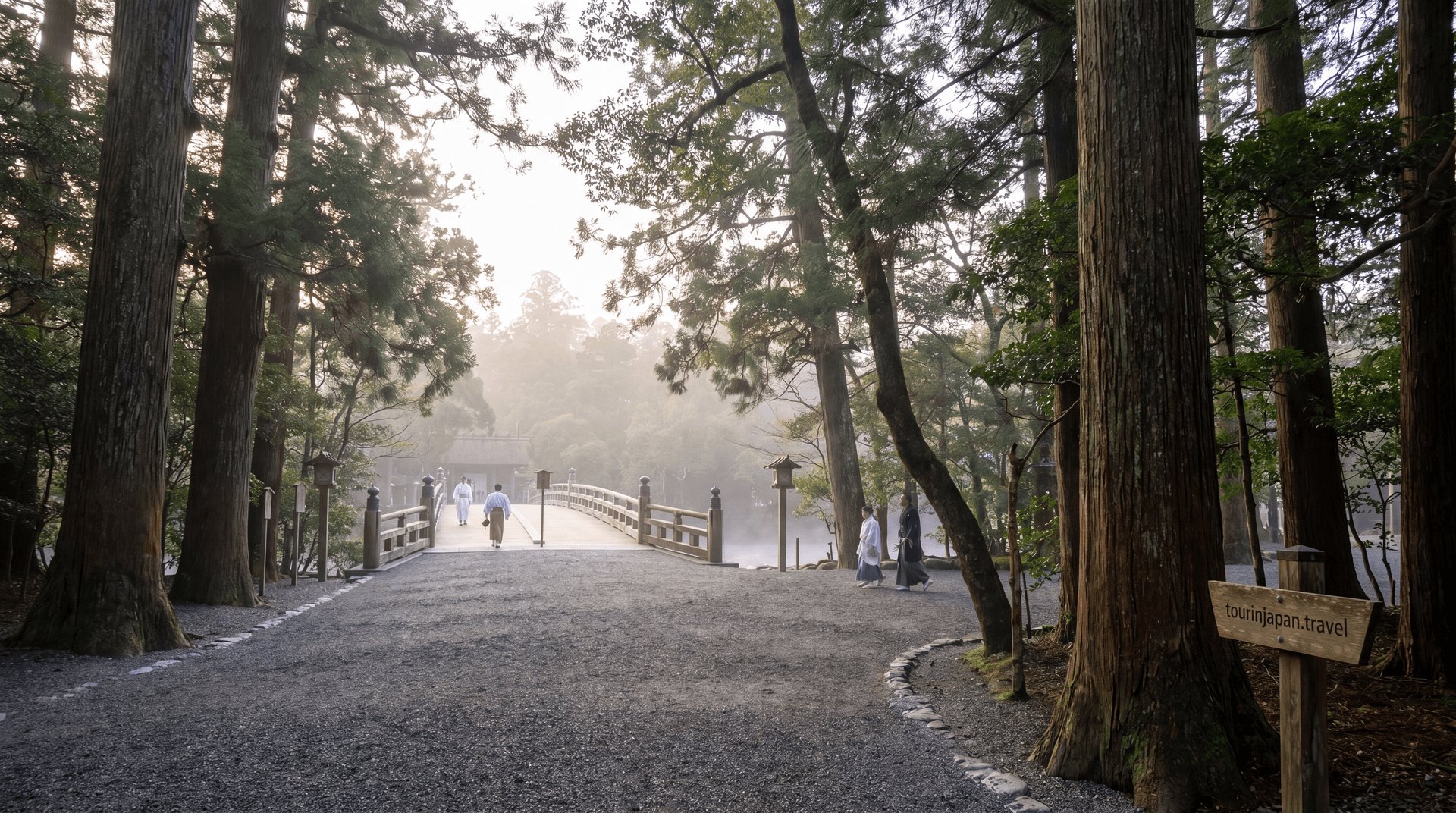
Naiku, the Inner Shrine, is dedicated to Amaterasu Omikami, the sun goddess and ancestor of the imperial family. The main sanctuary is off limits to all but the imperial family and senior priests. Visitors approach across a wooden bridge over the Isuzu River, walk a forested path of towering cedar trees, and reach a plain wooden gate where the inner precinct begins. The atmosphere is one of profound quiet even on busy days. There are no images of deities, no incense, no elaborate carvings. The sacred presence is conveyed through the quality of the silence and the age of the trees.
Arrive by 7:00 AM if possible. The shrine opens at sunrise and the first hour has a quality of light and stillness unreachable at other times. By 10:00 AM on weekends, the approach fills with tour groups. Entry is free. Photography is restricted near the inner sanctuary.
Geku and Okage Yokocho
Geku, the Outer Shrine, should be visited before Naiku according to traditional pilgrimage custom. Dedicated to Toyouke Omikami, the deity of food and agriculture, it sits in central Ise city and is accessed on foot from Ise-shi Station. The walk between Geku and Naiku is about six kilometers, historically done on foot, now served by bus. Okage Yokocho, the restored pilgrims' town beside Naiku's approach, is now a street of craft shops and food vendors serving Ise lobster, akafuku mochi rice cakes, and the local specialty beef skewers.
Mie's Other Wonders: Ago Bay and Ama Divers
Mie Prefecture extends south of Ise into the Shima Peninsula, where Ago Bay produces most of Japan's cultured pearls. Mikimoto Pearl Island near Toba (1,650 yen) tells the story of Mikimoto Kokichi, who invented cultured pearls in 1893, and includes demonstrations by ama divers, women free-divers who have harvested shellfish and seafood from these waters for over 2,000 years. The ama tradition is alive and actively practiced: you can visit ama huts (amagoya) where the women warm themselves after dives and sometimes cook their catch.
- Ise Grand Shrine (Naiku and Geku): free entry, open sunrise to sunset, visit Geku first then Naiku
- Okage Yokocho: open 9:30 AM to 5:30 PM, akafuku mochi 200 yen, excellent Ise lobster at Hachiya restaurant
- Mikimoto Pearl Island: 1,650 yen, ama diver demonstrations at 10 AM, 11 AM, 1 PM, 2 PM
- Ise lobster (Ise ebi): best October to April when in season, set meals from 8,000 yen at ryokan
- Futami Okitama Shrine: the Meoto Iwa (wedded rocks) joined by a sacred rope, sunrise visits best
- Access from Osaka: Kintetsu Limited Express direct to Ise-shi in 1 hour 30 minutes, 3,680 yen
- Accommodation tip: stay in Ise city for shrine access, or Shima for Ago Bay; avoid staying near Naiku where prices are highest
One long day from Osaka covers Geku and Naiku plus Okage Yokocho, but two nights lets you see everything properly including a morning arrival at Naiku before dawn. The Kintetsu Railway connects Osaka Namba to Ise-shi directly with no transfer; the JR pass covers the route via Taki on the Kisei Line. A car is useful for the Shima Peninsula attractions, which bus services reach infrequently.
Stay Connected in Japan
Yesim eSIMs work on arrival — no physical SIM needed. Japan data plans from $5.