
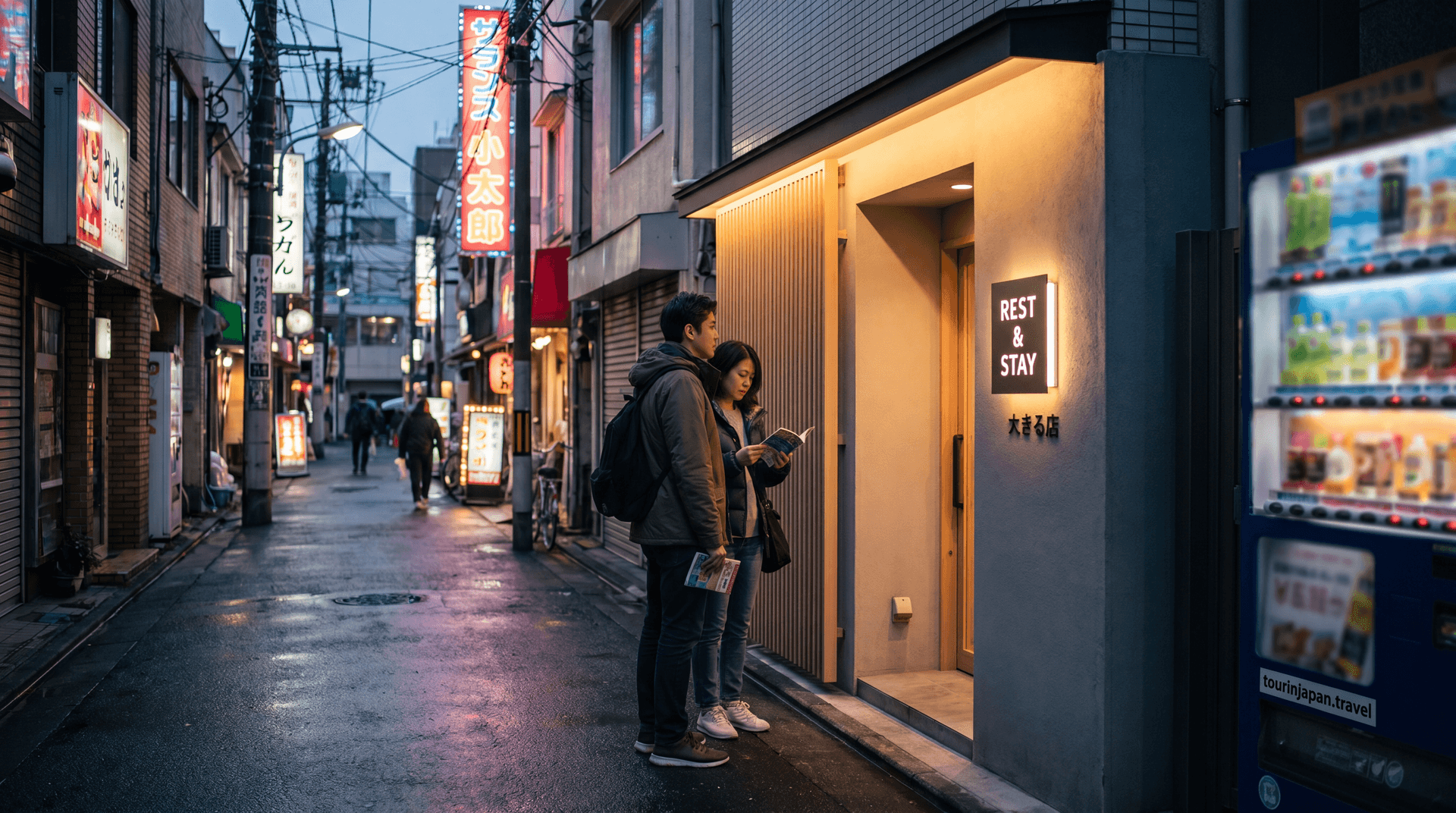
Love Hotels in Japan: What They Are, How They Work
By Tour in Japan editors · Updated
Love hotels are a uniquely Japanese phenomenon — hourly-rate hotels for couples. Here's what you need to know.
Love hotels are a uniquely Japanese phenomenon — hourly-rate hotels for couples. Here's what you need to know.
What Are Love Hotels?
Love hotels (ラブホテル) are hotels designed for short stays — typically 1–3 hours. They're legal, clean, and surprisingly common in Japan.
What to Expect
| Feature | Details |
|---|---|
| Privacy | No face-to-face check-in |
| Discretion | Anonymous entry/exit |
| Rooms | Themed, well-maintained |
| Amenities | TV, bath, sometimes karaoke |
| Hours | 24/7 |
Types of Visits
| Type | Duration | Price |
|---|---|---|
| Rest (休憩) | 1–3 hours | ¥3,000–8,000 |
| Stay (宿泊) | Overnight | ¥8,000–20,000 |
How to Use
Step 1: Find a Love Hotel
- Look for neon signs — heart symbols, "L" or "Love"
- Use apps — "Love Hotel" apps show nearby options
- Ask locals — they're everywhere
Step 2: Choose a Room
- Display boards — show available rooms and prices
- Select room — press the button or tell staff
- Pay — at the machine or desk
Step 3: Enjoy
- Room features — themed decor, bath, TV
- Privacy — no interruptions
- Check out — leave when ready
Price Guide
| Time | Price Range |
|---|---|
| 1 hour rest | ¥3,000–5,000 |
| 2 hour rest | ¥4,000–7,000 |
| 3 hour rest | ¥5,000–8,000 |
| Overnight stay | ¥8,000–20,000 |
| Premium room | ¥10,000–30,000 |
What's in the Room
| Feature | Standard | Premium |
|---|---|---|
| Bed | ✅ | ✅ (king size) |
| Bath | ✅ | ✅ (jacuzzi) |
| TV | ✅ | ✅ (adult content) |
| Karaoke | ❌ | ✅ |
| Massage chair | ❌ | ✅ |
| Themed decor | Basic | Elaborate |
Etiquette
| Rule | Details |
|---|---|
| No drugs | Absolutely prohibited |
| No filming | Without consent |
| Be quiet | Walls can be thin |
| Clean up | Don't leave a mess |
| Pay on time | Extra time costs extra |
Are They Safe?
- Yes — love hotels are clean and well-maintained
- Privacy — anonymous check-in
- Security — cameras in hallways (not rooms)
- Regular cleaning — rooms cleaned between guests
Tips
- Check prices — before entering
- Look for deals — overnight is often better value
- Try themed rooms — unique experience
- Use for rest — not just couples
- Be respectful — follow house rules
- Enjoy the privacy — that's what they're for
- Check reviews — some are better than others
- Have fun — it's a unique Japanese experience
📱Get a Japan eSIM
Stay Connected in Japan
Yesim eSIMs work on arrival — no physical SIM needed. Japan data plans from $5.