
Kusatsu Onsen Guide: Japan's #1 Hot Spring Town
By Tour in Japan editors · Updated
Kusatsu Onsen tops every list of Japan's best hot springs. This complete guide covers the yubatake, bathing etiquette, ryokan picks, and how to get there.
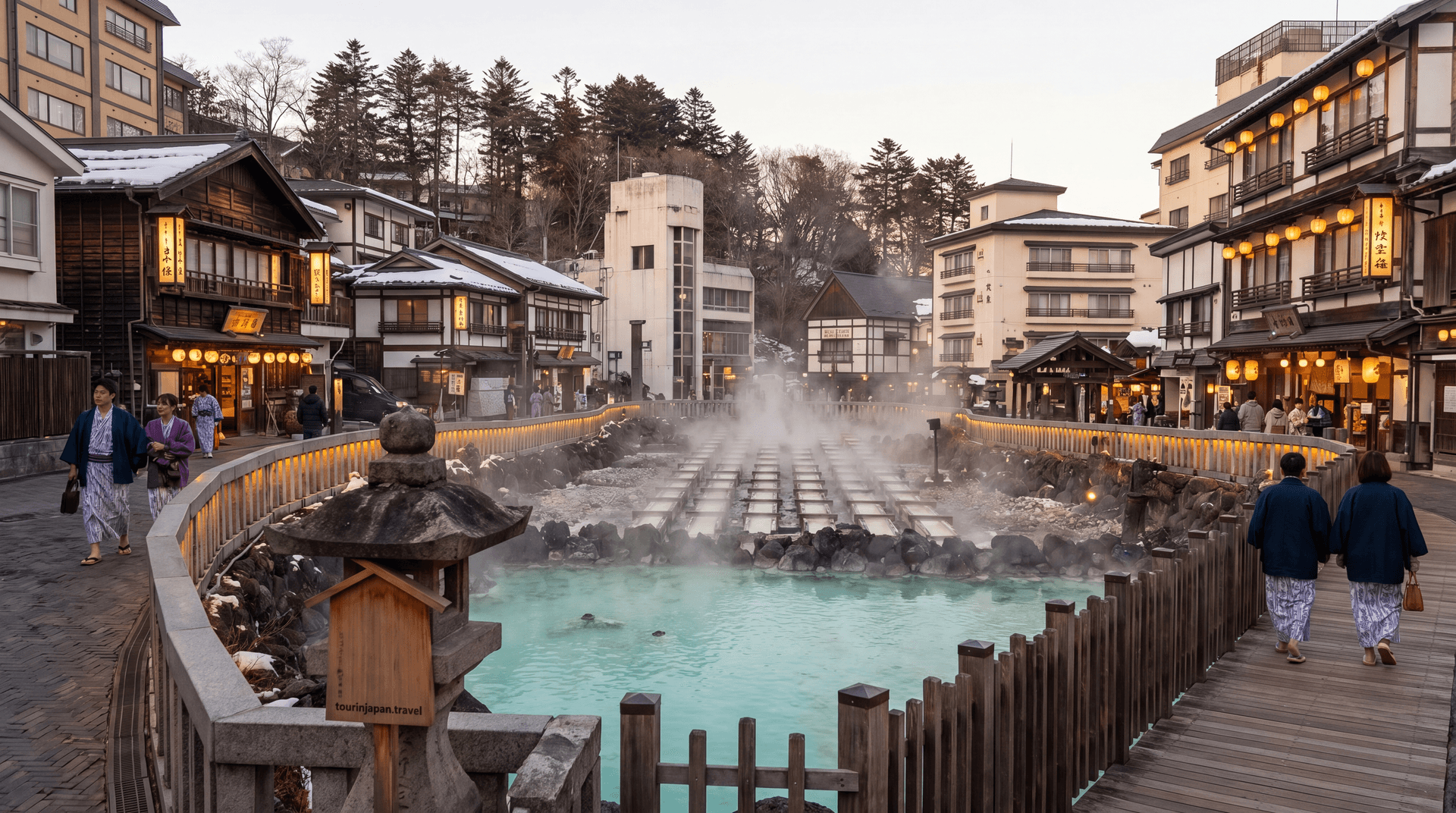
Kusatsu Onsen has topped the Onsen Grand Prix rankings for 23 consecutive years, and the moment you arrive and see the yubatake — the famous hot spring field at the center of town where mineral-laden water cascades through wooden channels — you understand why. Kusatsu Onsen, located in Gunma Prefecture about 200 kilometers from Tokyo at 1,200 meters above sea level, produces 32,300 liters of hot spring water every minute without any pumping. The water simply rises.
The Yubatake: Kusatsu's Living Heart
The yubatake (hot water field) is both a functional water distribution system and the town's central symbol. Steaming, slightly acidic water flows from the source into a series of wooden slats that cool it from around 95 degrees Celsius to a bathable 46-50 degrees before being piped to the town's bathhouses. The field is beautifully illuminated at night and surrounded by a promenade of gift shops, restaurants, and free foot baths. Admission to walk around the yubatake area is free.
Adjacent to the yubatake, the Netsunoyu (Heat Bath Hall) stages traditional yumomi performances every 30 minutes throughout the day. Yumomi involves workers stirring the hot water with large wooden paddles to cool it — a technique developed because Kusatsu water is too acidic and too hot for conventional cold water addition. Admission for spectators is 600 yen, or 1,200 yen to participate in a 5-minute yumomi session yourself.
Bathing in Kusatsu: Water and Etiquette
Kusatsu water is strongly acidic (pH 2.1) with high sulphur content, giving it a pale yellow-green tint and a distinctive rotten-egg smell that dissipates as you acclimatize. The acidity means it is mildly antibacterial and historically celebrated for skin conditions. However, it can irritate sensitive skin with prolonged soaking — 3-5 minute dips repeated multiple times are recommended over long continuous soaks.
The town has six public communal baths (soto-yu) free to enter, including the elegant Goshonoyu bathhouse in a traditional Japanese building. Private inns add their own baths — most ryokan have both indoor and outdoor baths with views of the surrounding forests and Shiga Kogen mountains. Bathing before meals is standard practice here, as the hot acidic water strongly stimulates appetite.
Where to Stay in Kusatsu
- Kusatsu Onsen Boun: Large resort-style ryokan near the yubatake with excellent kaiseki dinner; from 20,000 yen per person with meals
- Hotel Ichii: Mid-range option with private rotenburo rooms available for an additional fee; from 15,000 yen per person
- Nishiyama Onsen Keiunkan: Day-use bathing only (no accommodation) from 1,200 yen; excellent water quality
- Guesthouses and business hotels: available from 7,000-10,000 yen per person without meals for budget travelers
- Day trip option: possible from Tokyo in a single long day, though staying overnight lets you experience the town after dark
Getting to Kusatsu from Tokyo
The most convenient access is by direct highway bus from Shinjuku Expressway Bus Terminal (Busta Shinjuku) — the journey takes approximately 4 hours and costs around 3,100 yen one way. Buses run several times daily and reservations are recommended for weekends. Alternatively, take the Shinkansen to Karuizawa or Naganohara-Kusatsuguchi and connect by local bus, though this takes slightly longer and costs more.
Kusatsu is busiest in winter when skiers combine a day at Kusatsu International Ski Resort with evening onsen, and in summer when city-dwellers escape Tokyo's heat. The most atmospheric time to visit is during heavy snowfall — the yubatake steaming against a white backdrop, gas lanterns lit, and most tourists safely indoors creates a genuinely meditative atmosphere.
Stay Connected in Japan
Yesim eSIMs work on arrival — no physical SIM needed. Japan data plans from $5.