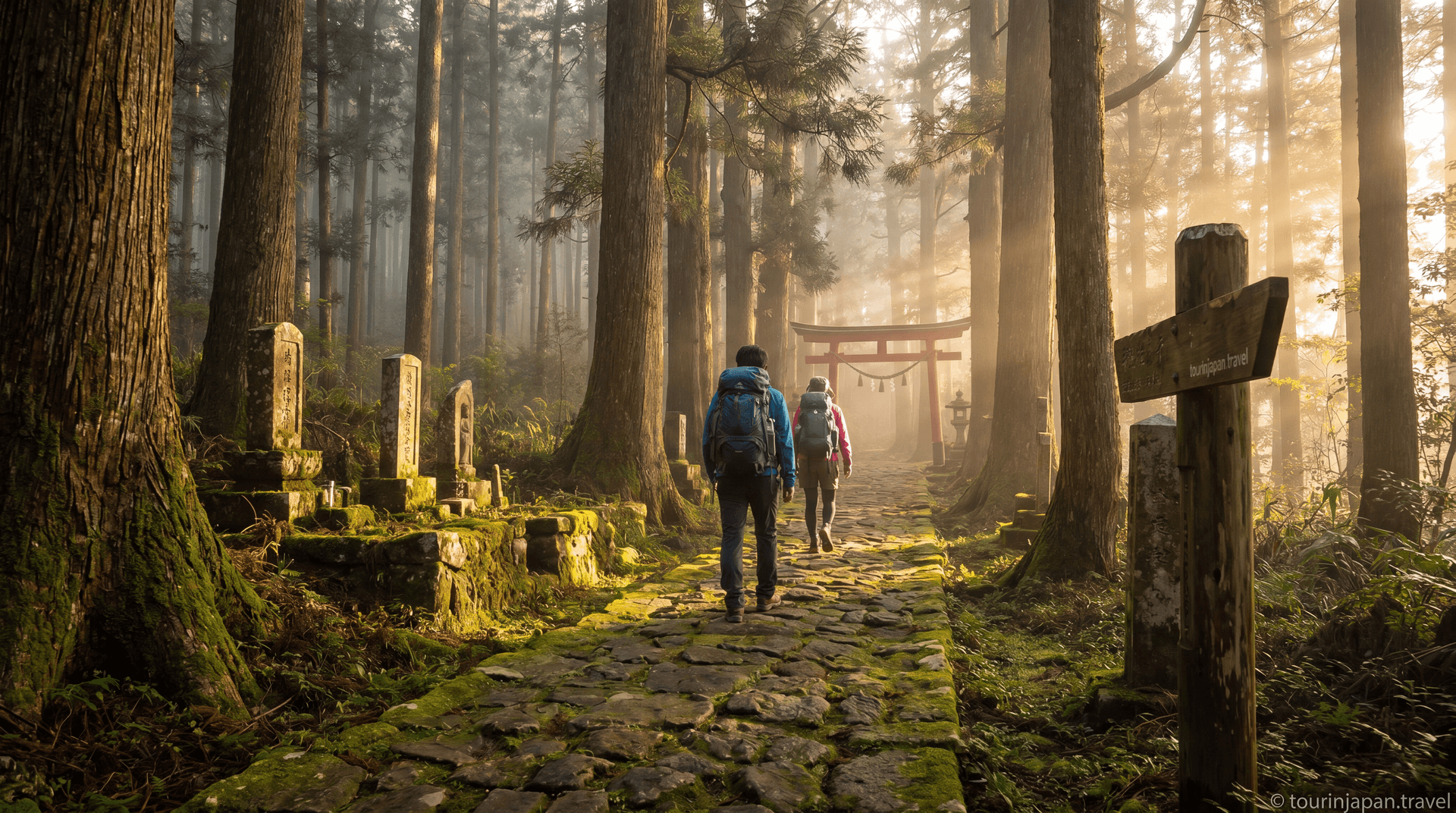
CultureKumano Kodo Pilgrimage Hike: Complete Trail Guide (3-6 Days)
By Tour in Japan editors · Updated
The Kumano Kodo is one of only two pilgrimage routes in the world that are UNESCO World Heritage Sites. Here's how to hike it.
The Kumano Kodo is one of only two pilgrimage routes in the world that are UNESCO World Heritage Sites. Here's how to hike it.
Overview
| Detail | Info |
|---|
| Distance | 70–170 km (depending on route) |
| Duration | 3–6 days |
| Difficulty | Moderate |
| Start | Tanabe or Kii-Tanabe |
| End | Kumano Hongu Taisha |
| Best season | Spring (March–May), Autumn (October–November) |
Routes
Nakahechi Route (Most Popular)
| Detail | Info |
|---|
| Distance | 70 km |
| Duration | 3–4 days |
| Difficulty | Moderate |
| Highlights | Main shrines, traditional villages |
Kohechi Route
| Detail | Info |
|---|
| Distance | 70 km |
| Duration | 3–4 days |
| Difficulty | Hard (mountain passes) |
| Highlights | Remote, mountain scenery |
Iseji Route
| Detail | Info |
|---|
| Distance | 170 km |
| Duration | 5–7 days |
| Difficulty | Moderate |
| Highlights | Coastal scenery, Ise Grand Shrine |
Nakahechi Route Itinerary
Day 1: Tanabe → Takijiri-oji (7 km)
| Detail | Info |
|---|
| Distance | 7 km |
| Time | 3–4 hours |
| Highlight | Takijiri-oji trailhead |
Day 2: Takijiri-oji → Chikatsuyu-oji (14 km)
| Detail | Info |
|---|
| Distance | 14 km |
| Time | 5–6 hours |
| Highlight | Traditional villages |
Day 3: Chikatsuyu-oji → Kumano Hongu Taisha (30 km)
| Detail | Info |
|---|
| Distance | 30 km |
| Time | 10–12 hours |
| Highlight | Main shrine, longest day |
Day 4: Kumano Hongu Taisha → Nachi Taisha (15 km)
| Detail | Info |
|---|
| Distance | 15 km |
| Time | 5–6 hours |
| Highlight | Nachi Falls (133m) |
What to Bring
| Item | Notes |
|---|
| Hiking boots | Essential, broken-in |
| Rain gear | Sudden showers |
| Layers | Temperature varies |
| Water | 1–2 liters per day |
| Snacks | For energy |
| First aid | Basic supplies |
| Cash | For ryokan, food |
Accommodation
| Type | Price | Notes |
|---|
| Ryokan | ¥8,000–20,000 | Traditional, meals included |
| Minshuku | ¥5,000–10,000 | Family-run, simple |
| Guesthouse | ¥3,000–6,000 | Budget, social |
Tips
- Start early — each day is long
- Carry water — limited shops on trail
- Wear proper boots — essential for safety
- Check weather — rain makes trails slippery
- Book accommodation — in advance during peak season
- Take breaks — enjoy the scenery
- Respect the trail — stay on marked paths
- Enjoy the journey — it's a pilgrimage, not a race
📱Stay Connected in Japan
Yesim eSIMs work on arrival — no physical SIM needed. Japan data plans from $5.