
Kimono vs Yukata: What's the Difference and Where to Wear Each
By Tour in Japan editors · Updated
Confused about kimono vs yukata? Learn the key differences in fabric, formality, and occasions, plus where in Japan you can wear each garment.
The kimono vs yukata distinction confuses many visitors to Japan, yet understanding the difference transforms how you dress for the country's most memorable occasions. Both are traditional Japanese garments worn with an obi sash, but they differ dramatically in fabric, formality, layering, and the seasons and settings in which you'd wear them. Choosing the right one matters — wearing a casual yukata to a formal tea ceremony would be like showing up to a black-tie dinner in flip-flops.
Understanding the Kimono
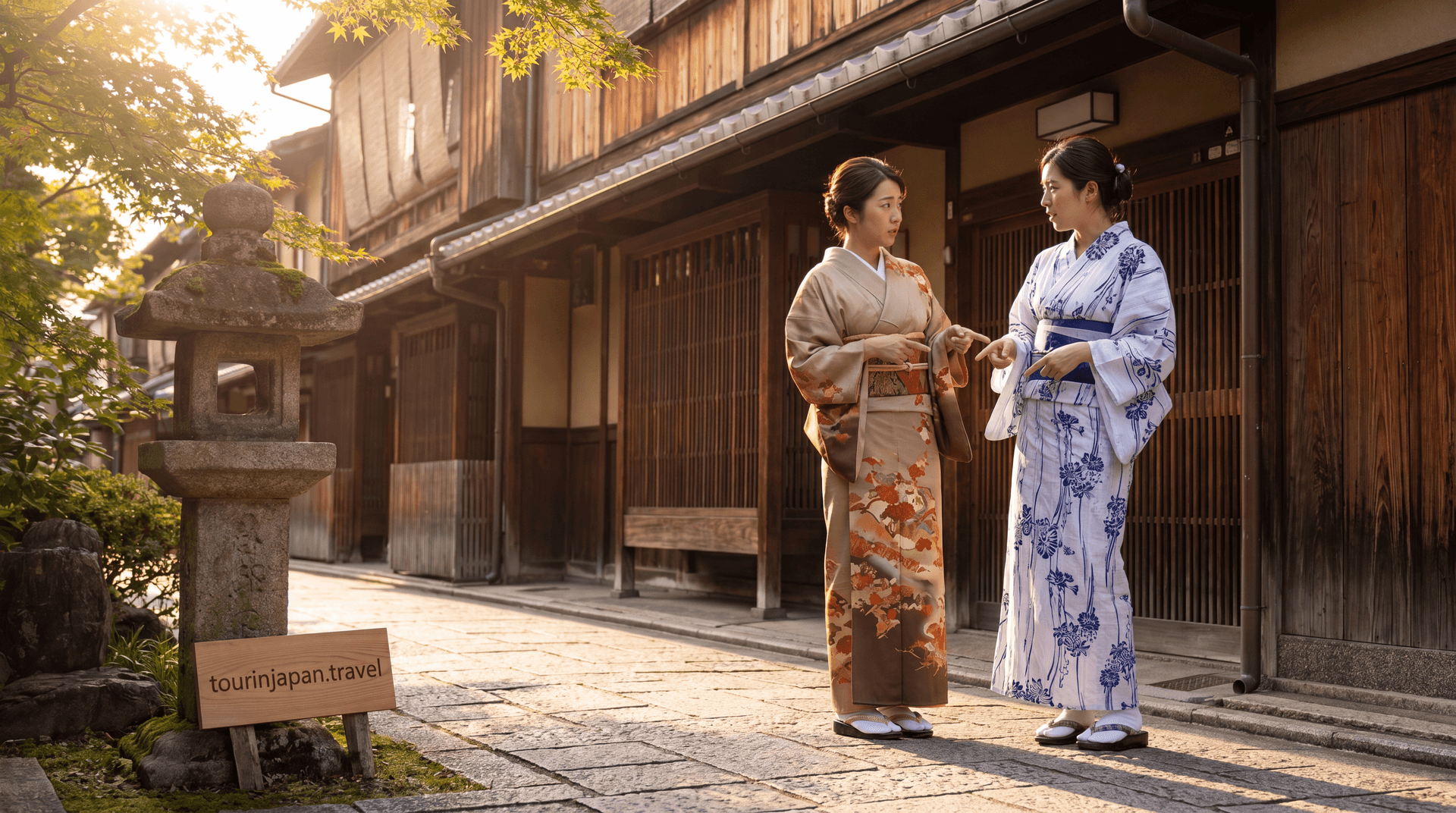
A kimono is a formal or semi-formal garment constructed from silk, wool, or synthetic fabric. It typically consists of multiple layers: an under-robe called a nagajuban worn beneath, then the kimono itself, secured with a wide structured obi that can be tied in elaborate knots. Traditional silk kimono can cost anywhere from 50,000 yen for a basic design to over 1,000,000 yen for hand-painted masterpieces.
Kimono are worn for formal occasions such as coming-of-age ceremonies, weddings, graduation ceremonies, and traditional tea ceremony. The level of formality is indicated by the number of family crests (kamon) on the sleeves and back — five crests mark the most formal level. Seasonal motifs are also important: pine and plum patterns suit winter and new year, while wisteria and peonies belong to spring and summer.
Understanding the Yukata
The yukata is a lightweight, unlined garment made from cotton or polyester. Originally designed as bathrobe-style loungewear after visiting the public bath, the yukata evolved into casual summer wear and festival attire. It is worn as a single layer, secured with a simpler obi or a narrow heko-obi sash. Rental yukata at onsen resorts often include a simple wrap-and-tie belt that takes seconds to put on.
Yukata are the garment of choice during summer festivals (matsuri), fireworks displays (hanabi), and stays at traditional inns (ryokan). Most onsen towns provide yukata for guests to wear both inside the inn and while strolling between bathhouses. The fabric is breathable and machine-washable, making yukata a practical choice for Japan's humid summers.
Key Differences at a Glance
- Fabric: Kimono uses silk, wool, or brocade; yukata uses cotton or polyester
- Layers: Kimono requires an under-robe (nagajuban); yukata is worn directly on bare skin
- Season: Kimono suits all seasons; yukata belongs to summer (July-September)
- Formality: Kimono ranges from semi-formal to extremely formal; yukata is always casual
- Collar: Kimono shows a white inner collar from the nagajuban; yukata shows no inner collar
- Footwear: Kimono pairs with tabi socks and lacquered zori sandals; yukata pairs with bare feet and wooden geta clogs
- Cost to rent: Kimono rental runs 3,000-8,000 yen; yukata rental runs 1,500-4,000 yen
- Dressing time: Professional kimono dressing takes 30-60 minutes; yukata dressing takes 10-15 minutes
Where to Wear Each Garment
Wear a kimono in Kyoto's Higashiyama district when visiting Kiyomizu-dera and Ninenzaka Lane — the stone-paved streets and preserved machiya townhouses create the perfect backdrop. Kimono are also appropriate for traditional tea ceremony experiences, Noh theater performances, and visits to formal shrines like Fushimi Inari or Meiji Jingu. Many rental shops in Kyoto and Asakusa offer full dressing services with professional styling.
Wear a yukata at summer festivals in any Japanese city from mid-July through August, at onsen towns like Kinosaki or Yufuin where guests roam streets in their inn-provided yukata, or at fireworks displays along riversides. If you're staying at a ryokan, you'll almost certainly be provided a yukata to wear to dinner and the baths. Wearing your inn's yukata outside is completely normal and often encouraged.
Stay Connected in Japan
Yesim eSIMs work on arrival — no physical SIM needed. Japan data plans from $5.