
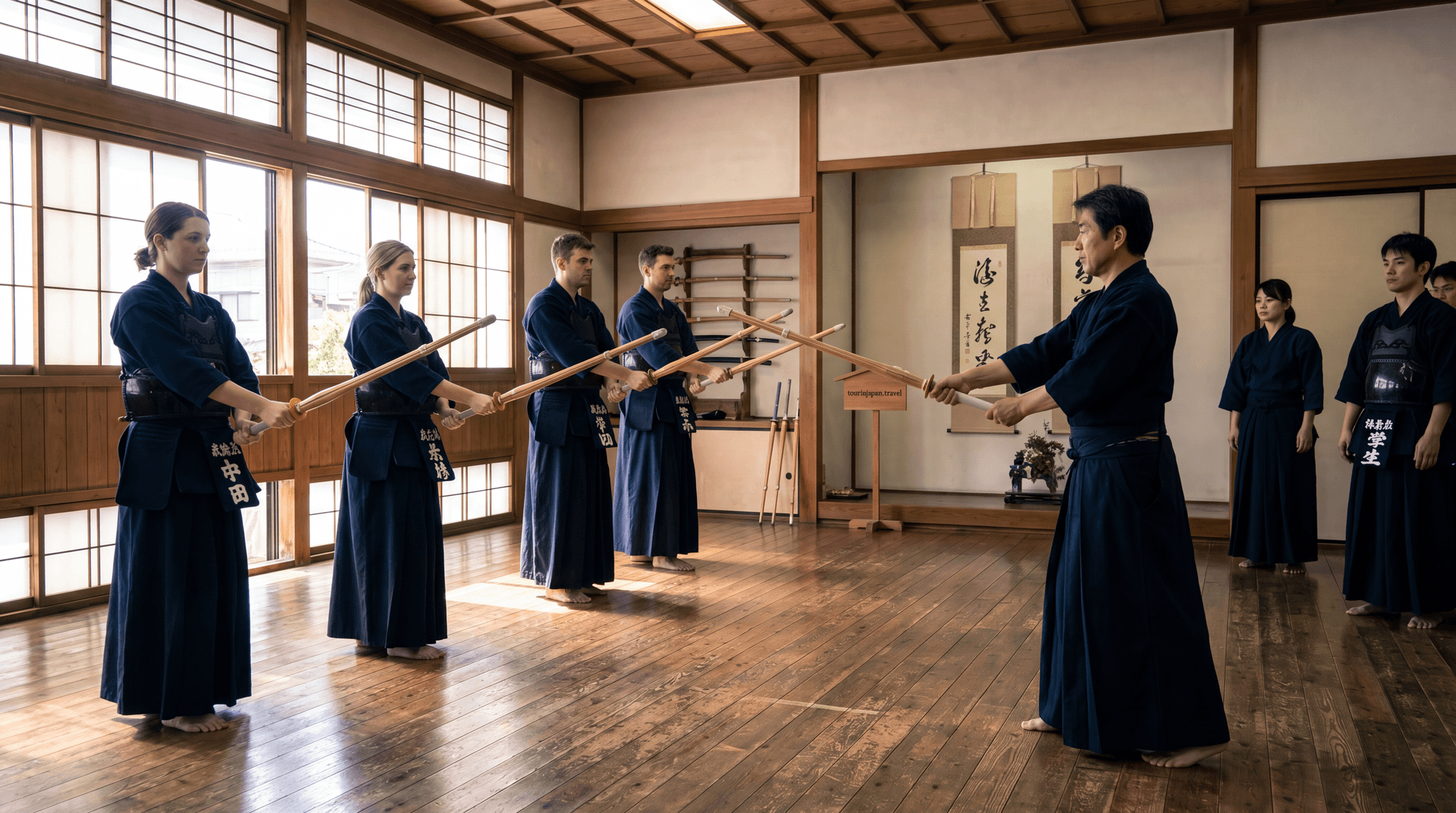
Kendo Classes for Tourists: How to Try Japan's Sword Fighting Art
By Tour in Japan editors · Updated
Kendo is Japan's martial art of the sword, practiced in dojos across the country. Tourists can try introductory classes in Tokyo and Kyoto — here is what to expect.
Kendo — the way of the sword — is Japan's modern martial art derived from the sword fighting traditions of the samurai. Practiced by over 1.66 million people in Japan and millions more worldwide, kendo uses bamboo practice swords (shinai) and protective armor (bogu) to allow full-power strikes in sparring without injury. The art is as much a path of personal development as a physical discipline — the name itself embeds the concept of do (way), reflecting the Japanese martial arts tradition of using physical practice as a vehicle for spiritual and character refinement. For visitors to Japan, a kendo introduction class offers a completely different perspective on Japanese culture than any temple visit: the physicality, the precise etiquette of the dojo, and the focus required are intensely present-moment experiences.
What Happens in an Introduction Class
A typical introductory kendo class for tourists runs 60 to 90 minutes and begins with the formal etiquette of the dojo — bowing on entry, the seiza (kneeling) bow to the teacher, the moment of mokuso (silent meditation) that opens every kendo practice. Students learn the basic shinai grip, the proper striking posture (kamae), and the fundamental cuts: the straight downward strike to the head (men), the diagonal cut to the wrist (kote), and the thrust to the throat (tsuki, usually not taught to beginners). The strikes are accompanied by the sharp kiai shout that is as important to kendo technique as the physical movement itself.
Many introduction classes proceed to having students try on kendo bogu armor — the distinctive helmet (men), chest protector (do), gauntlet gloves (kote), and hip protector (tare). Wearing the armor is transformative: the padded helmet changes your hearing, your sense of space, and the way you move. Even in a brief class, the combination of armor, shinai, and kiai produces a surprising intensity that most participants find exhilarating.
Where to Take Kendo Classes in Japan
- Samurai Kembu Theater (Kyoto): Combines kendo with kembu sword dance in an accessible tourist format. Located in central Kyoto. 60-minute sessions around 3,500 yen.
- Musashino Budokan (Tokyo): Large municipal martial arts hall that occasionally offers public kendo experience days. Check their schedule for visitor sessions.
- Samurai School (Asakusa, Tokyo): Regular kendo experience sessions in English with rental equipment provided. 90 minutes, around 5,000-7,000 yen. Suitable for all ages.
- Bujinkan Honbu Dojo (Noda, Chiba): For serious martial arts students, this dojo offers training in classical sword arts alongside the tourist introduction programs.
- Nikkо Toshogu area dojos: Several traditional martial arts schools near Nikko offer kendo and iaido sessions for visitors on request. Best organized through local tourist offices.
Kendo vs Other Sword Arts
Visitors interested in Japanese sword arts should know that kendo is one of several distinct disciplines. Iaido is the art of the sword draw — practitioners repeatedly practice drawing, cutting, and resheathing with controlled precision using real or training swords. There is no sparring in iaido; it is a solo meditative practice. Jodo is the art of the short staff against a sword. Kenjutsu encompasses the classical sword fighting systems (koryu) that predate modern kendo. Introduction classes in all of these disciplines are available in major cities through dedicated schools and tourism operators.
Dojo etiquette applies to all martial arts visits: remove shoes before entering, bow when crossing the threshold, do not touch equipment without permission, and follow all instructions from the instructor immediately and completely. The formality of a real dojo is part of the experience and reflects the serious purpose these spaces serve in Japanese culture. Arriving on time (ideally 10 minutes early) and wearing clean, plain clothing (dark-colored loose pants and a white t-shirt are ideal) shows respect.
Stay Connected in Japan
Yesim eSIMs work on arrival — no physical SIM needed. Japan data plans from $5.