
Kanazawa: The Kyoto Alternative That Actually Has Space
By Tour in Japan editors · Updated
Kanazawa offers samurai districts, geisha teahouses, and Japan's finest garden without the crowds. Your complete guide to this underrated cultural gem.
Kanazawa is the city that makes Kyoto veterans fall quiet. This former castle town on the Sea of Japan coast has preserved samurai and geisha districts, a garden widely considered Japan's most beautiful, and a thriving arts culture, all without the river of tourists that choke every Kyoto backstreet. Kanazawa travel is genuinely what people hope Kyoto will be: intimate, walkable, and filled with craft traditions still practiced by living artisans. Located on the Hokuriku Shinkansen line, it is now just over two hours from Tokyo and under an hour from Toyama, making it one of the most accessible off-the-beaten-path destinations in Japan.
Kenroku-en: The Garden That Changes Everything
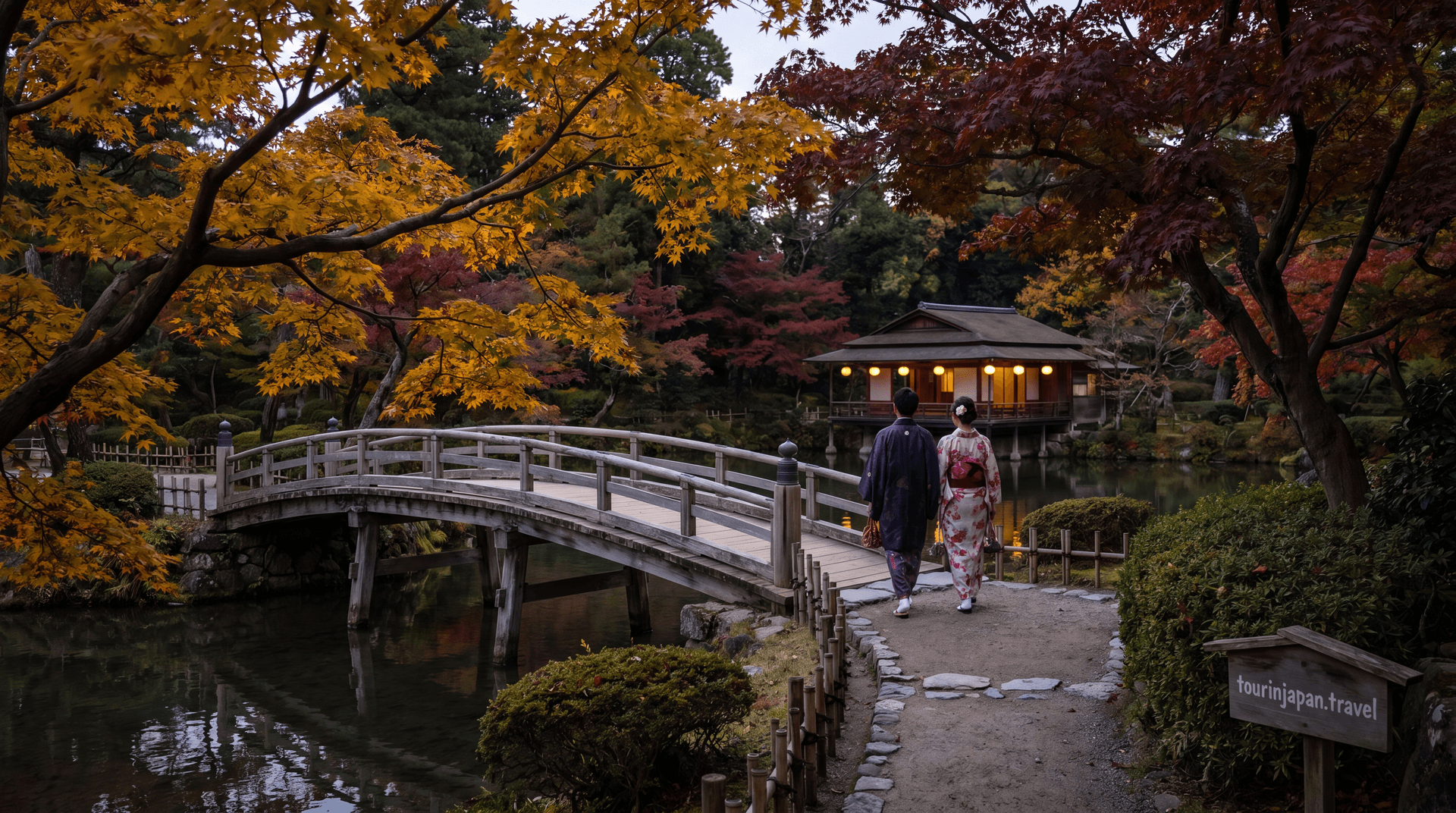
Kenroku-en is one of Japan's three officially designated great gardens, but unlike its rivals at Mito and Okayama, it is vast enough to absorb crowds without feeling overrun. The name means garden possessing six attributes, a classical ideal of a perfect landscape combining spaciousness, seclusion, artifice, antiquity, water, and panoramas. Spend at least ninety minutes here. The most famous image is Kotoji-toro, a two-legged stone lantern standing in the pond, whose asymmetric legs have made it the symbol of Kanazawa.
Admission is 320 yen for adults, free for under-18s. The garden opens at 7:00 AM in summer, giving you a golden hour before tour groups arrive. In winter, the pine trees are tied with straw ropes called yukitsuri to protect branches from snow, creating one of Japan's most atmospheric seasonal sights. The garden sits adjacent to Kanazawa Castle Park, which is free to enter.
Higashi Chaya: The Geisha District That Still Works
Kanazawa has three chaya districts where geisha still perform for private banquets. Higashi Chaya, the largest, dates to 1820 and its main street is lined with two-story wooden lattice buildings preserved largely intact. Unlike Kyoto's Gion, where many ochaya have become restaurants or closed entirely, Higashi Chaya retains active geisha culture. You cannot simply walk in for a performance, but you can enter some teahouses as paying visitors to see the interiors and sample matcha.
The Shima teahouse (500 yen entry) is the best-preserved interior, showing the upstairs banquet rooms where geisha once entertained feudal lords. The ground floor now sells Kanazawa gold leaf products, a local specialty where craftspeople beat gold into translucent sheets used on everything from Buddhist altars to soft-serve ice cream. Yes, gold leaf ice cream is both a novelty and genuinely delicious.
Nagamachi and the Samurai Quarter
Nagamachi sits on the opposite side of the city from Higashi Chaya, separated by the castle. This samurai residential district still has its original earthen walls, narrow lanes, and drainage canals. The Nomura Samurai House (550 yen) gives you the best interior access: a garden, reception rooms, and artifacts from the Kaga Domain's ruling class. Budget twenty minutes, though thirty is better if the garden is open.
Wandering Nagamachi without a specific destination is equally rewarding. The canals that run along the lanes were originally used to carry water from the Saigawa River for household use and fire prevention. Today they carry koi. The walls are made from packed earth mixed with sea salt to resist moisture, giving them a texture different from stone walls elsewhere in Japan.
Omicho Market and Kanazawa Food
Kanazawa sits between the Sea of Japan and the mountains, which gives it exceptional access to both seafood and mountain vegetables. Omicho Market, active since the Edo period, is the city's central fresh food market and worth visiting even if you do not cook. Roughly 200 stalls sell snow crab from October to March, nodoguro black-throat sea perch, and the local specialty jibuni, a duck and wheat gluten stew.
- Omicho Market: open daily 9:00 AM to 6:00 PM, free entry, best visited late morning
- Nodoguro sashimi: the local prized fish, expect 1,500 to 3,000 yen per serving at market restaurants
- Jibuni: the signature stew found at traditional kaiseki restaurants throughout the city
- Gold leaf soft serve: 500 yen at shops near Higashi Chaya, the flake melts on the tongue
- 21st Century Museum of Contemporary Art: world-class modern art in a circular building, free outer zone, 1,200 yen for inner exhibitions
- Myoryuji (Ninja Temple): advance reservations required, 1,000 yen, genuinely labyrinthine architecture
- Nishi Chaya district: smaller and quieter than Higashi Chaya, excellent for photographs without tour groups
Two full days is the minimum for Kanazawa, three is comfortable. The Hokuriku Shinkansen (Kagayaki or Hakutaka services) connects Tokyo Station to Kanazawa Station in two hours and twenty-eight minutes. Ticket price without a rail pass is around 14,120 yen one way. From Osaka, a limited express takes about two hours forty-five minutes. The city center is walkable or served by a loop bus (one-day pass 600 yen).
Stay Connected in Japan
Yesim eSIMs work on arrival — no physical SIM needed. Japan data plans from $5.