
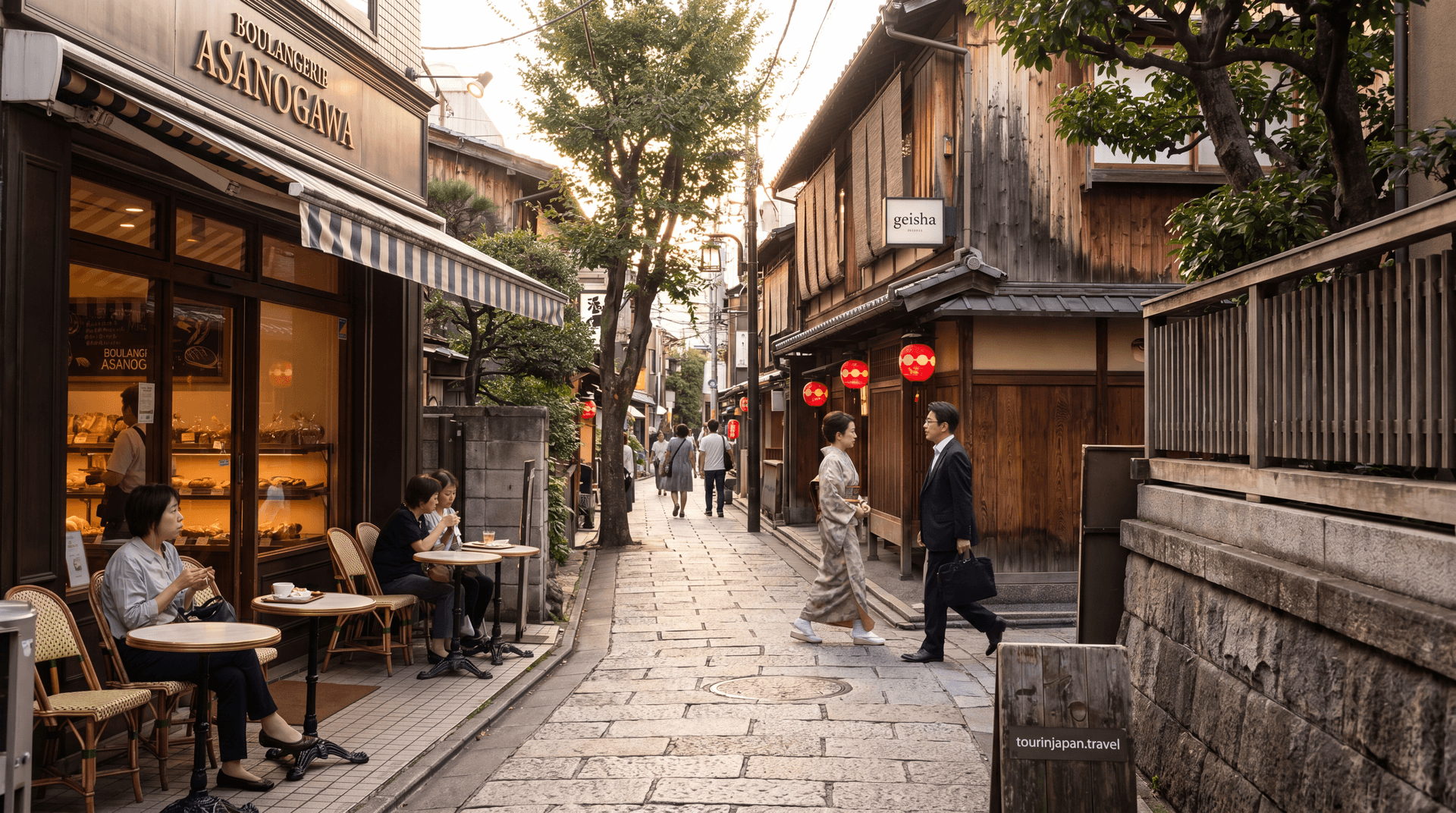
Kagurazaka: Tokyo's French-Japanese Geisha District
By Tour in Japan editors · Updated
Kagurazaka blends French boulangeries with traditional geisha lanes in one of Tokyo's most unexpected neighbourhoods, where cobblestone alleys hide century-old ochaya teahouses.
Kagurazaka is one of Tokyo's most quietly fascinating neighborhoods, a place where geisha culture and French cafe culture coexist with complete naturalness. The Kagurazaka guide experience starts with the main shopping street running from Iidabashi Station, crowded with French bakeries and Japanese sweets shops, and opens into a network of yokocho (side alleys) where traditional ochaya geisha teahouses operate behind wooden lattice facades. The French presence here dates to the postwar period when French businesses and the French Embassy established themselves nearby. Today the neighborhood has more French restaurants than any Tokyo district outside the embassy quarter.
The Geisha Alleys: Kakurenbo Yokocho and Hyogo Yokocho
Kakurenbo Yokocho (Hide and Seek Alley) is Kagurazaka's most atmospheric lane, a narrow stone-paved path that angles between wooden buildings covered in moss and climbing plants. On a weekday morning, the only sounds are sparrows and distant temple bells. The buildings along the lane are former ochaya, some still active as exclusive banquet restaurants where geisha perform for private parties. The stone paving was laid to muffle the sound of wooden sandals returning home late at night.
Hyogo Yokocho, a parallel lane, is slightly wider and has several small restaurants at street level, making it slightly more accessible to casual visitors. The full alley network is walkable in twenty minutes but rewards a slower pace. Neither lane is signposted prominently; finding them requires a degree of wandering.
French Culture in a Japanese Neighbourhood
Kagurazaka's French identity is specific and deeply embedded rather than superficial. Glaces Mori is an artisan ice cream shop producing flavors using Japanese ingredients in French technique. La Bonne Table is a French restaurant operating continuously since 1978 in a converted machiya townhouse. L'As is a Tokyo institution for French-Japanese fusion cuisine with prix-fixe lunches from 3,000 yen. The Institut Francais runs cultural events and a French-language library in a building on the main street. French language schools and French-immersion kindergartens are distributed throughout the residential back streets.
Zenkoku-ji and Traditional Kagurazaka
Zenkoku-ji Temple at the top of the main street is dedicated to Bishamonten, one of the Seven Lucky Gods, and is the neighborhood's spiritual anchor. It is particularly busy during the Setsubun festival in February when bean-throwing ceremonies draw large crowds. The temple's orange lanterns and the street leading to it form one of Kagurazaka's most photographed views. Adjacent to the temple, Kado Shrine is small and intimate, shaded by gingko trees that turn gold in November.
- Getting there: Iidabashi Station (Tokyo Metro, 4 lines) or JR Iidabashi Station (Chuo-Sobu Line)
- Kakurenbo Yokocho: free, best explored on weekday mornings before restaurants open at noon
- La Bonne Table: French restaurant since 1978, set lunch from 2,800 yen, reservations recommended
- Glaces Mori: artisan ice cream, single scoop 600 yen, seasonal Japanese flavors like yuzu and hojicha
- Zenkoku-ji Temple: free, Setsubun festival early February, regular Buddhist services open to visitors
- Akagi Shrine: architecturally striking modern shrine by architect Kengo Kuma, free, on the west side
- Pairs naturally with Shinjuku (7 minutes by Metro) or a walk to nearby Waseda for university atmosphere
Two to three hours is comfortable for Kagurazaka. Come on a weekday when the alleys are quiet and the French lunch restaurants have availability. Weekend evenings fill with Japanese and French families, creating a different but equally charming atmosphere. The neighborhood is small enough that you can walk every interesting street in a morning, have an excellent lunch at a fraction of Roppongi prices, and leave feeling like you found something nobody else was looking for.
Stay Connected in Japan
Yesim eSIMs work on arrival — no physical SIM needed. Japan data plans from $5.