
Kabuki Theater Guide: How to Book, Understand, and Enjoy
By Tour in Japan editors · Updated
Kabuki is Japan's most dramatic performing art — elaborate costumes, stylized movements, and thunderous set changes. Here is everything you need to attend and appreciate a performance.
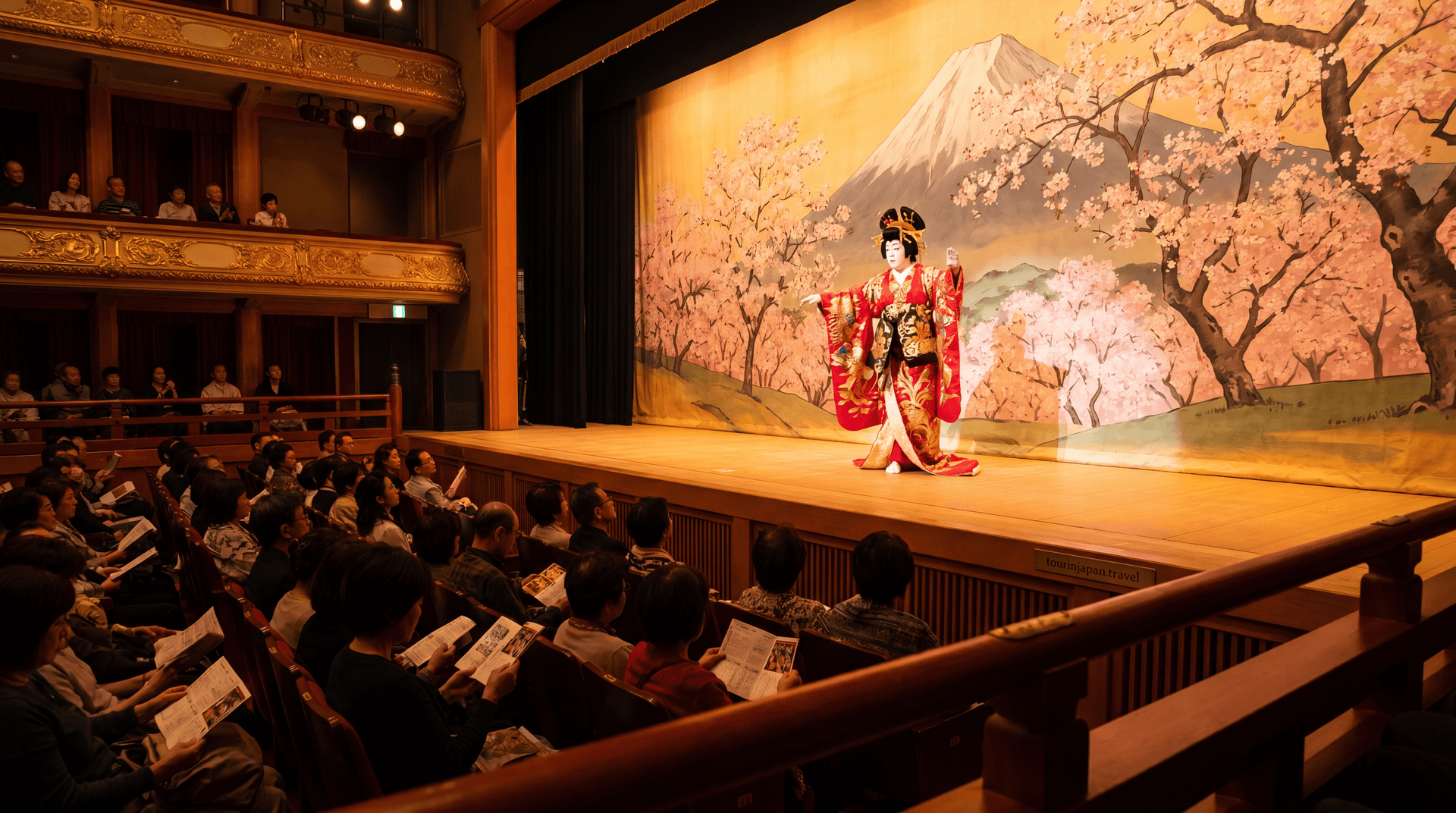
Kabuki is Japan's most theatrical performing art — a centuries-old tradition of stylized drama combining extraordinary costumes, exaggerated makeup (kumadori), acrobatic movement, and moments of absolute stillness that make time stop. Performances can last three to five hours, with the full programs of major productions spanning the entire day. Yet Kabuki theater remains one of the most electric experiences in Japanese culture. The art form emerged in 17th-century Edo (now Tokyo) from the scandalous performances of a shrine maiden named Okuni, evolved through a rich history of female roles played by male actors (onnagata), and was recognized as UNESCO Intangible Cultural Heritage in 2008. You do not need to understand Japanese to be moved by Kabuki — the visual language is its own communication system.
The Main Kabuki Theaters
The Kabuki-za in Ginza, Tokyo is the spiritual home of Kabuki, with a full performance schedule running almost year-round. The current building, completed in 2013, preserves the distinctive traditional exterior while housing a modern theater with excellent sightlines. The National Theater in Nagatecho, Tokyo hosts Kabuki as part of a broader traditional arts program. Minami-za in Gion, Kyoto is Japan's oldest kabuki theater and hosts the prestigious Kaomise performance each December when all major actors perform together.
At the Kabuki-za, performances are divided into matinee and evening sessions, each lasting approximately 4 hours with two intermissions. Single-act tickets (hitomaku-mi seki) are available for the first gallery from around 500-2,000 yen and allow you to see one act — an excellent option for first-timers unsure about committing to the full program. Full seat tickets range from 3,000 yen (gallery) to 25,000 yen (front orchestra with table service).
Understanding What You See
- Mie poses: When an actor freezes in an exaggerated, powerful pose at a climactic moment — this is a mie, and the audience expresses appreciation by shouting the actor's house name (yago).
- Hanamichi: The raised walkway extending through the audience from the stage. Major entrances and exits use this path, bringing actors close to the audience.
- Kumadori makeup: Bold red and black lines on white face paint indicate character type — red lines indicate righteousness, blue lines indicate malevolence.
- Koken stage assistants: Black-robed figures who adjust costumes and props during performance. They are considered invisible within the theatrical convention.
- Hikinuki quick costume change: An actor's outer kimono is dramatically pulled away in seconds to reveal a different costume beneath — a moment of pure theatrical magic.
English Audio Guides and Programs
The Kabuki-za provides English-language earphone guides (iyahon gaido) for rental at 700 yen plus a 1,000 yen refundable deposit. These guides provide real-time narration explaining the story, character backgrounds, and technical elements as the performance unfolds. They are highly recommended for first-time viewers. English-language programs (about 1,000 yen) explain the day's repertoire in detail and serve as a useful reference to read before the performance begins.
Bento boxes sold in the theater during intermissions are an integral part of the Kabuki experience — the long intermissions (30-40 minutes) are meant for eating and socializing, not just resting. Order your bento when you arrive (about 1,500-2,500 yen) and it will be delivered to your seat at the first intermission. The theater basement also has an excellent restaurant and souvenir shop with Kabuki-themed goods including the distinctive actor family crest patterns and makeup-inspired cosmetics.
Stay Connected in Japan
Yesim eSIMs work on arrival — no physical SIM needed. Japan data plans from $5.