
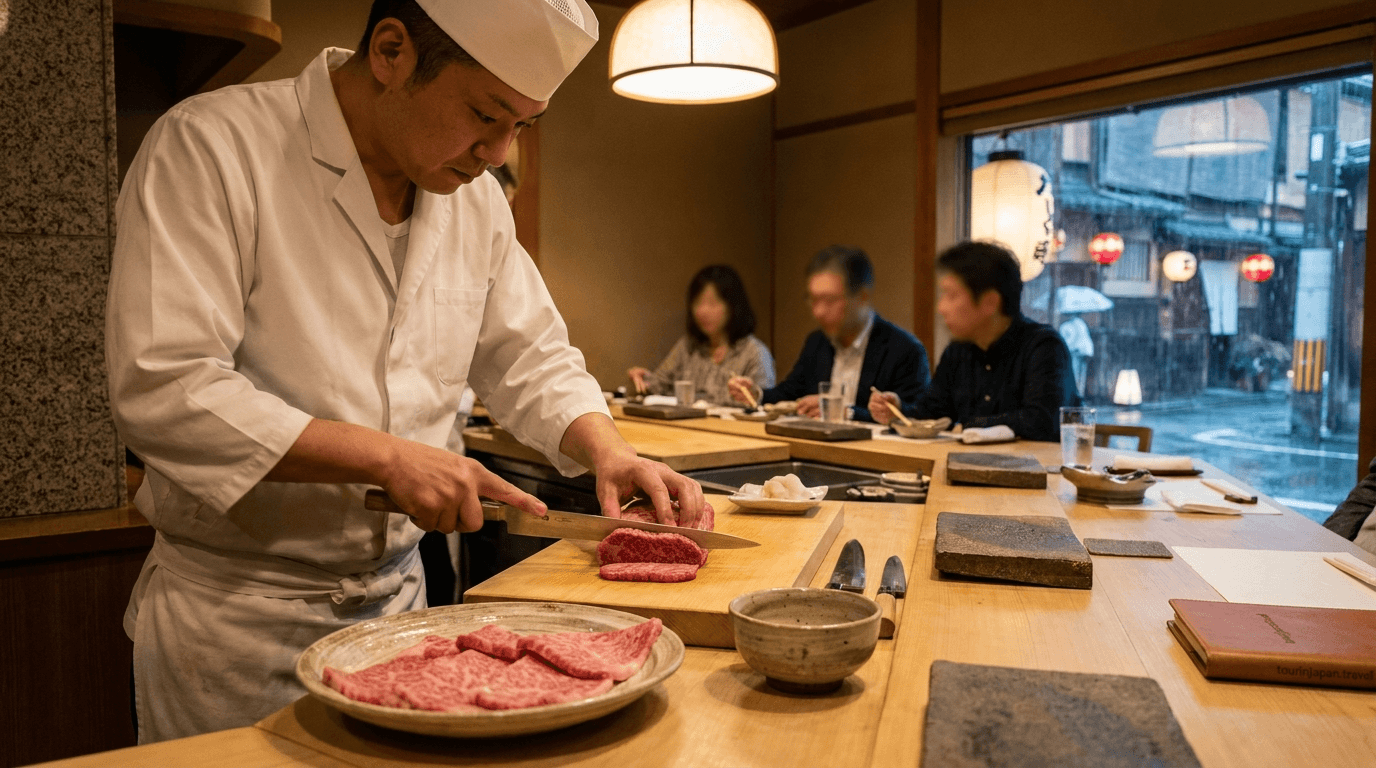
Japanese Wagyu Guide: Types, Grades, and Where to Eat the Best Beef
By Tour in Japan editors · Updated
Japanese wagyu (和牛 / wagyū) is some of the most prized beef in the world. The term "wagyu" literally means "Japanese cow" and refers to four specific breeds that produce extraordinarily marbled, flavorful meat. Understanding the grading system and where to eat wagyu will help you get the best value for what can be a very expensive meal.
What Makes Wagyu Special
Wagyu beef is distinguished by its intense intramuscular fat marbling (霜降り / shimofuri). This fat:
- Melts at low temperature — it literally melts on your tongue
- Has a sweet, nutty flavor — different from Western beef
- Is rich in oleic acid — the same healthy fat in olive oil
- Creates incredible tenderness — almost buttery texture
The Grading System
Japanese beef is graded on a scale that confuses most tourists. Here's the simple version:
Overall Grade (A–C)
- A: Best quality (yield of meat above average)
- B: Average quality
- C: Below average quality
Meat Quality Score (1–5)
- 5: Excellent marbling, color, texture, and fat quality
- 4: Very good
- 3: Good
- 2: Average
- 1: Below average
Marbling Score (BMS 1–12)
The Beef Marbling Score measures the amount of fat marbling:
| BMS | Marbling Level | Description |
|---|---|---|
| 1–2 | Slight | Light marbling |
| 3–4 | Moderate | Noticeable marbling |
| 5–6 | Moderately High | Good marbling |
| 7–8 | High | Heavy marbling |
| 9–10 | Very High | Intense marbling |
| 11–12 | Extremely High | Ultimate marbling (A5) |
What to Order
- A5 BMS 10–12: The absolute best — rich, buttery, melts in your mouth. Best for yakiniku or shabu-shabu where you can taste the fat.
- A5 BMS 8–9: Excellent quality, slightly less fat but still incredible
- A4 BMS 6–7: Great balance of flavor and meatiness — many chefs prefer this
- A3 BMS 4–5: Good beef, more "beefy" flavor, better value
- A2–A1: Still wagyu, but closer to regular beef. Great for curry or stewed dishes.
Types of Wagyu
The Four Japanese Breeds
| Breed | Japanese | Origin | Characteristics |
|---|---|---|---|
| Japanese Black (黒毛和種) | Kuroge Washu | Nationwide | 90% of wagyu, most marbled |
| Japanese Brown (赤毛和種) | Akage Washu | Kobe, Matsusaka | Leaner, richer flavor |
| Japanese Shorthorn (短角和種) | Tankaku Washu | Northern Japan | Lean, gamey, rare |
| Japanese Polled (無角和種) | Mukaku Washu | Shimane | Very rare, mild flavor |
Famous Regional Wagyu
| Name | Region | BMS Range | Price | Notes |
|---|---|---|---|---|
| Kobe (神戸牛) | Hyogo | 6–12 | ¥5,000–¥15,000 | Most famous worldwide |
| Matsusaka (松阪牛) | Mie | 6–12 | ¥6,000–¥20,000 | Considered the finest |
| Ōmi (近江牛) | Shiga | 5–10 | ¥4,000–¥12,000 | Oldest brand (400+ years) |
| Miyazaki (宮崎牛) | Miyazaki | 6–12 | ¥4,000–¥10,000 | 多次获奖 (multiple awards) |
| Saga (佐賀牛) | Saga | 6–10 | ¥4,000–¥10,000 | Rich, sweet fat |
| Tajima (但馬牛) | Hyogo | 6–12 | ¥5,000–¥15,000 | Source of Kobe beef |
| Yonezawa (米沢) | Yamagata | 6–10 | ¥4,000–¥10,000 | Winter specialty |
How to Eat Wagyu
Yakiniku (焼肉) — Japanese BBQ
Best for: Tasting multiple cuts, casual atmosphere
- You grill thin slices at your table
- Dip in tare (sauce) or salt
- Eat with rice and kimchi
- Price: ¥3,000–¥10,000 per person
Shabu-Shabu (しゃぶしゃぶ) — Hot Pot
Best for: Experiencing the melt-in-your-mouth texture
- Thinly sliced wagyu swished in hot broth
- Dip in ponzu or sesame sauce
- Add vegetables and noodles
- Price: ¥3,000–¥8,000 per person
Steak (ステーキ)
Best for: Thick cuts, steak lovers
- Grilled to your preference (rare is recommended for A5)
- Seasoned with salt and pepper
- Often served with garlic rice
- Price: ¥5,000–¥20,000 per person
Sukiyaki (すき焼き)
Best for: Sweet-savory flavor experience
- Thinly sliced wagyu simmered in sweet soy broth
- Dipped in raw egg
- Cooked with vegetables, tofu, and noodles
- Price: ¥4,000–¥10,000 per person
Omakase Wagyu (おまかせ)
Best for: Ultimate experience, multiple courses
- Chef's selection of various wagyu cuts
- Often includes sashimi, grilled, simmered, and fried preparations
- Paired with sake or wine
- Price: ¥15,000–¥50,000+ per person
Best Wagyu Restaurants
Tokyo
| Restaurant | Type | Price | Specialty |
|---|---|---|---|
| Yoroniku (よろにく) | Yakiniku | ¥8,000–¥15,000 | A5 wagyu, Omotesando |
| Seryna (セリナ) | Shabu/Shabu | ¥6,000–¥12,000 | Premium slices, Roppongi |
| Ibasho (居場所) | Yakiniku | ¥5,000–¥10,000 | Local favorite, Shinjuku |
| Han no Daidokoro (韓の台所) | Yakiniku | ¥4,000–¥8,000 | Korean-style, Shibuya |
| Rokkasen (六歌仙) | Yakiniku | ¥5,000–¥10,000 | All-you-can-eat premium |
| Steak Otsuka (ステーキオオツカ) | Steak | ¥8,000–¥15,000 | Thick-cut, Shinjuku |
Osaka
| Restaurant | Type | Price | Specialty |
|---|---|---|---|
| Wagyu Yakiniku M (和牛焼肉M) | Yakiniku | ¥5,000–¥10,000 | Kobe beef specialist |
| Matsusakagyu Yakiniku M (松坂牛焼肉M) | Yakiniku | ¥6,000–¥12,000 | Matsusaka beef |
| Kobe Beef 100 (神戸ビーフ100) | Steak | ¥5,000–¥10,000 | Kobe beef steak |
Kyoto
| Restaurant | Type | Price | Specialty |
|---|---|---|---|
| Steak Otsuka Kyoto (ステーキオオツカ) | Steak | ¥6,000–¥12,000 | Premium wagyu |
| Giro Giro Hitoshina (ギロギロひとしな) | Yakiniku | ¥4,000–¥8,000 | Affordable A5 |
Kobe (In Kobe itself)
| Restaurant | Type | Price | Specialty |
|---|---|---|---|
| Mouriya (モーリヤ) | Teppanyaki | ¥8,000–¥15,000 | Kobe beef, since 1873 |
| Steakland (ステーキランド) | Teppanyaki | ¥3,000–¥6,000 | Budget Kobe beef |
| Kazuya (和や) | Shabu-Shabu | ¥6,000–¥12,000 | Kobe beef hot pot |
How Much Should You Pay?
| Budget | What You Get | Where |
|---|---|---|
| ¥1,000–¥2,000 | Wagyu curry or donburi | Convenience stores, chain restaurants |
| ¥2,000–¥4,000 | Budget yakiniku or shabu-shabu | Casual restaurants |
| ¥5,000–¥10,000 | Quality wagyu experience | Mid-range restaurants |
| ¥10,000–¥20,000 | Premium A5 wagyu | High-end restaurants |
| ¥20,000–¥50,000+ | Ultimate omakase wagyu | Luxury establishments |
Red Flags: Fake Wagyu
Be aware of restaurants claiming to serve "Kobe beef" that aren't authentic:
- Real Kobe beef has a certificate and is only sold through licensed retailers
- If it's too cheap, it's probably not real Kobe (under ¥5,000 per person is suspicious)
- "Kobe-style" is a marketing term — not real Kobe beef
- Ask for the certificate — legitimate restaurants will show it proudly
Japanese Phrases
| Japanese | Pronunciation | Meaning |
|---|---|---|
| 和牛をお願いします | Wagyū wo onegai shimasu | "Wagyu, please" |
| A5でお願いします | A5 de onegai shimasu | "A5 grade, please" |
| おすすめは何ですか? | Osusume wa nan desu ka? | "What do you recommend?" |
| どの部位が良いですか? | Dono bubun ga yoi desu ka? | "Which cut is good?" |
| おいくらですか? | Oikura desu ka? | "How much is it?" |
| 焼肉お願いします | Yakiniku onegai shimasu | "Yakiniku, please" |
| しゃぶしゃぶお願いします | Shabu-shabu onegai shimasu | "Shabu-shabu, please" |
Tips for First-Timers
- Start with A4 — it's more "beefy" and easier to appreciate
- Don't overcook — A5 wagyu should be rare to medium-rare
- Eat with rice — the fat is rich; rice balances it perfectly
- Try different preparations — yakiniku, shabu-shabu, and steak are all different experiences
- Budget for one great meal — it's worth splurging on one wagyu experience
- Ask the chef — they'll guide you to the best cuts for your budget
Related Articles
Stay Connected in Japan
Yesim eSIMs work on arrival — no physical SIM needed. Japan data plans from $5.