
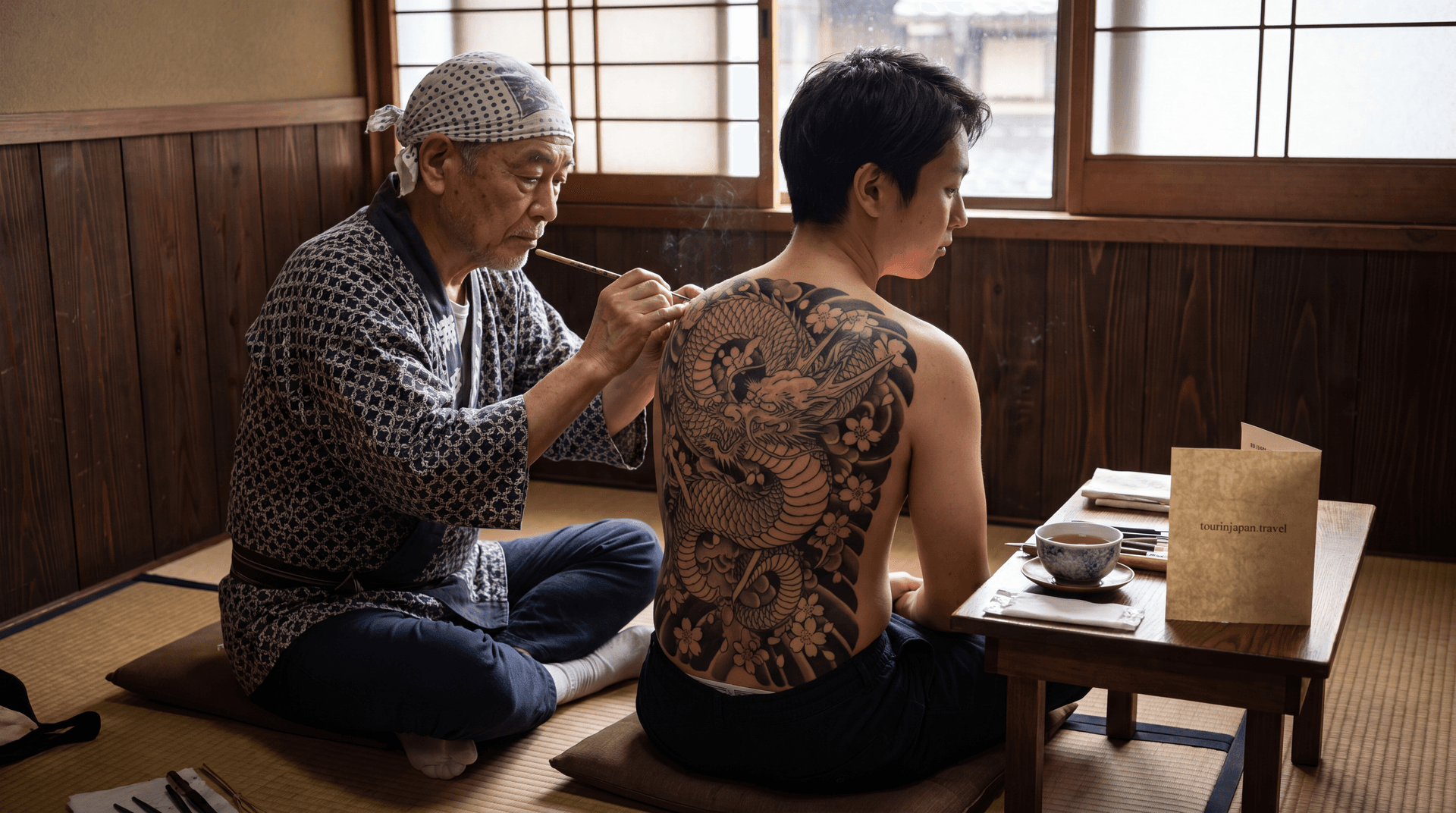
Japanese Tattooing (Irezumi): History, Culture, and Modern Artists
By Tour in Japan editors · Updated
Irezumi is one of the world's great tattoo traditions, with techniques and aesthetic principles developed over centuries. A guide to its history, meaning, and where to find master artists.
Japanese tattooing (入れ墨 irezumi) is one of the world's most revered tattoo traditions — but it's also one of the most misunderstood. Here's the complete guide.
What Is Irezumi?
Irezumi (入れ墨) literally means "inserting ink" — the traditional Japanese method of hand-poking tattoos using wooden handles and metal needles (tebori). Modern irezumi combines traditional techniques with electric machines.
Irezumi vs Western Tattoos
| Feature | Irezumi | Western Tattoos |
|---|---|---|
| Style | Traditional Japanese | Various styles |
| Coverage | Full body suit common | Usually smaller pieces |
| Colors | Limited palette (red, blue, green, yellow) | Unlimited |
| Themes | Dragons, koi, flowers, mythology | Anything |
| Technique | Hand-poke (tebori) + machine | Mostly machine |
| Meaning | Deep symbolism | Varies |
History of Japanese Tattoos
Timeline
| Period | Event |
|---|---|
| Jomon period | Tattoos as tribal marks |
| 3rd century | Chinese texts describe tattooed Japanese |
| Edo period (1603–1868) | Irezumi flourishes as art form |
| 1872 | Tattoos banned by Meiji government |
| 1948 | Ban lifted after WWII |
| 1980s | Yakuza association solidifies |
| 2000s | International revival begins |
| 2020s | Growing acceptance in Japan |
Traditional Irezumi Themes
Dragons (龍 Ryū)
- Meaning: Wisdom, strength, benevolence
- Colors: Blue, green, gold
- Placement: Arms, back, chest
Koi Fish (鯉 Koi)
- Meaning: Perseverance, determination
- Colors: Orange, gold, red
- Placement: Legs, back, arms
Tigers (虎 Tora)
- Meaning: Courage, protection
- Colors: Orange, black
- Placement: Arms, chest, back
Cherry Blossoms (桜 Sakura)
- Meaning: Impermanence, beauty
- Colors: Pink, white
- Placement: Background, scattered
Waves (波 Nami)
- Meaning: Strength, resilience
- Colors: Blue, white
- Placement: Background, legs
Phoenix (鳳凰 Hōō)
- Meaning: Rebirth, triumph
- Colors: Red, gold, green
- Placement: Back, chest
Foo Dogs (狛犬 Komainu)
- Meaning: Protection, courage
- Colors: White, gold
- Placement: Arms, chest
Skulls ( Skull)
- Meaning: Mortality, respect
- Colors: White, black
- Placement: Arms, back
Modern Irezumi Artists
Top Artists in Japan
| Artist | Location | Style | Price Range |
|---|---|---|---|
| Horitomo | San Jose (originally Japan) | Traditional | $$$$$ |
| Horitsubaki | Tokyo | Traditional | $$$$ |
| Gakkin | Kyoto | Neo-Japanese | $$$$ |
| Shige | Yokohama | Japanese Traditional | $$$$$ |
| Horikazu | Tokyo | Tebori specialist | $$$$$ |
Finding an Artist
| Method | Pros | Cons |
|---|---|---|
| Easy to view portfolio | Hard to verify quality | |
| Tattoo conventions | Meet artists in person | Limited to event dates |
| Word of mouth | Trusted recommendations | Requires contacts |
| Tattoo studios | Professional setting | May not specialize in irezumi |
Tattoo Etiquette in Japan
Current Social Attitudes
| Setting | Attitude | Notes |
|---|---|---|
| Onsen/Hot springs | Often prohibited | Many ban visible tattoos |
| Swimming pools | Usually prohibited | Public pools often ban |
| Gyms | Varies | Some allow, some don't |
| Restaurants | Generally accepted | Rarely an issue |
| Public transport | No issue | Never a problem |
| Hotels | No issue | No discrimination |
How to Handle Tattoo Restrictions
Onsen Options
- Private onsen (kashikiri-buro): Book a private bath — no restrictions
- Tattoo-friendly onsen: Research in advance (tattoo-friendly.jp)
- Cover tattoos: Use bandages or tattoo cover stickers
- Swimwear onsen: Some allow swimsuits (rare)
Tattoo Cover Solutions
| Product | Price | Where to Buy |
|---|---|---|
| Tattoo cover sleeves | ¥1,000–3,000 | Amazon Japan, Don Quijote |
| Tattoo cover stickers | ¥500–1,500 | Convenience stores, Amazon |
| Makeup (Dermablend) | ¥3,000–5,000 | Department stores |
| Bandages | ¥200–500 | Pharmacies |
Do's and Don'ts
DO ✅
- Cover tattoos in onsen/swimming areas
- Research tattoo-friendly venues
- Respect local customs
- Be patient with restrictions
- Ask permission before exposing tattoos
DON'T ❌
- Don't assume all places ban tattoos
- Don't be confrontational about restrictions
- Don't show tattoos in traditional areas
- Don't forget tattoo cover items
- Don't tattoo someone without proper licensing
Getting a Tattoo in Japan
Legal Requirements
- Licensed tattoo artist: Required since 2020
- Age requirement: 18+ (parental consent for 16-17)
- Medical license: Technically required (but rarely enforced)
Cost of Irezumi
| Size | Price Range | Duration |
|---|---|---|
| Small (5cm) | ¥30,000–80,000 | 2–4 hours |
| Medium (15cm) | ¥80,000–200,000 | 4–8 hours |
| Large (30cm+) | ¥200,000–500,000+ | Multiple sessions |
| Full back | ¥1,000,000+ | 10+ sessions |
| Full body suit | ¥3,000,000+ | 50+ sessions |
Booking Process
- Research artists — find someone whose style matches
- Contact studio — email or DM on Instagram
- Consultation — discuss design, size, placement
- Deposit — usually 30–50% upfront
- Sessions — multiple visits for large pieces
- Aftercare — follow artist's instructions
Frequently Asked Questions
Q: Can I get a tattoo in Japan? A: Yes! Many studios welcome international clients. Book in advance.
Q: Will my tattoo cause problems in Japan? A: Mostly no. Only onsen/swimming areas may have restrictions.
Q: Is tebori (hand-poke) better than machine? A: It's different — tebori is more painful but creates a unique texture. Many prefer it for traditional irezumi.
Q: Can I visit onsen with tattoos? A: Many onsen ban tattoos, but private onsen and tattoo-friendly options exist.
Q: How long does a full back piece take? A: Typically 10–20 sessions over 6–12 months.
Essential Japanese Phrases
| English | Japanese | Pronunciation |
|---|---|---|
| Tattoo | 入れ墨 | Irezumi |
| Can I cover my tattoo? | タトゥーを隠せますか? | Tatū o kakusemasu ka? |
| Private bath | 個室風呂 | Koshitsu furo |
| Tattoo-friendly | タトゥーOK | Tatū OK |
| How much? | いくらですか? | Ikura desu ka? |
Japanese tattooing is a profound art form with centuries of history — approach it with respect, and it becomes one of the most meaningful souvenirs you can take home.
Stay Connected in Japan
Yesim eSIMs work on arrival — no physical SIM needed. Japan data plans from $5.