
Japanese Death Rituals: Funerals, Obon, and Ancestor Worship
By Tour in Japan editors · Updated
Japan's approach to death combines Buddhist ritual, Shinto purification, and Confucian ancestor reverence. Understanding these practices reveals much about Japanese life and values.
Japan's relationship with death is rich, complex, and deeply bound up with the Buddhist and Shinto traditions that have shaped Japanese civilization for over a thousand years. Unlike many Western cultures where death is often sequestered and minimized, Japanese practice embraces rituals of remembrance, ancestral communion, and cyclical return that play out in annual festivals, domestic altar ceremonies, and the extraordinary communal moment of Obon each summer. Understanding Japanese death rituals is not morbid tourism — it is an entry point into some of the most fundamental values of Japanese culture: the continuity of family across generations, the respect for the dead as active presences in the lives of the living, and the Buddhist acceptance of impermanence as the fundamental nature of existence.
Japanese Buddhist Funerals
Over 90% of funerals in Japan follow Buddhist rites, making Japan one of the most consistently Buddhist funeral cultures in the world. The ritual typically takes place within a few days of death, beginning with a wake (otsuya) at which family and close friends gather to spend a night with the body, burning incense throughout. The next day, a funeral ceremony (soshiki) is conducted by Buddhist priests who chant sutras. The coffin is then transported to the crematorium — Japan has among the highest cremation rates in the world at over 99% — and family members use chopsticks to ceremonially pick the bones from the ashes and transfer them to an urn.
The deceased is given a kaimyo — a posthumous Buddhist name — by the priest, which will be used in all subsequent memorial services and inscribed on the grave marker. Family members enter a mourning period that includes specific ritual meals and restrictions. Memorial services are held at intervals after the death — on the 7th day, 49th day (when Buddhist teaching holds that the soul completes its journey to the next realm), 1st anniversary, and subsequent significant years.
Obon: When the Dead Return
Obon is the annual mid-summer festival during which the spirits of ancestors are believed to return to their home communities for a few days. Celebrated primarily August 13-16 (with some regional variations), Obon is one of the three major holiday periods in Japan along with Golden Week and New Year. Families return to ancestral homes, clean and decorate family graves, light welcoming fires (mukaebi) at their doors to guide spirits home, and hold bon odori community dances that originally served to entertain the returning spirits.
- Butsudan home altars: Most Japanese homes contain a small wooden altar housing memorial tablets (ihai) for deceased family members. Daily offerings of rice, water, and incense are made here.
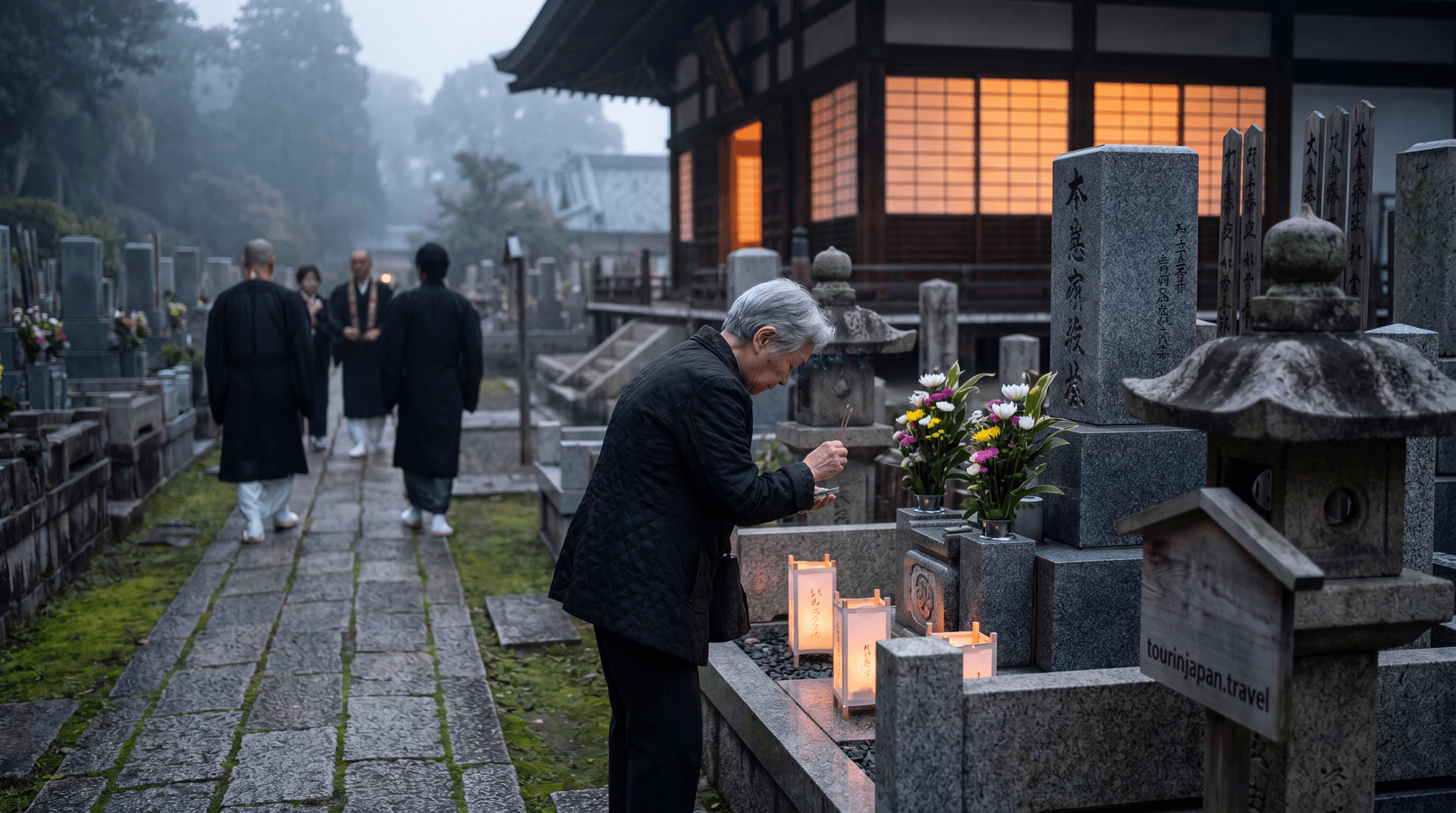
- Grave cleaning (ohakamairi): Regular visits to clean and maintain family graves, leaving flowers, water, and incense. Particularly intensive at Obon and equinox holidays.
- Toro nagashi: Floating lanterns on rivers and the sea to guide ancestral spirits back to the spirit world at the end of Obon. Beautiful to witness in riverside cities.
- Higan: Spring and autumn equinox weeks are times for grave visits and remembrance. Buddhist temples hold special services and many families visit ohaka together.
- Aoyama Cemetery and Yanaka Cemetery (Tokyo): Beautiful, park-like historic cemeteries open to the public that offer insight into Japanese memorial culture and inscriptions across the centuries.
For Visitors: Respectful Engagement
Visitors to Japan during Obon will notice that transportation networks are extremely crowded as Japanese people travel home to their families — this is actually one of the better periods to explore major cities, which become less crowded as residents leave. The bon odori dances held at shrines and temple grounds throughout Japan are typically open to everyone, including foreign visitors, and joining the circle dance — however clumsily — is welcomed as a sign of respect and participation. Many cemeteries are beautiful places for quiet contemplation, particularly Yanaka in Tokyo with its traditional grave markers and ancient trees, and they are open to visitors who conduct themselves respectfully.
Stay Connected in Japan
Yesim eSIMs work on arrival — no physical SIM needed. Japan data plans from $5.