
Hiking in the Japanese Alps: Kamikochi, Yarigatake, and Hotaka
By Tour in Japan editors · Updated
The Japanese Alps offer world-class hiking from the serene valley of Kamikochi to the sharp summit of Yarigatake. Plan your alpine adventure with this complete guide.
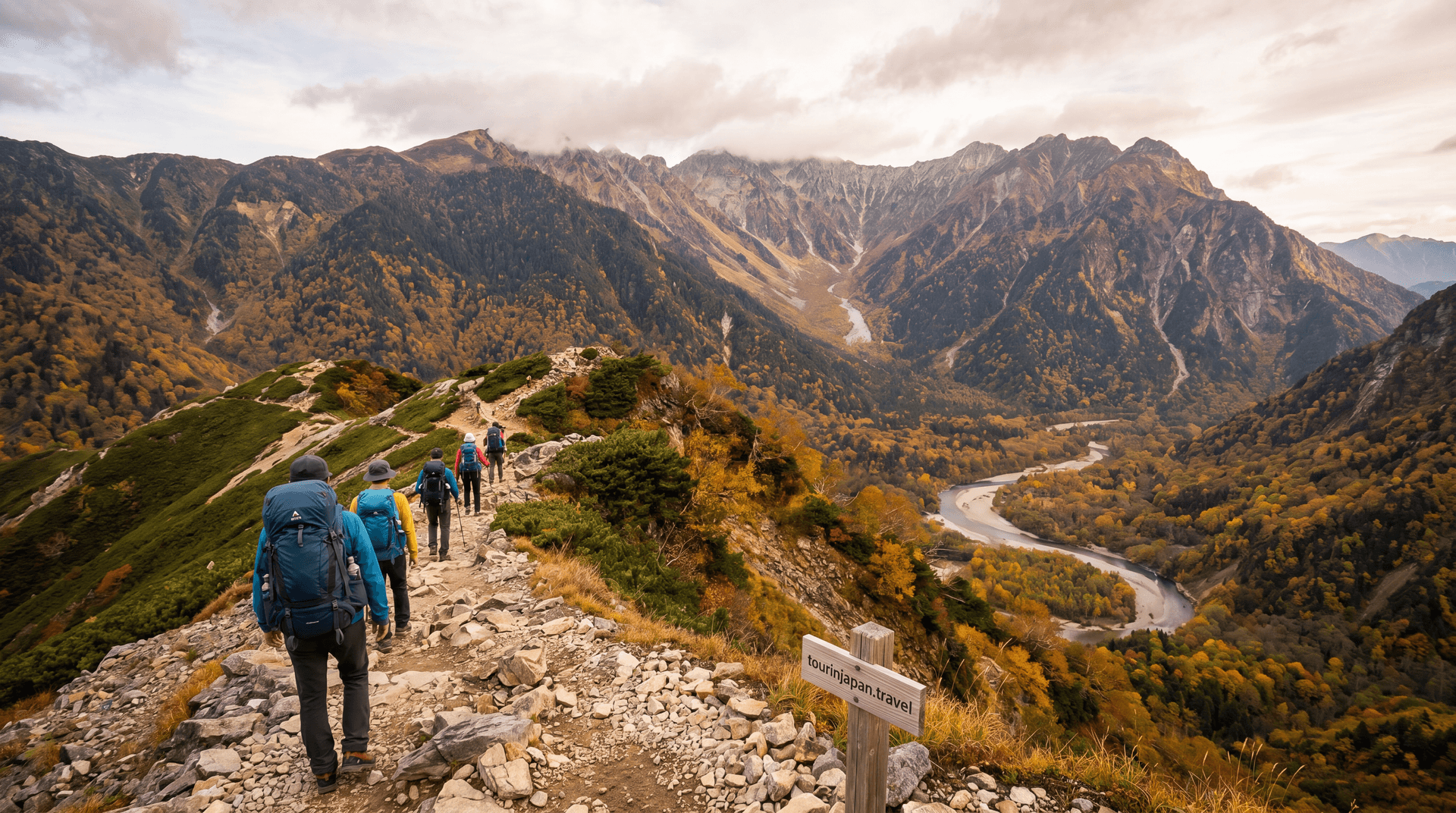
Hiking in the Japanese Alps ranks among the finest mountain experiences in East Asia, combining jagged peaks above 3,000 meters with well-maintained trails, reliable mountain huts, and dramatic scenery that shifts from flower-carpeted meadows to exposed rocky ridgelines within a single day's walk. The North Alps (Kita Alps) centered on Kamikochi, Yarigatake, and the Hotaka massif draw the most hikers, offering routes that range from leisurely riverside walks suitable for families to challenging multi-day traverses demanding serious mountaineering skills.
Kamikochi: The Valley Base Camp
Kamikochi sits at 1,500 meters in a glacially carved valley and serves as the main gateway into the North Alps. No private cars are permitted beyond Nakanoyu — visitors take a bus or taxi from Sawando bus terminal, which keeps the valley unusually quiet and clean. The Azusa River flows clear and cold past stands of white-barked birch and larch, and the Taisho Pond reflects Mount Yakedake's smoking peak in still conditions.
The flat valley walk from Kappa Bridge to Myojin-ike takes 90 minutes each way and requires no trail experience — it is suitable for anyone who can walk several kilometers on a paved path. Myojin Pond's clear water and surrounding peaks on a clear morning is one of the most beautiful sights in Japan. From Kamikochi, more serious hikers branch upward toward Nishihotaka, Dakesawa, or the Yarigatake ascent route.
Yarigatake: Japan's Matterhorn
Yarigatake (Spear Peak) at 3,180 meters is Japan's fifth highest peak and arguably its most dramatic — a rock needle visible from dozens of kilometers, inspiring the same awe as its European nickname suggests. The standard ascent from Kamikochi follows the Yarisawa trail for 15 kilometers, gaining 1,700 meters of elevation over 8-10 hours. The final 100 meters to the summit involves chains and fixed ladders on near-vertical rock — exhilarating and safe in dry conditions, serious when wet.
Most hikers stay at Yari-ga-Take Sanso (mountain hut) at 3,080 meters, costing around 10,000-12,000 yen per person including dinner and breakfast. Hut stays require advance reservation during peak season (late July to mid-August). The sunrise from Yarigatake's summit — with the shadow of the peak cast across the clouds below, and the panorama extending to Fuji on clear days — ranks among Japan's finest alpine experiences.
Hotaka Massif: The Roof of the North Alps
The Hotaka group includes Okuhotaka (3,190 meters, the highest peak in the North Alps), Nishihotaka, and Maenihotaka, forming a long ridge with tremendous exposure. The classic approach from Kamikochi ascends to Dakesawa Hut via the Dakesawa trail, then follows the ridge to the summit. The Karasawa cirque — a bowl of permanent snow beneath the Hotaka peaks — is one of the most photographed places in the Japanese Alps.
Essential planning information for the North Alps
- Season: Late June to mid-October; July and August for high-route traverses; October for autumn color
- Access: Train to Matsumoto (2.5 hrs from Shinjuku); then bus to Sawando/Kamikochi (70 min)
- Mountain hut fees: typically 8,000-12,000 yen per person with two meals; reservations essential
- Gear: waterproof shell, gloves, trekking poles, and crampons for early-season snowfields are strongly recommended
- Route registration (tozan届): required by law — file your plan at the police box at Kamikochi bus terminal
- Weather: afternoon thunderstorms are common from late July through August; start summits before 10 AM
- Accommodation in Kamikochi valley: from simple lodge-style to Kamikochi Imperial Hotel (from 35,000 yen per person)
Recommended Itineraries
For a 2-day beginner trip, spend day one walking the Kamikochi valley to Myojin Pond and back, staying at a Kamikochi lodge. Day two ascends to Dakesawa Hut via the trail along the ravine and returns. For experienced hikers on a 4-day trip: Kamikochi to Yarigatake via Yarisawa (Day 1-2), traverse the ridge to Hotaka (Day 3), descend to Kamikochi via Karasawa (Day 4). This is one of the finest mountain circuits in Japan.
Stay Connected in Japan
Yesim eSIMs work on arrival — no physical SIM needed. Japan data plans from $5.