
Japan Winter Itinerary: Skiing, Snow Festivals, and Hot Springs
By Tour in Japan editors · Updated
Japan's winter offers the world's best powder skiing, spectacular snow festivals, illuminated winter light shows, and the perfect excuse to soak in hot springs as snow falls outside.
Japan winter travel is genuinely world-class, built around three experiences that no other country combines so effectively: Hokkaido's powder snow, which is consistently rated among the finest ski conditions on earth; the Sapporo and Otaru Snow Festivals that transform February into a month of enormous ice sculpture and atmospheric winter beauty; and the onsen (hot spring) culture that reaches its peak pleasure when snow falls outside while you soak in mineral-rich water. The Japan winter itinerary below covers January and February, when snow conditions are at their best and winter festivals are in full swing. December and March are gentler alternatives with fewer crowds and lower prices. The route focuses on Hokkaido but includes the Tohoku region's winter festival circuit and some classic mainland Japan winter experiences.
Hokkaido Skiing: Niseko, Rusutsu, and Furano
Niseko in Hokkaido receives an average of 15 meters of snowfall per season and is frequently ranked the world's best powder ski destination. The Grand Hirafu, Hanazono, Niseko Village, and Annupuri ski areas connect into a pass (8,500 yen/day adult) covering 888 hectares. The Niseko resort town is heavily internationalized—English menus and multilingual staff are standard—but prices reflect this. Budget 25,000-45,000 yen per night for accommodation in peak season (January-February). Rusutsu Resort (40 minutes from Niseko) offers comparable powder at lower prices and fewer crowds.
Furano, 2 hours from Sapporo by train, combines excellent skiing (7,100 yen/day) with Hokkaido's most famous winter scenery—snow-covered lavender farms and a charming resort town that feels less developed than Niseko. The Furano Prince Hotel ski-in ski-out location offers good value at 18,000-25,000 yen per night. Non-skiers can snowshoe through the birch forest trails for 3,000-4,000 yen with a guide.
Sapporo Snow Festival and Winter Events
The Sapporo Snow Festival (Yuki Matsuri) runs for approximately one week in early February across three sites. Odori Park features monumental snow sculptures reaching 15 meters; the scale and detail—often depicting famous buildings, anime characters, or historical scenes—is genuinely astonishing. Susukino Ice Festival lines the entertainment district with illuminated ice sculptures through February. Tsudome family area has giant snow slides, ice rinks, and snowmobile rides. Combining the festival with 2-3 ski days at a nearby resort makes a perfect 5-7 day Hokkaido winter itinerary.
Onsen in Snow: Noboribetsu, Zao, and Beyond
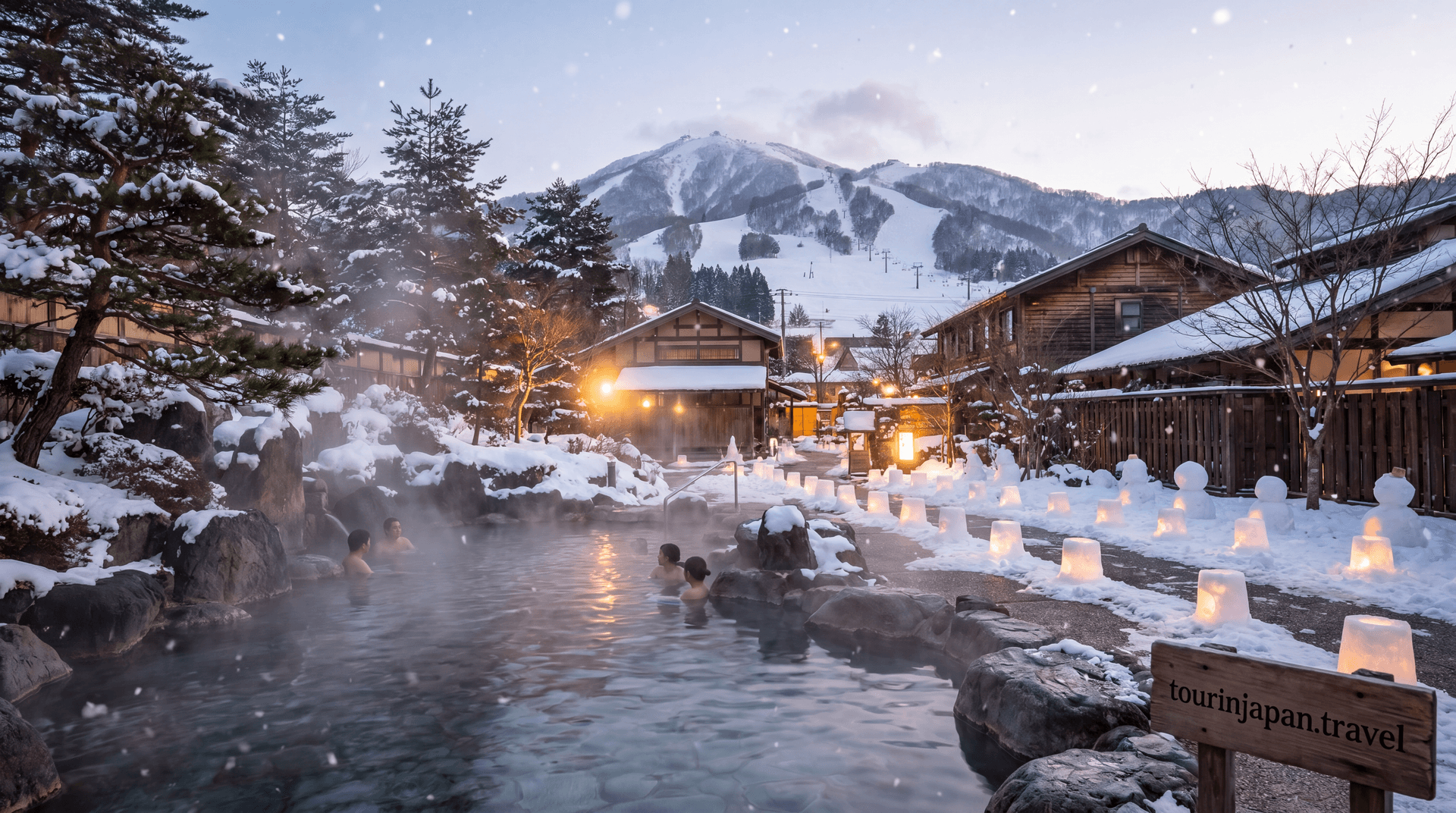
Noboribetsu in Hokkaido is Japan's most dramatic hot spring resort, built around Jigokudani (Hell Valley), where sulfurous steam vents from a volcanic crater. The spa facilities here use 11 different types of mineral water. Zao Onsen in Yamagata Prefecture combines ski slopes with hot spring baths and the extraordinary Juhyo ice monsters—trees encased in snow and ice that line the ski runs creating a fantasy landscape unique to Tohoku. Nyuto Onsen in Akita Prefecture has seven rustic woodland hot spring inns connected by forest paths, where bathing in a wooden tub as snow falls in the birch forest around you is the most evocative onsen experience in Japan.
- Niseko ski season: December through April; peak powder mid-January to late February
- Sapporo Snow Festival dates: typically first week of February; book accommodation 4-6 months ahead
- Equipment rental: all major ski resorts have full rental including ski boots for 4,000-6,000 yen/day
- Zao ice monsters (Juhyo): best January through February; night tours with illuminated trees available from 3,000 yen
- Kamakura lantern festival: Yokote Kamakura Festival in Akita (February 15-16) creates hundreds of snow igloos with candles inside
- Layering clothing: thermal base layer plus mid-layer plus waterproof shell sufficient for ski runs and city sightseeing
- Indoor heaters: Japanese buildings are well-heated; large temperature difference between outside and inside requires layering
- Tokyo in winter: January-February are clear and cold but rarely snowy; temples and gardens are beautiful and uncrowded
Japan's winter is underrated by travelers who assume the country is best in cherry blossom season. The combination of world-class skiing, atmospheric snow festivals, and the deeply satisfying experience of a hot spring bath in the cold make January-February one of the most rewarding times to visit—especially if you can afford to spend a few nights in a ryokan where the onsen experience is genuinely premium.
Stay Connected in Japan
Yesim eSIMs work on arrival — no physical SIM needed. Japan data plans from $5.