
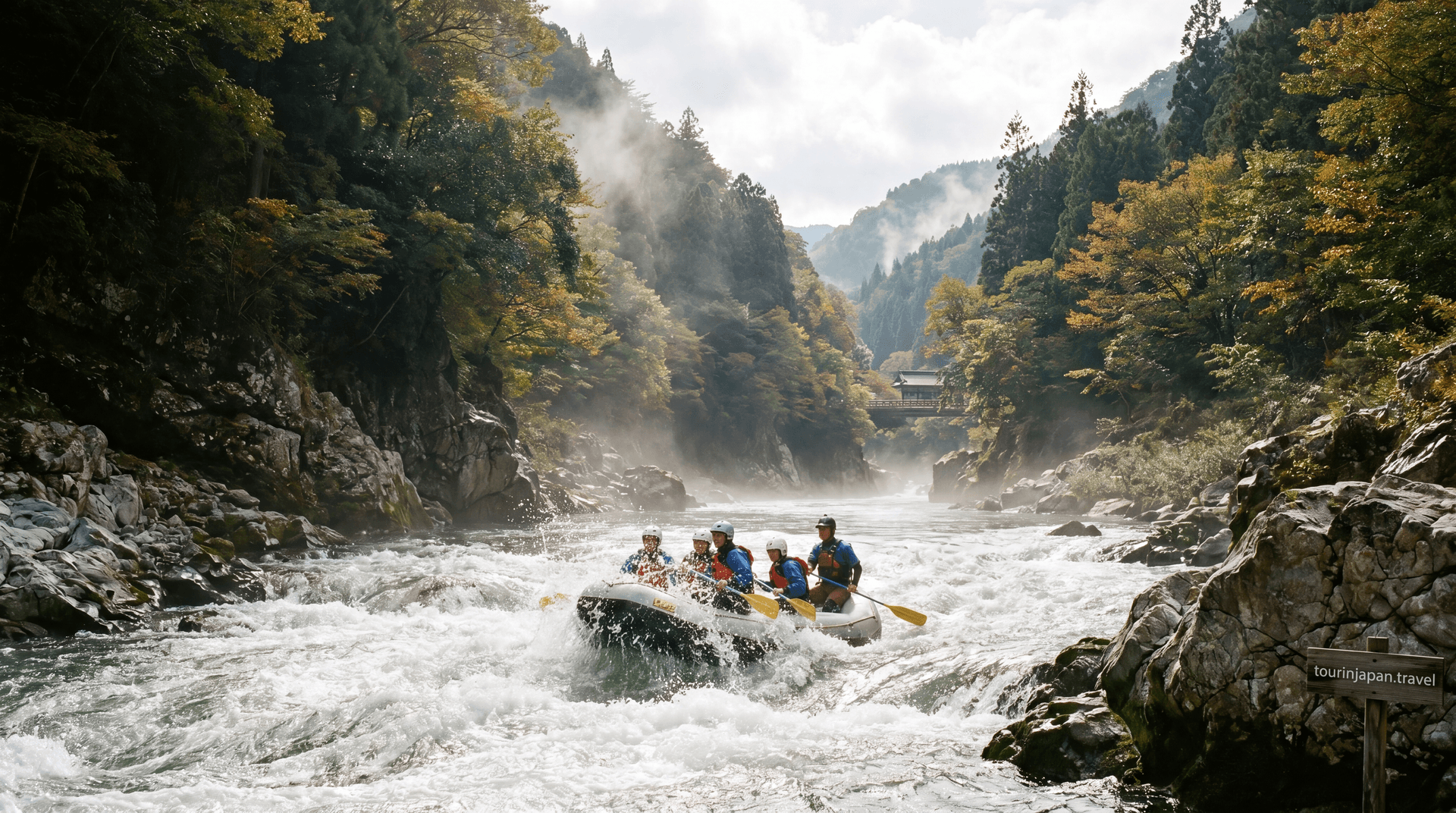
White-Water Rafting in Japan: Best Rivers in Hokkaido and Nagano
By Tour in Japan editors · Updated
Japan's mountainous terrain creates incredible white-water rafting opportunities. From gentle family-friendly floats to thrilling Class IV rapids, Japan's rivers offer something for every skill level. The best part? Many rivers are surrounded by stunning mountain scenery — you're rafting through Japan's most beautiful landscapes.
Why Raft in Japan?
| Factor | Details |
|---|---|
| Clean water | Crystal-clear mountain rivers |
| Scenery | Forested gorges, snow-capped peaks |
| Accessibility | Many rivers within 2–3 hours of Tokyo |
| Safety | Professional operators, strict regulations |
| Season | May–October (varies by location) |
Best Rafting Locations
1. Hokkaido: Chubetsu River (忠別川)
Japan's most famous rafting river
| Feature | Details |
|---|---|
| Location | Kamifurano, Hokkaido |
| Difficulty | Beginner to Intermediate |
| Best season | May–October |
| Water temperature | Cold (10–15°C) |
| Cost | ¥7,000–¥12,000 |
| Duration | 2–3 hours |
| Rapids | Class I–III |
Why it's the best: Crystal-clear water, stunning Daisetsuzan mountain backdrop, excellent guides. The river is wide enough for comfortable rafting but has enough rapids for excitement.
2. Hokkaido: Sorachi River (空知川)
Wilderness experience
| Feature | Details |
|---|---|
| Location | Yakumo, Hokkaido |
| Difficulty | Intermediate |
| Best season | June–September |
| Cost | ¥8,000–¥14,000 |
| Duration | 3–4 hours |
| Rapids | Class II–IV |
3. Nagano: Chikuma River (千曲川)
Longest river in Japan
| Feature | Details |
|---|---|
| Location | Ueda, Nagano |
| Difficulty | Beginner to Intermediate |
| Best season | June–October |
| Cost | ¥6,000–¥10,000 |
| Duration | 2–3 hours |
| Rapids | Class I–III |
Why visit: Close to Nagano city, combine with Zenko-ji Temple and onsen. Beautiful scenery with Japanese Alps backdrop.
4. Gunma: Tone River (利根川)
Closest to Tokyo
| Feature | Details |
|---|---|
| Location | Minakami, Gunma |
| Difficulty | Beginner to Advanced |
| Best season | May–October |
| Cost | ¥6,000–¥12,000 |
| Duration | 2–4 hours |
| Rapids | Class I–IV |
Why visit: Most accessible from Tokyo (2.5 hours). Multiple courses available, combined with canyoning options.
5. Nagano: Ina Valley (伊那谷)
Scenic gorge rafting
| Feature | Details |
|---|---|
| Location | Ina, Nagano |
| Difficulty | Beginner to Intermediate |
| Best season | June–September |
| Cost | ¥7,000–¥11,000 |
| Duration | 2–3 hours |
| Rapids | Class I–III |
Difficulty Levels
| Class | Description | Who Should Do It |
|---|---|---|
| Class I | Flat water, small waves | Families, children (6+) |
| Class II | Moderate waves, easy rapids | Beginners, comfortable swimmers |
| Class III | Significant waves, technical | Intermediate, some experience |
| Class IV | Powerful rapids, complex | Advanced, strong swimmers |
| Class V | Extreme, dangerous | Experts only (rare in Japan) |
What to Expect
Before the Trip
- Meeting point — usually at a parking area or office
- Registration — sign waiver, pay
- Gear fitting — wetsuit, helmet, life jacket, paddle
- Safety briefing — 15–20 minutes, very important
- Bus to river — 10–30 minutes to put-in point
On the River
- Guide in front — controls direction
- Paddling commands — "Forward!", "Back!", "Left!", "Right!"
- Stop points — calm areas for swimming, photos
- Rapids — exciting but controlled
- Swimming — optional in calm sections
After the Trip
- Take out point — bus back to office
- Change clothes — facilities provided
- Photos — operator usually sells photo packages
- Hot drink — tea or soup provided
- Lunch — some tours include lunch
What to Bring
Provided by Operator
- Wetsuit (full or shorty)
- Life jacket/PFD
- Helmet
- Paddle
- Waterproof jacket
What to Bring
- Swimsuit — wear under wetsuit
- Towel — for after
- Change of clothes — you'll get wet
- Waterproof camera — GoPro or similar
- Sunscreen — if sunny
- Water bottle — hydration
What NOT to Bring
- Jewelry — can get caught
- Valuables — leave in locker
- Regular shoes — you'll need water shoes
- Cotton clothes — gets cold when wet
Safety Tips
- Listen to your guide — they know the river
- Wear your life jacket — always, even in calm water
- Don't stand up in rapids — foot entrapment risk
- Stay in the boat — unless told to swim
- Hold your paddle correctly — blade facing forward
- Communicate — tell guides if you're uncomfortable
- Check weather — heavy rain changes river conditions
- Know your limits — don't attempt Class IV as a beginner
Seasonal Guide
| Season | Conditions | Best For |
|---|---|---|
| Spring (May) | High water, snowmelt | Intermediate+, fewer crowds |
| Summer (Jun–Aug) | Warmest water, moderate flow | Beginners, families |
| Autumn (Sep–Oct) | Cooling water, fall foliage | Intermediate, scenic |
| Winter (Nov–Apr) | Closed (too cold) | — |
Best months: July–August (warmest water, best conditions)
Booking Tips
How to Book
- Online: Most operators have English websites
- Hotels: Can arrange through your accommodation
- Tourist centers: Local visitor centers recommend operators
- Package deals: Combine with canyoning for discount
What to Ask
- Group size: Smaller groups get more attention
- Guide ratio: 1 guide per 6–8 people is ideal
- Photo package: Do they take photos?
- Lunch included?: Some tours include lunch
- Cancellation policy: What if weather is bad?
Budget Guide
| Category | Budget | Mid-range | Premium |
|---|---|---|---|
| Rafting | ¥6,000 | ¥9,000 | ¥14,000 |
| Transport | ¥2,000 (bus) | ¥5,000 (train) | ¥10,000 (car) |
| Accommodation | ¥3,000 (hostel) | ¥8,000 (ryokan) | ¥20,000 (resort) |
| Food | ¥1,500 | ¥3,000 | ¥5,000 |
| Total/day | ¥12,500 | ¥25,000 | ¥49,000 |
Tips for First-Timers
- Start with Class II — even if you're fit
- Trust the gear — life jackets float, helmets protect
- Listen to commands — "Forward!" means paddle hard
- Stay hydrated — rafting is physical
- Warm up after — hypothermia is real
- Bring a waterproof camera — you'll want memories
- Combine with onsen — many areas have hot springs nearby
- Book in advance — popular weekends fill up
Japanese Phrases
| Japanese | Pronunciation | Meaning |
|---|---|---|
| ラフティングをしたいです | Rafutingu wo shitai desu | "I want to go rafting" |
| 初心者です | Shoshinsha desu | "I'm a beginner" |
| 安全ですか? | Anzen desu ka? | "Is it safe?" |
| 写真を撮ってもいいですか? | Shashin wo tottemo ii desu ka? | "Can I take photos?" |
| ありがとうございます | Arigatō gozaimasu | "Thank you" |
Related Articles
Stay Connected in Japan
Yesim eSIMs work on arrival — no physical SIM needed. Japan data plans from $5.