
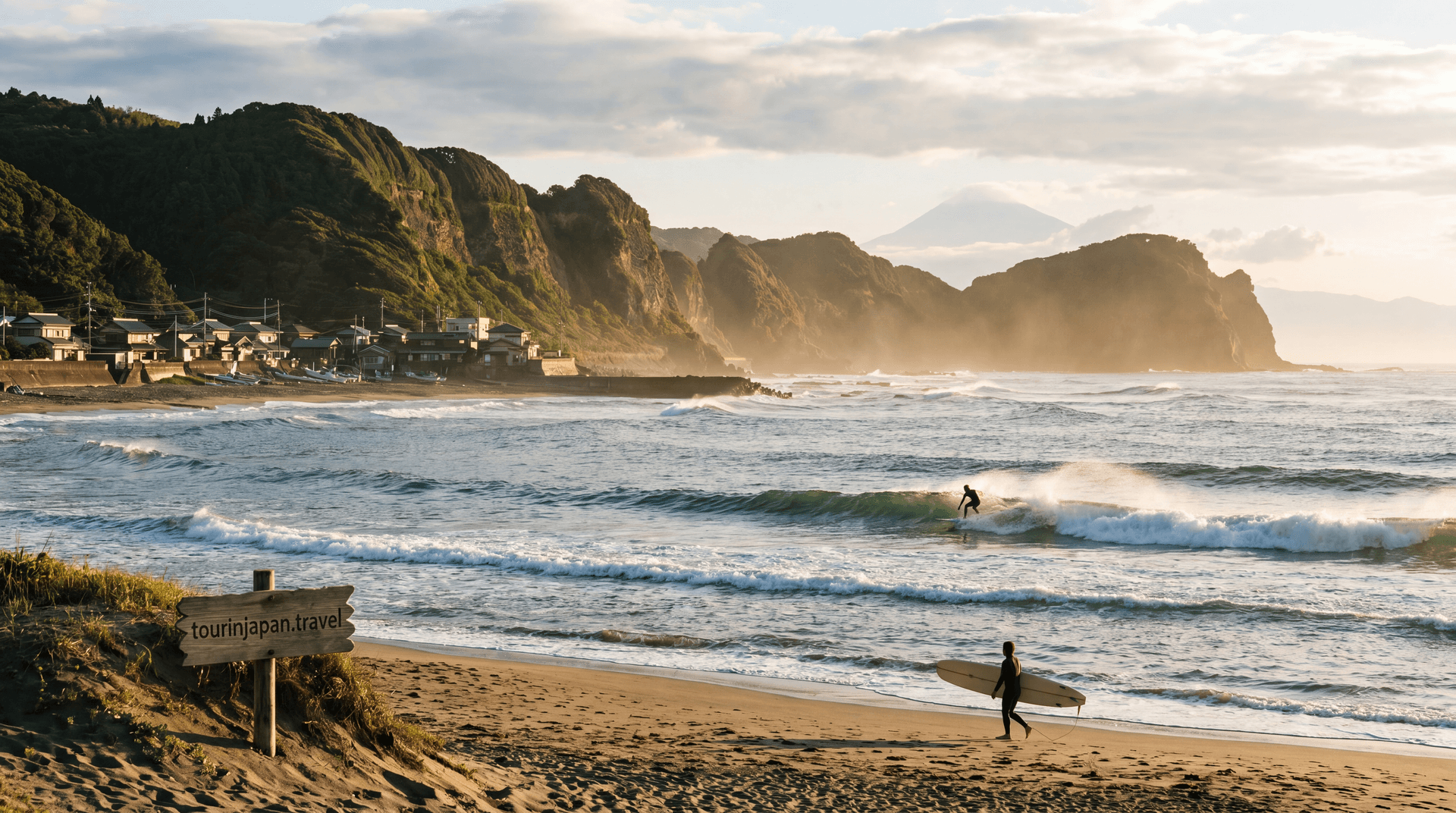
Surfing in Japan: Best Beaches in Chiba, Miyazaki, and Shizuoka
By Tour in Japan editors · Updated
Japan has a growing surf scene — from Chiba's consistent waves to Miyazaki's warm water and uncrowded breaks.
Japan has a growing surf scene — from Chiba's consistent waves to Miyazaki's warm water and uncrowded breaks.
Why Surf in Japan?
- Year-round surfing — warm water in south, wetsuit needed in north
- Uncrowded — compared to Australia, California
- Unique culture — surf + Japanese culture
- Affordable — board rental cheap, food cheap
- Safe — Japan is one of the safest countries in the world
Best Surf Regions
Chiba (Near Tokyo)
| Spot | Wave Type | Level | Season |
|---|---|---|---|
| Ichinomiya (Tsurigasaki) | Beach break | All levels | Year-round |
| Hebara | Beach break | Intermediate | Year-round |
| Katsuura | Reef break | Advanced | Year-round |
Miyazaki (Kyushu)
| Spot | Wave Type | Level | Season |
|---|---|---|---|
| Aoshima | Beach break | Beginner–Intermediate | Year-round |
| Nichinan | Reef break | Advanced | April–October |
| Shirahama | Beach break | All levels | Year-round |
Shizuoka
| Spot | Wave Type | Level | Season |
|---|---|---|---|
| Omaezaki | Point break | Intermediate | Year-round |
| Kugenuma | Beach break | All levels | Year-round |
| Irago | Reef break | Advanced | April–October |
Surf Seasons
| Region | Best Season | Water Temp |
|---|---|---|
| Chiba | Year-round | 16–26°C |
| Miyazaki | Year-round | 18–28°C |
| Shizuoka | Year-round | 16–26°C |
| Hokkaido | June–September | 15–22°C |
Board Rental
| Location | Price | Notes |
|---|---|---|
| Chiba | ¥3,000–5,000/day | Near Tokyo |
| Miyazaki | ¥3,000–5,000/day | Warm water |
| Shizuoka | ¥3,000–5,000/day | Near Tokyo |
| Hokkaido | ¥3,000–5,000/day | Summer only |
Tips
- Check surf reports — before heading out
- Respect local surfers — don't drop in on others
- Wear a wetsuit — if water is cool
- Bring reef shoes — for rocky entries
- Start small — beginner waves first
- Stay hydrated — sun + salt water
- Respect marine life — sharks are rare but exist
- Have fun — surfing is about the experience
📱Get a Japan eSIM
Stay Connected in Japan
Yesim eSIMs work on arrival — no physical SIM needed. Japan data plans from $5.