
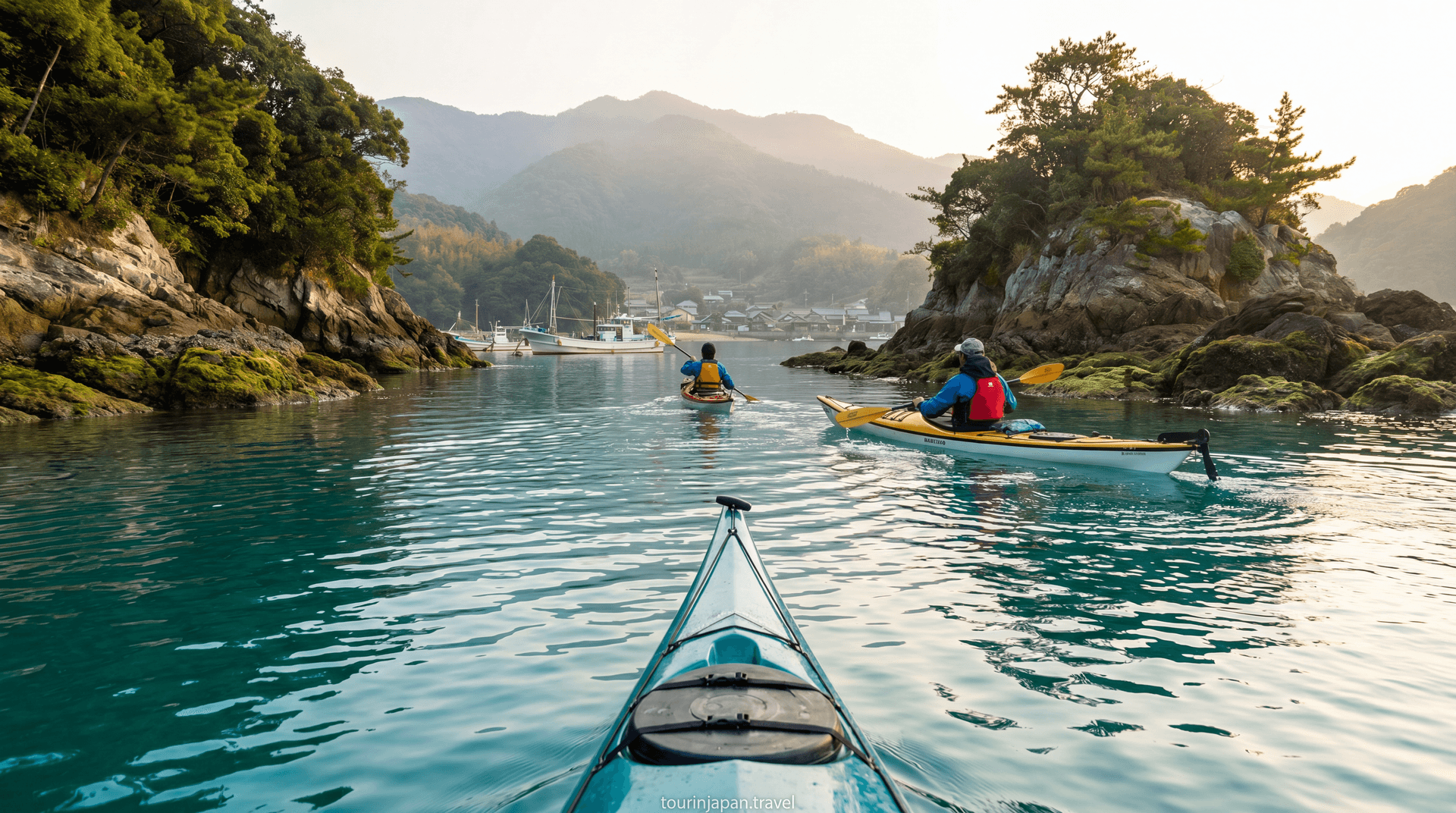
Sea Kayaking Japan: Coastal Routes in Kyushu and Inland Sea
By Tour in Japan editors · Updated
Japan's intricate coastline offers world-class sea kayaking through island chains, sea caves, and calm bays. Discover the best routes in Kyushu, the Inland Sea, and Okinawa.
Japan's coastline offers incredible sea kayaking — from volcanic islands to ancient fishing villages, with crystal-clear waters and dramatic scenery.
Why Sea Kayak in Japan?
Japan has 30,000 km of coastline with diverse landscapes — volcanic islands, limestone cliffs, ancient fishing villages, and calm bays. Sea kayaking offers a unique perspective on Japan's coastal beauty.
Best Regions for Sea Kayaking
| Region | Highlights | Difficulty | Best Season |
|---|---|---|---|
| Seto Inland Sea | Islands, calm water | Easy–Medium | Year-round |
| Kyushu | Volcanic scenery | Medium | Apr–Nov |
| Okinawa | Crystal water, coral | Easy–Medium | Year-round |
| Noto Peninsula | Fishing villages | Medium | May–Oct |
| Ise-Shima | Pearl islands | Easy | Apr–Oct |
Top 10 Sea Kayaking Routes
1. Seto Inland Sea (Shimanami Kaido)
- Location: Between Honshu and Shikoku
- Distance: 10–30 km
- Difficulty: Easy
- Highlights: Island hopping, bridges
- Best for: Beginners
2. Yakushima Island
- Location: Southern Kyushu
- Distance: 5–15 km
- Difficulty: Medium
- Highlights: Ancient forests, crystal water
- Best for: Nature lovers
3. Ise-Shima (Pearl Islands)
- Location: Mie Prefecture
- Distance: 5–10 km
- Difficulty: Easy
- Highlights: Pearl farms, abalone divers
- Best for: Cultural experience
4. Noto Peninsula
- Location: Ishikawa Prefecture
- Distance: 10–20 km
- Difficulty: Medium
- Highlights: Traditional fishing villages
- Best for: Photography
5. Okinawa (Cape Zampa)
- Location: Okinawa Island
- Distance: 5–10 km
- Difficulty: Easy
- Highlights: Coral reefs, tropical fish
- Best for: Snorkeling + kayaking
6. Kinosaki Onsen Coast
- Location: Hyogo Prefecture
- Distance: 5–10 km
- Difficulty: Easy
- Highlights: Coastal scenery, onsen nearby
- Best for: Combined with onsen
7. Tateyama Coast
- Location: Chiba Prefecture
- Distance: 10–15 km
- Difficulty: Medium
- Highlights: Cliffs, caves
- Best for: Day trip from Tokyo
8. Naoshima Island
- Location: Seto Inland Sea
- Distance: 5–10 km
- Difficulty: Easy
- Highlights: Art installations, calm water
- Best for: Art lovers
9. Shimoda Coast
- Location: Shizuoka Prefecture
- Distance: 5–10 km
- Difficulty: Easy
- Highlights: Beaches, dolphin watching
- Best for: Families
10. Okushiri Island
- Location: Hokkaido
- Distance: 10–20 km
- Difficulty: Medium–Hard
- Highlights: Dramatic coastline, wildlife
- Best for: Advanced paddlers
Kayaking Operators
Seto Inland Sea
| Operator | Location | Price | Notes |
|---|---|---|---|
| Shimanami Cycling Tour | Onomichi | ¥8,000 | Half day |
| Sea Kayak Japan | Imabari | ¥10,000 | Full day |
Kyushu
| Operator | Location | Price | Notes |
|---|---|---|---|
| Yakushima Tours | Yakushima | ¥12,000 | Full day |
| Beppu Kayak | Beppu | ¥8,000 | Half day |
Okinawa
| Operator | Location | Price | Notes |
|---|---|---|---|
| Okinawa Kayak Tours | Naha | ¥10,000 | Half day |
| Cape Zampa Tours | Chatan | ¥8,000 | Half day |
What to Bring
Essential Gear
| Item | Notes |
|---|---|
| Kayak | Usually provided by operator |
| Paddle | Usually provided |
| PFD | Usually provided |
| Wetsuit | Sometimes provided |
| Dry bag | For electronics |
| Sunscreen | SPF 50+ |
| Hat | Sun protection |
| Water shoes | For launching |
| Water bottle | Stay hydrated |
| Camera | Waterproof case |
What Operators Provide
- Kayak and paddle
- PFD (life jacket)
- Safety briefing
- Guide
- Some provide wetsuits
Seasonal Guide
| Season | Weather | Water Temp | Best For |
|---|---|---|---|
| Spring (Apr–May) | Mild | 15–18°C | Comfortable paddling |
| Summer (Jun–Aug) | Hot | 22–28°C | Longest days |
| Autumn (Sep–Nov) | Mild | 18–24°C | Best visibility |
| Winter (Dec–Feb) | Cold | 10–15°C | Advanced only |
Safety Tips
Essential Safety Rules
- Always wear PFD — non-negotiable
- Check weather — no kayaking in storms
- Tell someone — leave your plan
- Stay hydrated — drink water regularly
- Know your limits — don't overextend
- Follow guide — listen to instructor
What to Do If...
| Situation | Action |
|---|---|
| Capsized | Stay with kayak, signal for help |
| Fatigue | Rest, eat, hydrate |
| Weather change | Head to shore immediately |
| Current too strong | Paddle parallel to shore |
| Wildlife encounter | Stay calm, don't approach |
Budget Guide
Half-Day Kayaking Trip
| Category | Budget | Mid-Range | Premium |
|---|---|---|---|
| Tour | ¥8,000 | ¥12,000 | ¥20,000 |
| Transport | ¥2,000 | ¥5,000 | ¥8,000 |
| Food | ¥1,000 | ¥3,000 | ¥5,000 |
| Total | ¥11,000 | ¥20,000 | ¥33,000 |
Frequently Asked Questions
Q: Do I need experience? A: No! Most operators welcome beginners. They provide instruction and equipment.
Q: Can I kayak in winter? A: It's possible in southern regions (Okinawa, Kyushu) but not recommended for beginners.
Q: Is it safe for children? A: Yes, with proper equipment and calm conditions. Some operators offer family tours.
Q: Can I kayak solo? A: Experienced kayakers can, but guided tours are recommended for safety.
Q: What's the best region for beginners? A: Seto Inland Sea — calm water, easy routes, beautiful scenery.
Essential Japanese Phrases
| English | Japanese | Pronunciation |
|---|---|---|
| Kayak | カヤック | Kayakku |
| Life jacket | ライフジャケット | Raifu jaketto |
| Paddle | パドル | Padoru |
| Help! | 助けて! | Tasukete! |
| Beautiful view | 綺麗な景色 | Kirei na keshiki |
| Water | 水 | Mizu |
Sea kayaking in Japan offers a unique perspective on the country's stunning coastline — from volcanic islands to ancient fishing villages, with crystal-clear waters and dramatic scenery.
Stay Connected in Japan
Yesim eSIMs work on arrival — no physical SIM needed. Japan data plans from $5.