
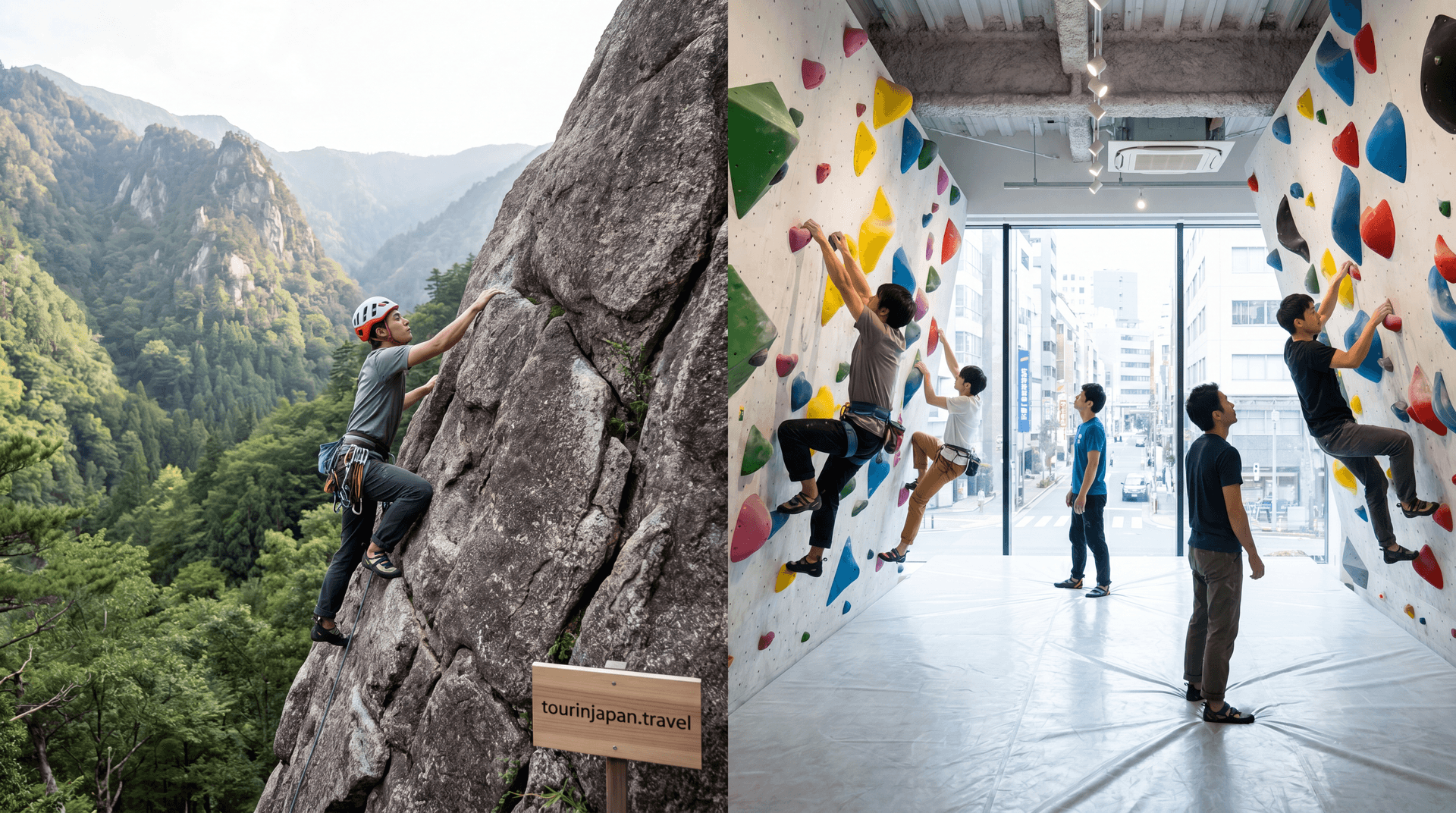
Bouldering and Rock Climbing in Japan: Indoor and Outdoor Crags
By Tour in Japan editors · Updated
Japan has a vibrant climbing scene from Olympic-grade indoor walls to granite crags in the Alps. Discover the best bouldering gyms and outdoor climbing in Mitake, Ogawayama, and Okinawa.
Rock climbing and bouldering in Japan combine world-class indoor facility culture with exceptional outdoor venues spread across the Japanese Alps, the Tanzawa Mountains southwest of Tokyo, and the subtropical limestone of Okinawa. Japan has taken climbing particularly seriously since Tokyo hosted the 2020 Olympics, where sport climbing debuted as a competitive discipline — the country has a thriving gym culture, strong domestic competition scene, and a genuine tradition of difficult sport and trad routes on the volcanic and granite faces of its mountain ranges.
Indoor Climbing in Tokyo
Tokyo has over 100 bouldering gyms within its metropolitan area, many of them world-class facilities that would be at home in any international climbing city. Bouldering Salon Wideboule in Shinjuku and B-PUMP Ogikubo are the most popular venues for visiting climbers, with extensive walls set to international grades (V-grade bouldering and French sport climbing grades), English-language grade charts, and day-use passes typically costing 1,500-2,000 yen. Rental shoes and chalk bags are available at all gyms for around 500-700 yen per item.
Mitake Bouldering: Accessible Outdoor Stone
Mitake, 90 minutes from central Tokyo by JR Chuo Line to Mitake Station, is the most accessible outdoor bouldering destination from Tokyo. The Tama River cuts through a boulder-strewn gorge here, and dozens of problems on river-smoothed granite have been established at grades from V1 to V11. The area is particularly appealing in autumn when the surrounding mountains color. The boulders require no equipment beyond shoes and chalk — no ropes, no guides, no permits.
Top climbing destinations in Japan
- Mitake, Tokyo vicinity: River bouldering, V1-V11, 90 min from Shinjuku, no gear required, September-May best
- Ogawayama, Nagano: Japan's premier sport and trad crag, 5.8-5.14b routes on granite, camping available
- Mizugaki-yama, Yamanashi: Dramatic granite domes with big wall potential and excellent sport routes
- Okinawa limestone: Sport climbing on sea cliffs near Nago; tropical conditions suit winter climbing
- Yosemite-style wall at Kobiwako, Shiga: 100-meter quartzite face with multi-pitch routes
- Chousen-iwa, Hyogo: Popular sport crag 2 hours from Osaka with hundreds of bolted routes
- Indoor: B-PUMP (Tokyo), Gravity Research (Osaka, Nagoya), Urban Research (Kyoto)
For Visiting Climbers: Practical Information
Most Japanese indoor climbing gyms allow entry with a day pass and rental gear, making them accessible to visiting climbers without their own equipment. Outdoor crags in Japan are generally open-access, though some require a permit or have seasonal closures due to bird nesting (typically March-July on certain cliffs). The Japanese Mountain Climbers Association (Nihon Kinren) publishes guidebooks in Japanese for all major areas; Kansai Rock by Kenchi Nakamura is the most comprehensive English-language guide for western Japan.
Japanese climbing etiquette emphasizes quiet and cleanliness at crags. Remove chalk with a wire brush from holds after your session at popular bouldering areas, do not camp where prohibited, and observe any posted restrictions. The climbing community here is welcoming to international visitors and most Tokyo gym staff speak adequate English for registration and safety briefings.
Stay Connected in Japan
Yesim eSIMs work on arrival — no physical SIM needed. Japan data plans from $5.