
Japan Overtourism 2026: Which Sites Are Limiting Visitors and When
By Tour in Japan editors · Updated
Japan's most popular sites are implementing visitor caps, timed entry, and restricted zones. Here's which attractions have limits in 2026 and how to plan around them.
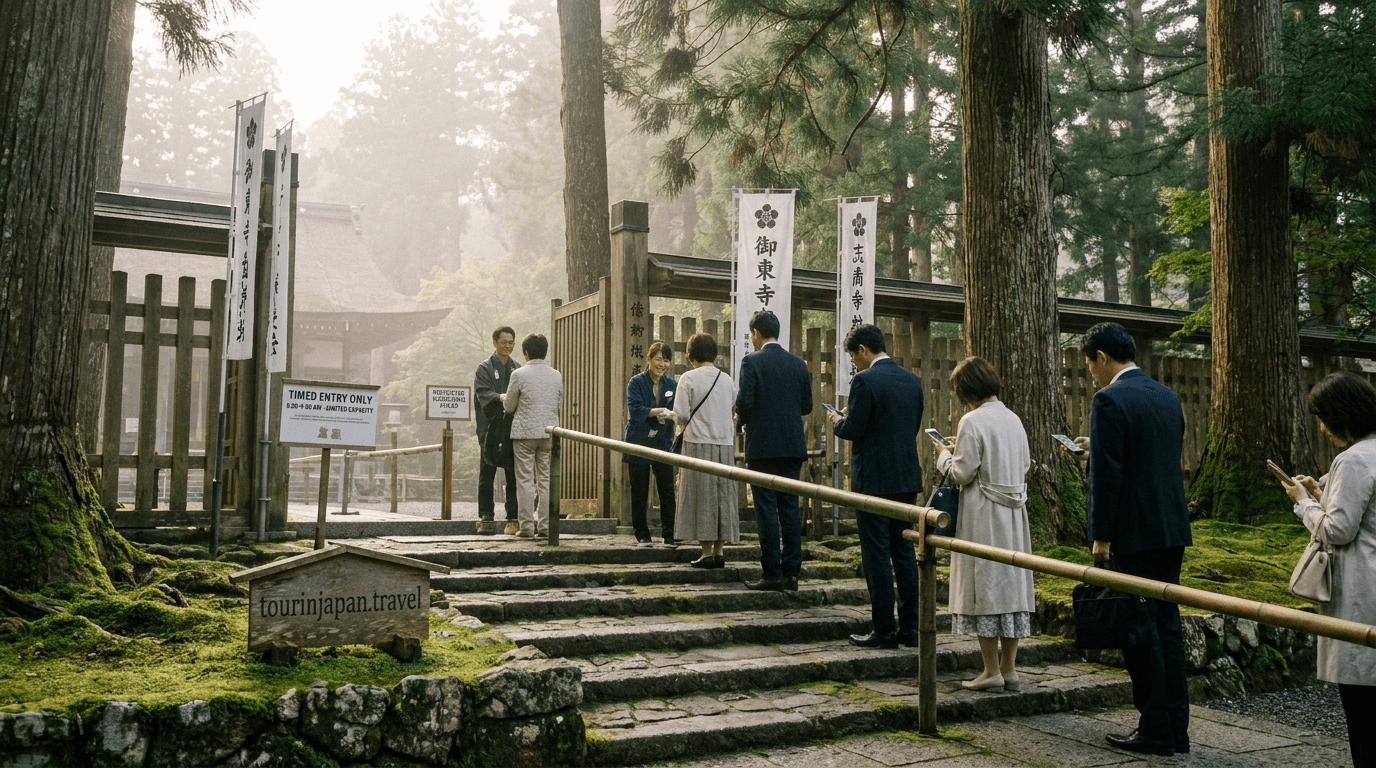
Japan overtourism 2026 has become one of the most significant issues shaping the travel experience in Japan's most visited destinations. Record tourist arrivals following Japan's border reopening have pushed iconic sites to their limits, prompting local governments and attraction operators to implement caps, timed entry, barriers, and fees specifically targeting tourists. This guide to Japan overtourism visitor limits covers which sites have restrictions in place for 2026 and how to plan your visit accordingly.
Sites With Active Visitor Limits in 2026
Mount Fuji's Yoshida Trail gate closure (4pm-3am) and daily limit of 4,000 climbers has been one of the most visible measures. In Kyoto, Gion district has installed barriers blocking photography from public roads of geisha streets during popular evening hours, and several machiya (townhouse) alleyways have been closed entirely. Fushimi Inari has limited photography operations in the torii gates area during peak hours.
Kamakura has implemented voluntary traffic diversion on peak days, asking tourists to avoid certain narrow residential streets that had become tourist thoroughfares. Nara's deer park now has restricted feeding zones. Hakone's popular Oshino Hakkai springs installed ticketing systems and timed entry after crowds damaged the traditionally open grounds. Miyajima Island in Hiroshima Prefecture introduced a 200 yen day-visitor fee in 2023, retained in 2026.
Kyoto: The Most Affected City
Kyoto has faced the most aggressive overtourism management of any Japanese city. Geisha district barriers in Gion are staffed by personnel who will fine tourists 10,000 yen for taking photos in restricted areas. Several smaller temples that had been freely accessible have implemented reservation systems with limited daily quotas — Daitoku-ji sub-temples, Enko-ji, and Jonangu all require advance booking in peak seasons.
The city has also implemented a bus capacity management system where popular routes stop accepting non-IC card passengers during peak hours, effectively limiting the number of tourists who can access certain neighborhoods. Arashiyama Bamboo Grove is considering a paid timed entry system modeled on Hakone's approach.
How to Navigate Overtourism Restrictions in 2026
- Book timed entry tickets for popular sites well in advance — many sell out weeks ahead
- Visit popular sites at opening time (8-9am) — crowds double by 10am at most locations
- Weekday visits see dramatically lower crowds than weekends and national holidays
- In Kyoto, respect the Gion photography ban — fines are 10,000 yen and actively enforced
- Explore secondary cities: Nara, Kanazawa, Matsumoto, and Beppu offer similar experiences with far fewer crowds
- Shoulder seasons (May-June, September-October) offer better weather and thinner crowds than peak summer and cherry blossom
- Japan Tourism Agency's 'Alternate Tourism' campaign actively promotes off-the-beaten-track destinations with incentives
The overtourism situation in Japan reflects a genuine tension between the country's desire to welcome international visitors and the need to protect both the sites themselves and the quality of life for local residents. The trend is clearly toward more restrictions, not fewer. Travelers who plan ahead, book in advance, arrive early, and show respect for local rules will continue to have exceptional experiences. Those who expect to simply turn up to the most famous spots at noon on a Saturday may be disappointed.
Stay Connected in Japan
Yesim eSIMs work on arrival — no physical SIM needed. Japan data plans from $5.