
First Time in Japan? Everything You Need to Know (2026 Edition)
By Tour in Japan editors · Updated
Japan can feel overwhelming for first-time visitors. But with the right preparation, it's one of the most rewarding travel destinations on Earth. Here's everything you need to know.
Before You Go
Visa Requirements
Most Western countries don't need a visa for stays up to 90 days.
| Country | Visa Required? | Stay Limit |
|---|---|---|
| USA | No | 90 days |
| UK | No | 90 days |
| Canada | No | 90 days |
| Australia | No | 90 days |
| EU countries | No | 90 days |
| Most Asian countries | No | 30-90 days |
Check your specific country on the Japanese Ministry of Foreign Affairs website.
When to Go
| Season | Pros | Cons | Best For |
|---|---|---|---|
| Spring (Mar-May) | Cherry blossoms, mild weather | Crowded, expensive | First-timers |
| Summer (Jun-Aug) | Festivals, long days | Hot, humid, rainy | Festival lovers |
| Autumn (Sep-Nov) | Autumn leaves, comfortable | Typhoon season | Nature lovers |
| Winter (Dec-Feb) | Skiing, illuminations, fewer crowds | Cold, some closures | Budget travelers |
My recommendation for first-timers: Late March to mid-April (cherry blossoms) or mid-October to late November (autumn leaves).
What to Book in Advance
Must book ahead:
- Flights — especially during peak seasons
- Hotels — popular areas fill up fast
- JR Pass — order online before arrival
- Restaurant reservations — for popular spots (use Tabelog or Omakase)
Can book later:
- Day trips — trains run frequently
- Activities — most can be booked on arrival
- Accommodation in smaller cities — easier to find
What to Pack
Essentials:
- Comfortable walking shoes — you'll walk 15,000-20,000 steps daily
- Small daypack — for daily essentials
- Portable charger — for your phone
- Cash — Japan is still cash-heavy
- Passport — you'll need it for tax-free shopping
Nice to have:
- Pocket Wi-Fi or SIM card — rent at airport
- Universal adapter — Japan uses Type A (US-style plugs)
- Light rain jacket — weather changes quickly
- Reusable water bottle — tap water is safe
Don't pack:
- Too many clothes — laundromats are everywhere
- Large suitcases — trains have limited space
- Expectations — let Japan surprise you
Arriving in Japan
Airports
| Airport | Location | Best For |
|---|---|---|
| Narita (NRT) | 60 km from Tokyo | International flights |
| Haneda (HND) | 15 km from Tokyo | Closer, some international |
| Kansai (KIX) | 50 km from Osaka | Western Japan |
Getting from Airport to City
From Narita:
| Option | Time | Cost | Notes |
|---|---|---|---|
| Narita Express | 60 min | ¥3,070 | Covered by JR Pass |
| Keisei Skyliner | 40 min | ¥2,520 | Fastest |
| Airport limousine bus | 85 min | ¥3,200 | Most comfortable |
| Budget bus | 90 min | ¥1,000 | Cheapest |
From Haneda:
| Option | Time | Cost | Notes |
|---|---|---|---|
| Monorail | 20 min | ¥500 | To Hamamatsucho |
| Keikyu Line | 20 min | ¥300 | To Shinagawa |
| Limousine bus | 30 min | ¥1,000 | Direct to hotels |
From Kansai:
| Option | Time | Cost | Notes |
|---|---|---|---|
| JR Haruka | 50 min | ¥2,900 | To Kyoto/Osaka |
| Nankai Rapi:t | 40 min | ¥1,450 | To Namba |
| Airport bus | 60 min | ¥1,600 | To Kobe |
Getting Around Japan
Trains
Japan's train system is the best in the world.
Key lines to know:
- JR Yamanote Line — loops around central Tokyo
- Tokyo Metro — subway system
- JR Tokaido Shinkansen — Tokyo to Osaka
- JR Sanyo Shinkansen — Osaka to Hiroshima
How to use:
- Buy a Suica/Pasmo card — tap in and out at gates
- Or use IC card — works on most trains and buses
- Check Hyperdia or Google Maps — for route planning
- Stand on the left — walk on the right (in Tokyo)
IC Cards (Suica/Pasmo)
Your magic ticket for Japanese trains.
| Card | Where to Get | Cost | Coverage |
|---|---|---|---|
| Suica | JR stations | ¥500 deposit | JR + Metro |
| Pasmo | Private railway stations | ¥500 deposit | Private + Metro |
| Welcome Suica | Airport | No deposit | Limited validity |
Tip: You can also use IC cards at convenience stores, vending machines, and some restaurants.
Buses
Useful for areas not covered by trains.
- City buses: ¥210-230 per ride
- Highway buses: For long-distance travel (budget option)
- Local buses: For temples and rural areas
Taxis
Expensive but convenient.
- Starting fare: ¥500-710
- Per km: ¥100-150
- Door opens automatically — don't try to open it
- Sit in back — front seat is for the driver
- Pay at end — through the window
Renting a Car
Only for rural areas.
- International driving permit required
- Drive on the left — opposite of most countries
- Highway tolls are expensive
- Parking is expensive in cities
- Best for: Hokkaido, Tohoku, rural Kyushu
Money in Japan
Currency
- Yen (¥) — the only currency accepted
- Bills: ¥1,000, ¥5,000, ¥10,000
- Coins: ¥1, ¥5, ¥10, ¥50, ¥100, ¥500
Cash vs Card
Japan is more cash-heavy than you'd expect.
| Place | Cash | Card |
|---|---|---|
| Convenience stores | ✅ | ✅ |
| Train stations | ✅ | ✅ |
| Restaurants | ✅ | Sometimes |
| Shops | ✅ | Usually |
| Temples/Shrines | ✅ | Rarely |
| Vending machines | ✅ | Sometimes |
Tip: Carry ¥10,000-20,000 in cash at all times.
ATMs
- 7-Eleven ATMs — best for foreign cards
- Japan Post ATMs — also reliable
- Airport ATMs — always available
- Fees: ¥110-220 per withdrawal
Budget Breakdown
| Budget Level | Daily Cost | What You Get |
|---|---|---|
| Budget | ¥5,000-8,000 | Hostels, convenience store food, public transport |
| Mid-range | ¥10,000-20,000 | Hotels, restaurants, attractions |
| Comfort | ¥20,000-40,000 | Nice hotels, good restaurants, all attractions |
| Luxury | ¥40,000+ | Ryokans, fine dining, private tours |
Food in Japan
Types of Restaurants
| Type | Price | What to Expect |
|---|---|---|
| Gyudon | ¥400-600 | Beef bowl chains (Yoshinoya, Matsuya) |
| Ramen | ¥700-1,000 | Noodle soup shops |
| Izakaya | ¥2,000-4,000 | Japanese pub food |
| Tempura | ¥1,000-2,000 | Deep-fried seafood/vegetables |
| Sushi | ¥2,000-5,000 | Conveyor belt to high-end |
| Kaiseki | ¥10,000-30,000 | Traditional multi-course |
Must-Try Foods
- Ramen — every region has its own style
- Sushi — from conveyor belt to Michelin-starred
- Tempura — light, crispy perfection
- Okonomiyaki — savory pancake
- Yakitori — grilled chicken skewers
- Tonkatsu — breaded pork cutlet
- Udon — thick wheat noodles
- Soba — buckwheat noodles
- Matcha — green tea everything
- Wagashi — traditional sweets
Food Etiquette
Do's:
- Say "itadakimasu" before eating
- Use chopsticks — ask for fork if needed
- Slurp noodles — it's polite!
- Say "gochisousama" after eating
Don'ts:
- Don't stick chopsticks upright in rice (funeral tradition)
- Don't pass food chopstick-to-chopstick (funeral tradition)
- Don't tip — it's not expected
- Don't pour your own drink — pour for others
Etiquette & Culture
Basic Etiquette
The Golden Rules:
- Bow — a slight nod shows respect
- Remove shoes — when entering homes, temples, some restaurants
- Be quiet — on trains, in public
- Queue properly —日本人 love orderly lines
- No eating while walking — find a spot to stand
Onsen (Hot Springs) Etiquette
- Wash thoroughly before entering the bath
- No swimsuits — nude bathing only
- Small towel — place on your head, not in the water
- Tattoos — some onsen don't allow them (check first)
- Be quiet — onsen are for relaxation
Shrine & Temple Etiquette
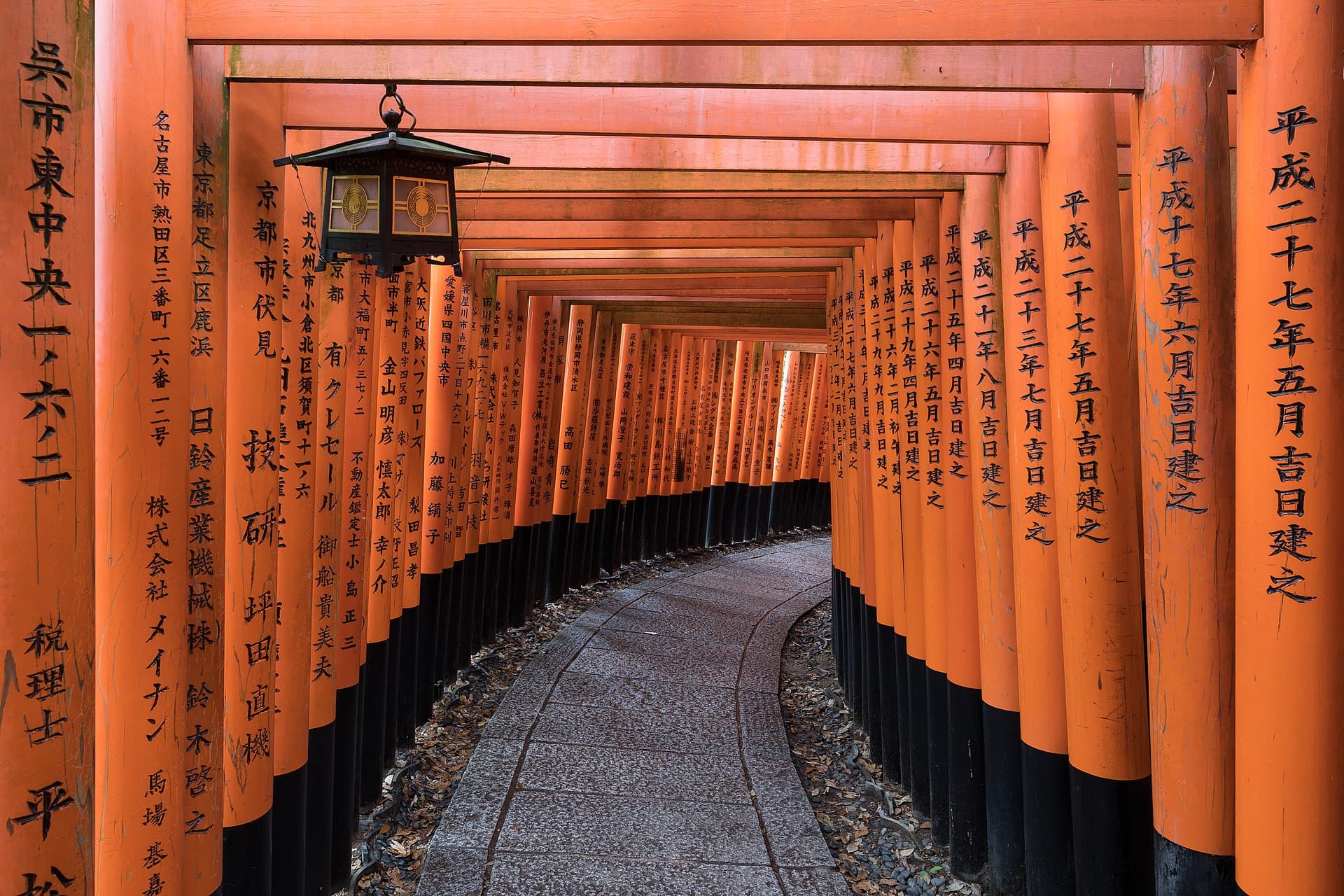
- Bow at the torii gate (shrine) or entrance (temple)
- Wash hands at the temizuya (water pavilion)
- Clap twice at shrines (not temples)
- Make a wish after clapping
- Don't walk in the center of the path (that's for the gods)
Shopping Etiquette
- Don't touch items unless you're buying
- Don't haggle — fixed prices
- Say "sumimasen" to get attention
- Tax-free shopping — bring your passport
- Bags are extra — bring your own
Essential Japanese Phrases
Survival Phrases
| Japanese | English | When to Use |
|---|---|---|
| Sumimasen | Excuse me / Sorry | Getting attention, apologizing |
| Arigatou gozaimasu | Thank you | After receiving something |
| Itadakimasu | I humbly receive | Before eating |
| Gochisousama | Thank you for the meal | After eating |
| Kudasai | Please | Asking for something |
| Eigo no menu | English menu | At restaurants |
| Toire wa doko? | Where's the bathroom? | When you need it |
| Ikura desu ka? | How much is it? | Shopping |
Numbers
| Number | Japanese | Pronunciation |
|---|---|---|
| 1 | ichi | ee-chee |
| 2 | ni | nee |
| 3 | san | sahn |
| 4 | shi/yon | shee/yohn |
| 5 | go | goh |
| 6 | roku | roh-koo |
| 7 | shichi/nana | shee-chee/nah-nah |
| 8 | hachi | hah-chee |
| 9 | kyuu/ku | kyoo/kuu |
| 10 | juu | joo |
Apps to Download
Essential Apps
| App | Purpose | Notes |
|---|---|---|
| Google Maps | Navigation | Works great in Japan |
| Hyperdia | Train schedules | More accurate than Google Maps |
| Tabelog | Restaurant reviews | Like Yelp but better |
| Google Translate | Translation | Camera feature for menus |
| XE Currency | Currency conversion | For quick price checks |
| PayPay | Mobile payment | Japan's main QR payment |
Optional Apps
| App | Purpose | Notes |
|---|---|---|
| Navitime | Train routes | Alternative to Hyperdia |
| Japan Travel | Planning | Offline maps |
| KYOTO Travel | Kyoto-specific | Temples, events |
Common Mistakes to Avoid
- Overplanning — leave room for spontaneity
- Not enough cash — ATMs aren't everywhere
- Too much luggage — use takkyubin (luggage forwarding)
- Skipping smaller cities — Kyoto and Tokyo aren't all of Japan
- Not trying convenience store food — 7-Eleven is delicious
- Being afraid to get lost — it's part of the adventure
- Not saying "sumimasen" — the most useful word in Japanese
Sample First-Timer Itinerary
7 Days: Classic Japan
| Day | Location | Highlights |
|---|---|---|
| 1 | Tokyo | Arrive, explore Shinjuku |
| 2 | Tokyo | Asakusa, Akihabara, Shibuya |
| 3 | Tokyo | Harajuku, Meiji Shrine, Shinjuku at night |
| 4 | Day trip | Nikko or Kamakura |
| 5 | Kyoto | Shinkansen, Fushimi Inari, Gion |
| 6 | Kyoto | Arashiyama, Kinkaku-ji, tea ceremony |
| 7 | Osaka | Day trip: Dotonbori, Osaka Castle, street food |
10 Days: Extended Japan
| Day | Location | Highlights |
|---|---|---|
| 1-3 | Tokyo | Full exploration |
| 4 | Day trip | Mt. Fuji / Hakone |
| 5-6 | Kyoto | Temples, shrines, geisha district |
| 7 | Nara | Deer park, giant Buddha |
| 8-9 | Osaka | Food capital, nightlife |
| 10 | Hiroshima | Peace Park, Miyajima Island |
Final Tips
- Be polite — Japanese culture values courtesy above all
- Be patient — things work differently here
- Be curious — try everything, even if you don't know what it is
- Be respectful — you're a guest in their country
- Have fun — Japan is amazing, and you're going to love it
Welcome to Japan
Japan is a country that rewards curiosity. The more you explore, the more you discover. The more you learn, the more you realize how much there is to learn.
Your first trip will be unforgettable. And you'll already be planning your second before you leave.
Welcome to Japan. You're going to love it here.
Stay Connected in Japan
Yesim eSIMs work on arrival — no physical SIM needed. Japan data plans from $5.