
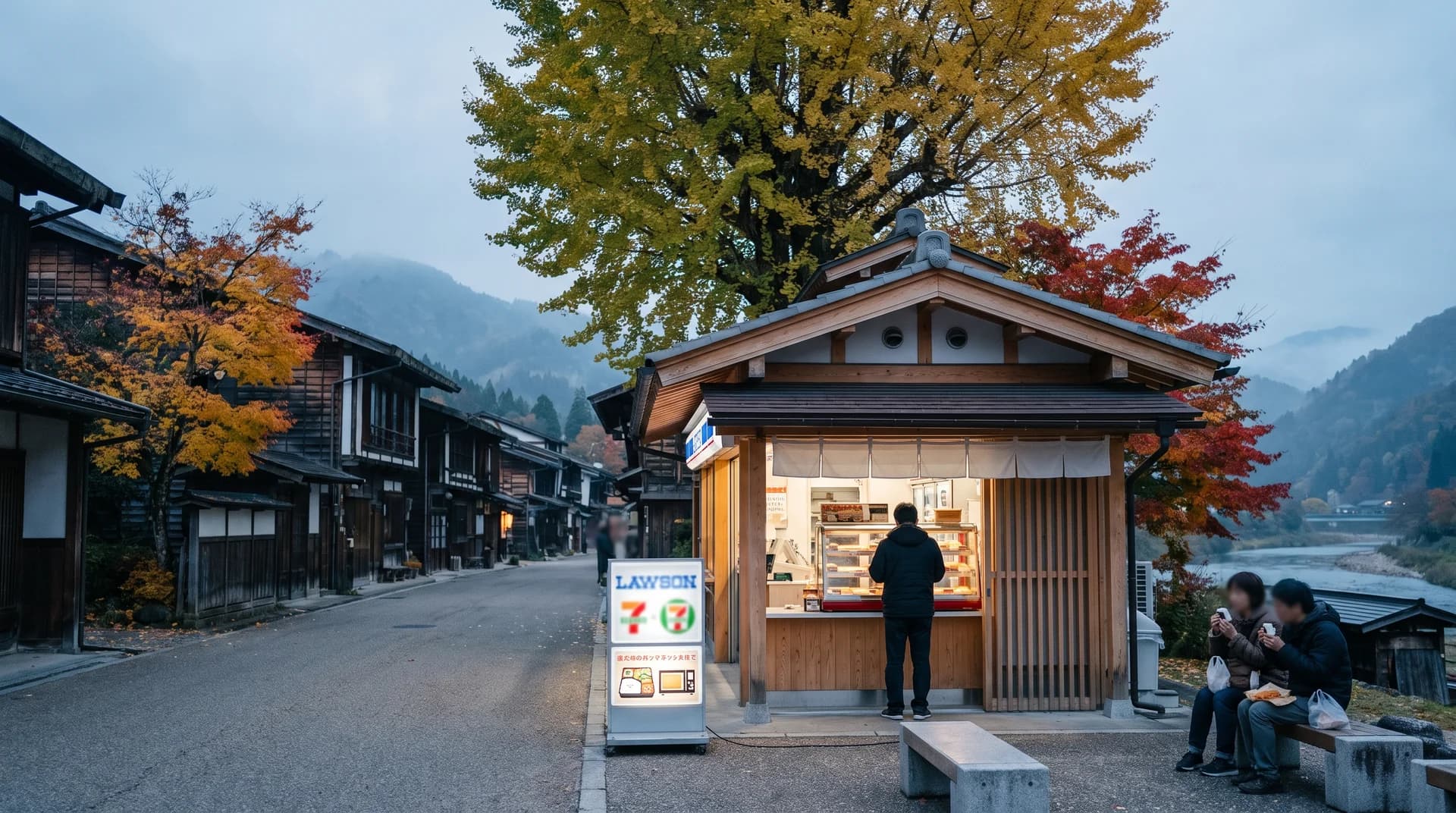
Japan Konbini Guide: Budget Eating at 7-Eleven & Lawson
By Tour in Japan editors · Updated
Master Japan konbini eating to save on food costs. This guide unlocks a budget-friendly itinerary using 7-Eleven and Lawson, where meals cost ¥500 to ¥1,200. A concrete must-know: use the in-store ovens for hot pizza and the microwave for bento boxes.
The smell of toasted sesame and steamed buns hits you the moment you slide open the glass door of a 7-Eleven in Shinjuku. For the independent traveler, the convenience store—or konbini—is not just a place to buy a bottle of water; it is a fully functional food court, ATM hub, and logistics center. This guide to Japan konbini budget eating is for first-time visitors and budget-conscious backpackers who want to keep their daily food spend low without sacrificing quality or variety.
Navigating Japan on a budget requires a strategy. While high-end sushi and kaiseki are available, the real secret to surviving a two-week trip without draining your bank account is the strategic use of the 'Big Three': 7-Eleven, Lawson, and FamilyMart. These stores are open 24 hours a day, located on nearly every street corner in Tokyo, Osaka, and Kyoto, and offer a rotating menu of seasonal items that often rival restaurant quality. Whether you are grabbing a quick breakfast before heading to a temple or a late-night snack after a long day of walking, the konbini is your most reliable ally.
Essential Highlights & Local Itinerary (H2)
To experience the best of Japan konbini budget eating, you don't need a map, but you do need a plan. Most travelers treat these stores as afterthoughts, but treating them as a culinary exploration allows you to save significant funds for activities and transport.
The Morning Rush: Lawson (ローソン)
Start your day at a Lawson. These stores are famous for their premium desserts and high-quality bento. Look for the 'Ittentoppasugi' series—these are single-minded bento boxes designed to focus on one primary ingredient for maximum flavor rather than a variety of small sides.
- Location: Any Lawson branch in major districts like Shibuya or Umeda.
- Transport: Accessible via any JR Line or Metro station exit.
- Timing: 7:00 AM to 9:00 AM for the freshest stock. This is when the morning shipments arrive, ensuring the softest bread and freshest salads.
- Cost: Bento boxes typically range from ¥500 to ¥800 (~$3.30 to $5.30 USD). A typical breakfast combo of a tuna onigiri (¥140) and a black coffee (¥110) will cost you roughly ¥250.
The Mid-Day Fuel: 7-Eleven (セブン-イレブン)
For lunch, head to 7-Eleven. Their hot food section is widely considered the gold standard among the chains. Specifically, look for their revamped convenience store pizzas. These are kept in a heated display and are designed with enhanced size and texture to satisfy a full meal's hunger.
- Location: Ubiquitous; usually found directly adjacent to subway exits.
- Transport: Walkable from any transit hub.
- Timing: 12:00 PM to 2:00 PM (be aware that popular items sell out quickly during the salaryman lunch hour). If you arrive at 1:30 PM, you may find the most popular bento boxes are gone, but the hot pizza and fried chicken are usually replenished.
- Cost: Pizza slices or small whole pizzas range from ¥300 to ¥600 (~$2.00 to $4.00 USD). A filling lunch of a pizza slice, a small side salad (¥200), and a bottled green tea (¥160) totals approximately ¥700–¥900.
The Evening Wind-down: FamilyMart (ファミリーマート)
End your day with the 'Famichiki'—the legendary fried chicken from FamilyMart. It is a rite of passage for any traveler in Japan. Pair this with a seasonal drink or a small salad to balance the meal. If you are visiting during the colder months, check out the Japan Autumn Travel Guide: Foliage Forecasts and Snacks to see how seasonal konbini offerings change with the weather.
- Location: Found in every residential and commercial neighborhood.
- Transport: Walkable.
- Timing: 8:00 PM to 11:00 PM. Pro tip: Visit after 8:00 PM to find 'discount stickers' (waribiki) on fresh bento and sushi, often reducing the price by 20% to 50%.
- Cost: Famichiki pieces are usually around ¥220 (~$1.50 USD). A full dinner of Famichiki, a large onigiri (¥160), and a canned highball (¥180) comes to roughly ¥560.
The Play: Step-by-Step Konbini Mastery (H2)
Eating at a konbini is more than just grabbing a sandwich; there is a specific workflow to maximize value and quality. Follow these steps to eat like a local pro.
Step 1: The Strategic Selection
Don't just grab the first thing you see. Walk the entire perimeter of the store.
- The Cold Section: Start here for onigiri and sandwiches. Look for the 'New' (新発売) tags to try seasonal flavors.
- The Hot Case: Check the counter for fried chicken (Famichiki, L-Chiki, or Nanachiki) and steamed buns (Nikuman).
- The Bento Wall: Look for the meal sets. If you see a bento with a 'Half-Price' sticker, grab it immediately—these are usually safe to eat if consumed within a few hours.
Step 2: The Heating Process
This is where most tourists get confused. You don't just take your food to the counter; there is a dialogue regarding temperature.
- The Request: When the clerk scans your bento or onigiri, they will ask: 'Atatame-masu ka?' (Would you like this heated?).
- The Response: Reply 'Hai, onegaishimasu' (Yes, please) or 'Iie, kekkou desu' (No, thank you).
- The Wait: The clerk will place your item in a high-powered microwave. For onigiri, they use a specific heating method that warms the rice without making the seaweed (nori) soggy. For bento, they usually wrap the top in a plastic film to retain moisture.
Step 3: The Beverage Pairing
Japan's beverage game is unmatched. To save money, avoid the expensive imported sodas and stick to the house brands.
- Tea: Grab a 500ml bottle of unsweetened Oolong or Green tea for ¥100–¥160. It's the healthiest and cheapest way to stay hydrated.
- Coffee: Use the in-store machines. 7-Eleven's 'Seven Cafe' offers high-quality Arabica beans. You select your size (S, M, L) and roast, pay at the counter, and then operate the machine yourself. Cost: ¥110 to ¥200.
Step 4: Waste Management
Japan has very few public trash cans. Carrying your trash is the norm.
- The Return: The most respectful way to handle your waste is to bring your empty bento trays and plastic bottles back to the konbini where you bought them.
- Sorting: Use the designated bins: 'Plastic' (ペットボトル), 'Burnable' (燃えるゴミ), and 'Cans' (缶).
Real-World Example: A 3-Day Budget Food Log (H2)
To illustrate how this works in practice, here is a realistic 3-day eating plan for a solo traveler in Tokyo using only konbinis and one cheap local eatery.
Day 1: The 'First-Timer' Exploration
- Breakfast (Lawson): 1 Egg Salad Sandwich (¥280) + 1 Hot Coffee (¥120). Total: ¥400.
- Lunch (7-Eleven): 1 Pepperoni Pizza Slice (¥350) + 1 Bottled Water (¥110). Total: ¥460.
- Dinner (FamilyMart): 1 Salmon Onigiri (¥150) + 1 Famichiki (¥220) + 1 Miso Soup cup (¥120). Total: ¥490.
- Daily Total: ¥1,350 (~$9.00 USD).
Day 2: The 'Protein-Packed' Day
- Breakfast (7-Eleven): 1 Boiled Egg Pack (2 eggs, ¥160) + 1 Apple (¥150) + 1 Tea (¥120). Total: ¥430.
- Lunch (Lawson): 1 Ittentoppasugi Pork Ginger Bento (¥650) + 1 Green Tea (¥120). Total: ¥770.
- Dinner (Local Yoshinoya/Matsuya): 1 Beef Bowl (Gyudon) Regular (¥450). Total: ¥450.
- Daily Total: ¥1,650 (~$11.00 USD).
Day 3: The 'Seasonal Treat' Day
- Breakfast (FamilyMart): 1 Melon Pan (¥160) + 1 Milk Tea (¥150). Total: ¥310.
- Lunch (7-Eleven): 1 Cold Soba Noodle Set (¥550) + 1 Small Salad (¥200). Total: ¥750.
- Dinner (Lawson): 1 Premium Sushi Set (¥600) + 1 Canned Beer (¥200) + 1 Mochi Dessert (¥220). Total: ¥1,020.
- Daily Total: ¥2,080 (~$13.80 USD).
Three-Day Average: ¥1,693 per day. This proves that you can eat comfortably, nutritiously, and interestingly for under $12 a day.
Practical Details & Dual-Currency Budget (H2)
Best Season & Weather
Konbini eating is a year-round strategy, but the menu shifts drastically. From March to May (Cherry Blossom season), expect pink-themed sweets and sakura-flavored lattes. June to August is typhoon and humidity season; this is when you should prioritize the cold section, focusing on chilled soba and cold pasta. For more on seasonal eating, see the Tokyo Summer Food Itinerary: Cold Ramen, Shaved Ice & More.
Budget Breakdown
For a traveler relying on konbinis for 2 out of 3 meals a day, the costs are remarkably low.
- Budget Traveler: ¥2,500 to ¥3,500 per day (~$16.50 to $23.00 USD). This includes a bento breakfast, a pizza/sandwich lunch, and a fried chicken/onigiri dinner, plus drinks and a small snack.
- Mid-Range Traveler: ¥5,000 to ¥7,000 per day (~$33.00 to $46.00 USD). This allows for one restaurant meal (like a ¥2,000 ramen and gyoza set) and two konbini meals, with room for premium desserts, alcohol, and high-end fruit.
Transit & Access
To move between these food hubs, use an IC card (Suica or Pasmo). You can now add these to your Apple Wallet or Google Pay for seamless transit. If you are planning a multi-city trip, check your eligibility for the JR Pass, though for city-only travel, a loaded Suica is more practical. Avoid the Tokyo Travel Traps to Avoid: Food, Hotels & Budget Tips by avoiding overpriced 'tourist' cafes and sticking to the consistent pricing of the konbini.
Where to Eat & Local Food Secrets (H2)
While the stores are the same, the experience varies by what you order. The most authentic budget experience is the 'Onigiri Crawl.' Onigiri (rice balls) are the backbone of Japanese convenience food.
Must-Try Items
- Tuna Mayo Onigiri: The universal favorite. Cost: ¥120 to ¥160 (~$0.80 to $1.10 USD).
- Egg Salad Sandwich (Tamago Sando): Known globally for its creamy texture and soft white bread. Cost: ¥250 to ¥350 (~$1.65 to $2.30 USD).
- Hot-to-Go Pizza (7-Eleven): Specifically the revamped versions with improved crust. Cost: ¥400 (~$2.65 USD).
- Ittentoppasugi Bento (Lawson): Focused, single-ingredient meals for those who prefer quality over variety. Cost: ¥600 (~$4.00 USD).
- Karaage-kun (Lawson): The direct competitor to Famichiki, often available in different flavors like cheese or spicy. Cost: ¥220.
Dining Etiquette
Konbinis are not designed for lounging. You will rarely find seating inside. The local custom is to buy your food and eat it at your hotel, in a public park (being careful not to leave trash), or at a designated eating area in a train station. Always return your trash to the store's recycling bins; public trash cans are rare in Japanese cities. When using the microwave or coffee machine, wait your turn patiently and a quick 'arigato' to the staff is appreciated.
Essential Traveler Checklist (H2)
- Payment: Carry a mix of cash (JPY) and a contactless card; while most konbinis take cards, some small vending machines and older kiosks are cash-only. IC cards (Suica/Pasmo) are the fastest method.
- Connectivity: Purchase an eSIM (Airalo or Ubigi) before landing so you can use Google Maps to find the nearest 7-Eleven. In dense areas like Shinjuku, there may be three 7-Elevens within a single block.
- Packing: Bring a reusable shopping bag; stores now charge a small fee (usually ¥3 to ¥5) for plastic bags. This is a government-led initiative to reduce plastic waste.
- Phrases:
- 'Atatame-onegaishimasu' (Please heat this up)
- 'Fukuro-onegaishimasu' (Bag, please)
- 'O-kaikei onegaishimasu' (Check, please)
- Dress Code: Casual attire is fine for konbinis, but remember to dress modestly if you are heading from a store directly to a shrine or temple.
Sign up for our /newsletter for weekly travel updates and hidden gem guides.
Frequently Asked Questions
How much does a typical konbini meal cost?
A typical meal consisting of an onigiri, a side salad, and a drink usually costs between ¥600 and ¥1,000 (~$4.00 to $6.60 USD). More substantial bento boxes, like the Lawson Ittentoppasugi series, generally range from ¥500 to ¥800.
Are convenience store pizzas actually good?
Yes, especially at 7-Eleven, which recently revamped its pizza to improve size and texture. They are a popular, hot, and affordable alternative to fast-food chains for travelers on a budget. They are often better than standard frozen pizzas due to the high-heat ovens used in-store.
Can I use my Suica card to pay for food?
Yes, almost all major convenience stores including 7-Eleven, Lawson, and FamilyMart accept IC cards like Suica and Pasmo for payment. This is often faster than using cash or a credit card because you simply tap the reader at the terminal.
Is konbini food healthy?
It varies, but you can find healthy options like salads, boiled eggs, and grilled fish bento. To keep it healthy, balance the fried items like Famichiki with the fresh produce sections. Look for 'Low Carb' or 'High Protein' labels which are becoming more common in urban stores.
Related reading
Stay Connected in Japan
Yesim eSIMs work on arrival — no physical SIM needed. Japan data plans from $5.