
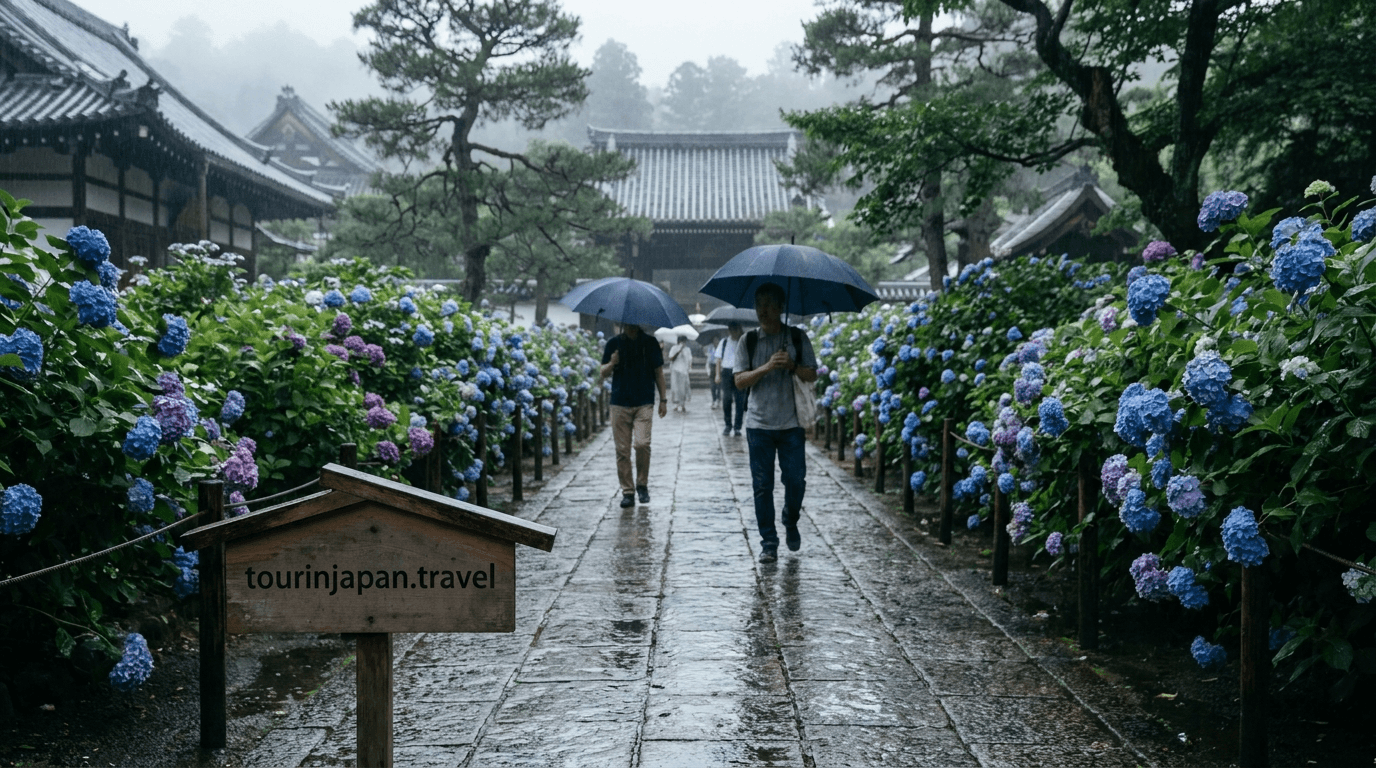
Japan in June: Rainy Season Survival Guide and What to Do
By Tour in Japan editors · Updated
June's rainy season in Japan puts off many travelers, but hydrangeas, uncrowded temples, and lower prices make it one of the most underrated months to visit.
Japan in June during rainy season, known as tsuyu or bai-u, is one of the most polarizing months in the Japan travel calendar. The reputation for grey skies and persistent drizzle keeps many visitors away, which is actually an excellent reason to consider it for your trip. June delivers some of Japan's most beautiful seasonal sights — particularly the explosion of hydrangea blossoms that transform temple gardens and hillside paths into walls of blue, purple, and pink — and it does so with far fewer crowds and significantly lower accommodation prices than April or November. The rainfall is real but manageable: you rarely get all-day downpours, and many days have clear mornings with afternoon showers. A lightweight rain jacket and a compact umbrella (available everywhere for around 500 yen) are all you need.
Hydrangea Viewing: June's Real Attraction
Ajisai, or hydrangeas, are the unofficial flower of tsuyu season and bloom in extraordinary abundance throughout June. Meigetsuin temple in Kamakura, known as the Hydrangea Temple, lines its approach path with thousands of blue hydrangeas and draws long queues on weekends. Hasedera in Kamakura has a hillside garden with over 2,500 hydrangea plants with views over Sagami Bay. In Kyoto, the path approaching Mimurotoji temple in Uji and the grounds of Fujinomori Shrine are carpeted with hydrangeas that photograph beautifully in the soft diffused light of an overcast day.
Hakusan Jinja in Bunkyo, Tokyo, hosts a hydrangea festival during June and is surrounded by over 3,000 plants. Shirako Park in Nerima ward is less famous but has a quiet hydrangea garden that locals favor. The muted, wet light of rainy season actually produces more saturated colors in hydrangea photography than direct sunlight, making June a favorite month for Japanese flower photographers.
Indoor Attractions for Rainy Days
June's rainy days are an excellent excuse to explore Japan's outstanding museum culture. The Tokyo National Museum in Ueno is the largest museum in Japan and holds over 110,000 cultural artifacts; you could spend two full days and not see everything. The teamLab digital art installations are particularly compelling on rainy days when the contrast between grey streets outside and the luminous interactive environments inside is dramatic. The Ghibli Museum in Mitaka requires advance reservation months ahead but is a perfect rainy day destination for Studio Ghibli fans.
June Rainy Season Travel Tips
- Rainy season typically runs from early June to mid-July in Honshu; Hokkaido largely escapes it
- Hydrangea peak: late May to late June depending on location and elevation
- Hotel prices in June are 20-30% lower than April or November peak seasons
- Carry a compact umbrella; coin-operated umbrella dispensers exist at many train stations
- Morning hours often have the clearest skies; schedule outdoor sightseeing early
- Humidity rises significantly in June; breathable clothing is important
- Kyoto and Nara are less crowded than any time since winter; temple visits are peaceful
- June sumo tournament (Natsu Basho) is held in Osaka in late May and may extend to early June
The key mindset for a successful June Japan trip is flexibility. Build in buffer time for outdoor sightseeing to catch clear windows, prioritize indoor attractions as backups, and embrace the wet atmosphere rather than fighting it. Many experienced Japan travelers consider June among their favorite months precisely because the country feels more authentic when it isn't performing for peak-season crowds. The lush greenery that the rain produces makes gardens and forest walks extraordinarily beautiful throughout June.
Stay Connected in Japan
Yesim eSIMs work on arrival — no physical SIM needed. Japan data plans from $5.