
Japan in January: New Year, Snow Monkeys, and Winter Deals
By Tour in Japan editors · Updated
January in Japan kicks off with shrine visits and ceremonial food, then settles into a quieter winter pace with great ski conditions and famous snow monkey encounters.
Japan in January offers a fascinating split personality. The first three days are among the most culturally rich of the entire year, packed with shrine visits, elaborate traditional foods, and ceremonial rituals observed by virtually every household in the country. Then, after the hatsumode first-shrine-visit season settles down around January 3rd, the country enters its quietest and most affordable travel window of the year. Hotels drop to their lowest prices, tourist attractions have their shortest queues, and the landscape is defined by snow, clean cold air, and the deep blue skies of a Japanese winter. For skiers, January powder season in Hokkaido and Nagano is world-class. And for one of Japan's most iconic wildlife experiences, the snow monkeys of Jigokudani are at their most photogenic when winter is at its deepest.
New Year in Japan: Oshogatsu Culture
Japanese New Year, known as Oshogatsu, is the most important holiday in the calendar. Families gather to eat osechi ryori, a set of elaborately prepared traditional dishes packed in lacquered boxes, each food carrying symbolic meaning for good fortune in the coming year. Ozoni soup with mochi rice cakes is eaten for breakfast. Hatsumode, the first shrine visit of the year, draws enormous crowds to major shrines and temples nationwide: Meiji Jingu in Tokyo sees three million visitors in the first three days of January, Naritasan Shinshoji temple draws another three million, and Fushimi Inari in Kyoto hosts hundreds of thousands.
If you are in Japan during January 1st to 3rd, joining the hatsumode crowds is an experience not to miss despite the queues. The atmosphere of thousands of people in winter coats waiting in orderly lines to clap, bow, and make their wishes for the new year is uniquely Japanese and genuinely moving. Department stores hold their Fukubukuro lucky bag sales on January 2nd, where mystery bags containing merchandise worth two to three times the purchase price sell out within hours.
Snow Monkeys at Jigokudani
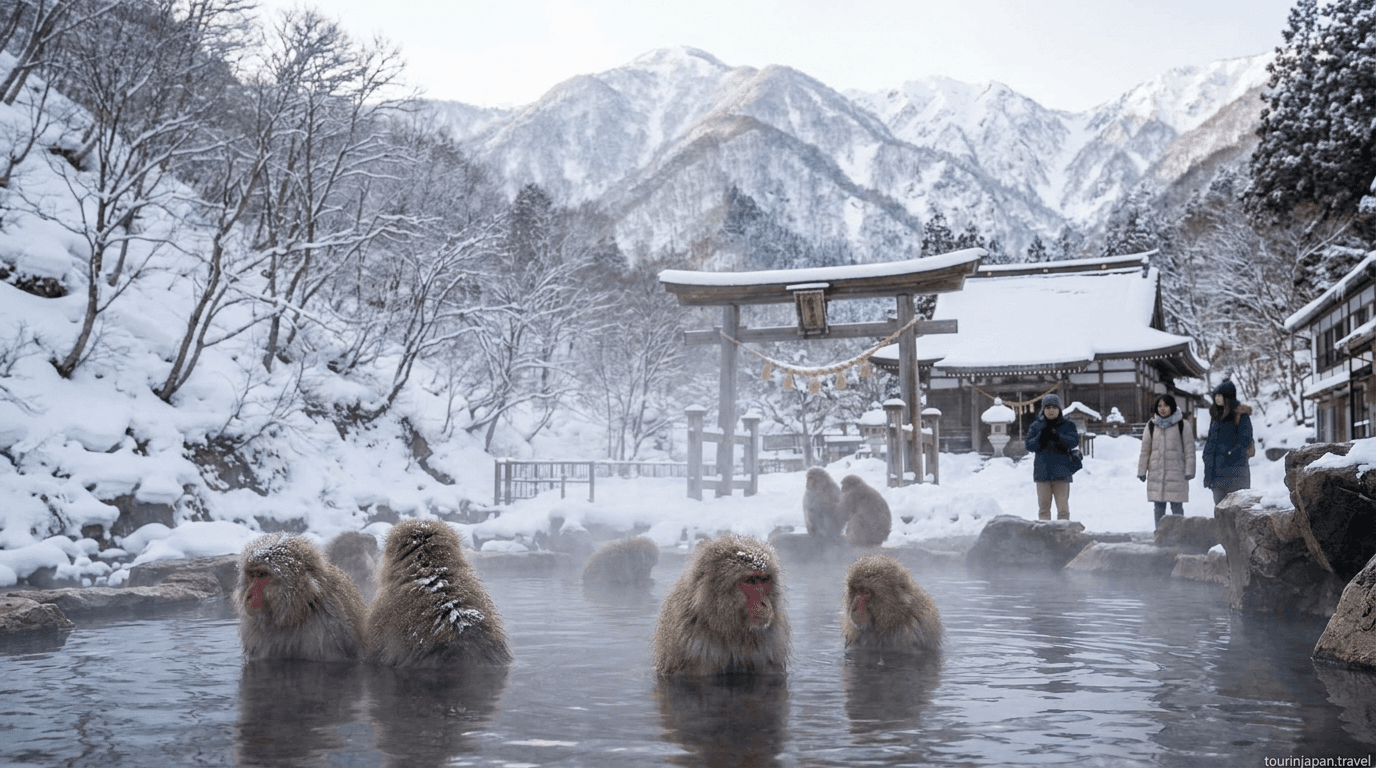
Jigokudani Yaen-Koen in Nagano prefecture is home to Japan's famous wild Japanese macaques who bathe in a natural hot spring pool surrounded by snow and forest. January and February are peak months for this behavior, as the monkeys retreat to the warm thermal water to escape temperatures that can drop below minus ten degrees Celsius. The park is free to enter and the monkeys are wild, but accustomed to visitors and approachable to within a few meters. Photography is excellent on overcast days when there are no harsh shadows.
The walk from the nearest bus stop to the monkey park takes about 30 minutes through forest. Wear waterproof boots as the path can be icy. The nearby Shibu Onsen village has nine public baths accessible to guests of the local inns, and staying overnight there combines the snow monkey visit with one of Japan's most atmospheric onsen towns. Ryokan rates in Shibu Onsen start at around 20,000 yen per person including dinner and breakfast.
January Skiing and Winter Activities
January is peak powder season in Hokkaido, and Niseko consistently ranks among the world's top ski destinations for light, dry powder snow. The resort receives an average of 15 meters of snowfall per season, with January delivering some of the best conditions. Multiple ski areas including Niseko United, Rusutsu, and Furano cater to all abilities. The international atmosphere at Niseko means English is widely spoken in ski schools and restaurants, making it unusually accessible for non-Japanese speakers.
Japan January Travel: What to Know
- January 1-3: Oshogatsu holiday period, many shops and restaurants closed
- January 4 onwards: quietest and cheapest travel period of the year
- Fukubukuro lucky bags on sale January 2nd at department stores; arrive early
- Jigokudani monkey park: free entry, best visited January through March
- Niseko and Furano ski resorts: peak powder season, advance booking essential
- Average Tokyo temperatures in January: 1-10C; pack warm layers
- The Coming of Age Day national holiday falls on the second Monday of January
- Winter sales (winter sale) at major retailers run through January
- Hotel rooms cost 20-40% less in mid-January compared to Golden Week or autumn peak
For budget-conscious travelers, the window from January 5th to the end of the month is arguably the best value time to visit Japan's major cities. Museums have short queues, bullet train seats are readily available without advance booking, and hotel rooms at high-quality business hotels in central Tokyo can be found for under 8,000 yen per night. Combine cultural sightseeing with a side trip for snow monkeys or skiing, and January delivers a Japan trip that is both affordable and memorable.
Stay Connected in Japan
Yesim eSIMs work on arrival — no physical SIM needed. Japan data plans from $5.