
Japan Healthcare for Tourists: Hospitals, Pharmacies, Emergency Numbers
By Tour in Japan editors · Updated
Japan's healthcare system is excellent — if you know how to navigate it. Here are the emergency numbers, hospital options, and pharmacy tips every visitor needs.
Japan's healthcare system consistently ranks among the best in the world, and tourists who need medical care will generally receive excellent treatment. The challenges are practical: finding an English-speaking doctor, understanding payment procedures as a foreign visitor without Japanese national health insurance, and knowing which number to call in an emergency. This guide gives you the essential information about Japan healthcare for tourists so you are prepared before you need it.
Emergency Numbers in Japan
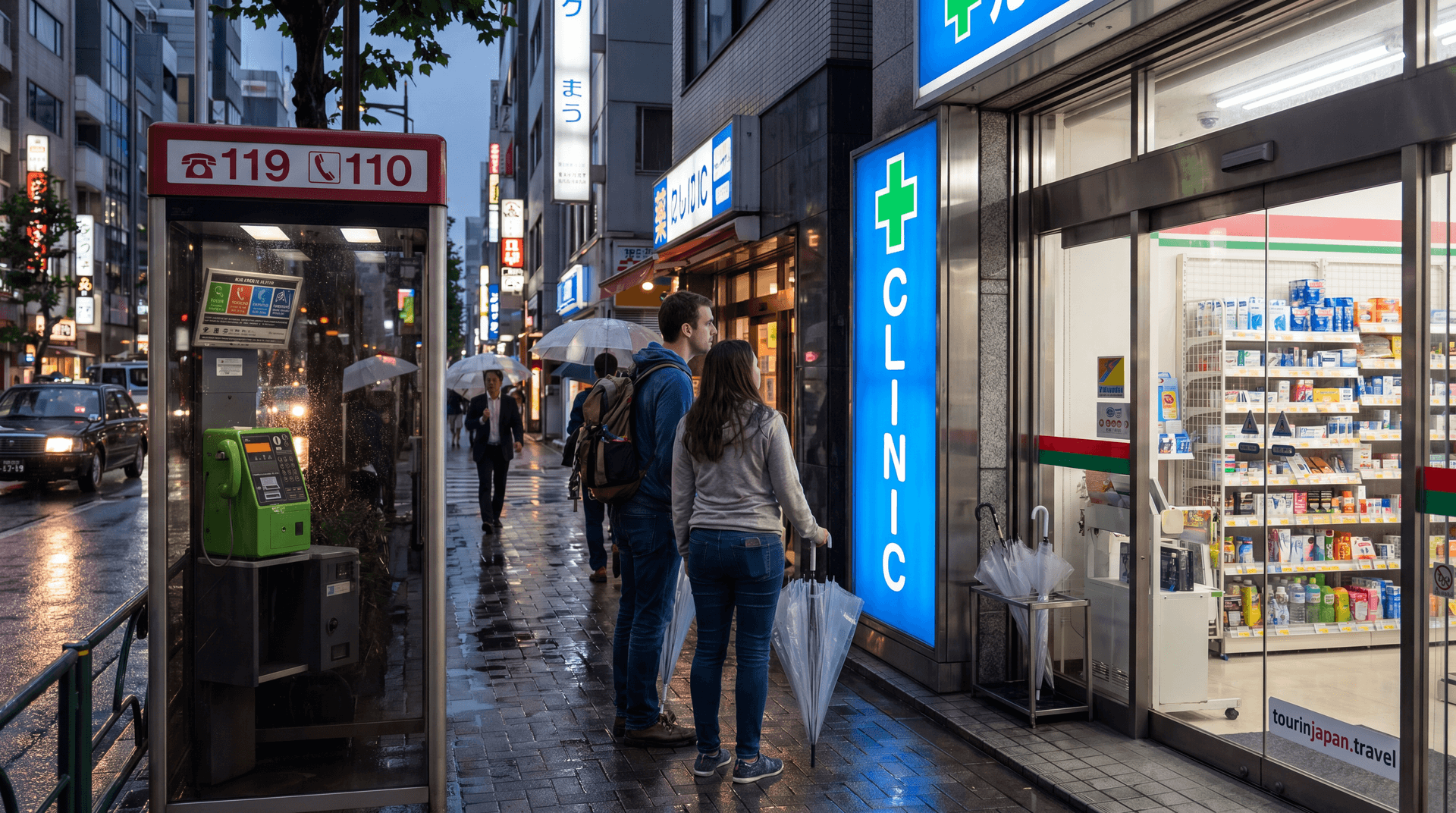
Japan has separate emergency numbers for police and medical emergencies, unlike the single-number systems in the US or UK. The medical and fire emergency number is 119 — this dispatches ambulances and fire services. The police number is 110. Both are free from any phone including foreign SIM cards. Dispatchers at 119 have limited English ability at most locations; if you cannot communicate, stay on the line, give your location, and the dispatcher will trace the call.
For non-emergency medical questions, the JNTO operates a Tourist Information Hotline at 050-3816-2787, available 24 hours in English, Chinese, Korean, and Japanese. They can direct you to nearby English-speaking medical facilities. The number 7119 in Tokyo connects to a nurse consultation service that advises whether symptoms require emergency care or can wait for a clinic visit.
Finding English-Speaking Hospitals and Clinics
Major international hospitals in Tokyo include St. Luke's International Hospital in Chuo-ku (+81-3-5550-7166), Tokyo Medical and Surgical Clinic in Minato-ku (+81-3-3436-3028), and International SOS Clinic (+81-3-5413-7911, available 24 hours to members). In Osaka, Sumitomo Hospital and Osaka Red Cross Hospital both have international patient departments. In Kyoto, the Kyoto University Hospital has English-speaking staff and handles international patients regularly.
Essential Japan healthcare contacts and pharmacies
- Emergency: 119 (ambulance and fire) | 110 (police) — free from any phone
- JNTO Tourist Hotline: 050-3816-2787 (24 hours, English, for hospital referrals)
- Tokyo non-emergency nurse line: 7119 (Tokyo only, 24 hours, advice on whether to go to ER)
- Pharmacy chains: Matsumoto Kiyoshi, Welcia, and Sundrug are the largest nationwide chains
- OTC medications available: ibuprofen (Eve brand), antacids, allergy medication, cold medicine
- Prescription medications: Japan has strict import rules — carry a doctor's letter and original packaging for any prescription drugs
- Some medications legal in your home country are controlled substances in Japan, including certain ADHD medications
- Japan's tap water is entirely safe to drink in all major cities — bottled water is not necessary
Payment at Japanese hospitals works differently from most Western systems. You pay at the counter after treatment, usually by cash or credit card depending on the facility. Keep all receipts for insurance claims. University hospitals and large public hospitals are cheaper but have longer waits of 2-4 hours for non-emergencies. Private clinics are faster and slightly more expensive. In most cities, small walk-in clinics (naika, meaning internal medicine) handle colds, stomach issues, and minor injuries quickly and cost between 2,000-5,000 yen for a consultation including basic examination.
Stay Connected in Japan
Yesim eSIMs work on arrival — no physical SIM needed. Japan data plans from $5.