
Japan Dual Pricing 2026: Which Attractions Now Charge More for Foreigners
By Tour in Japan editors · Updated
A growing number of Japan's attractions charge tourists more than locals in 2026. Here's which sites have dual pricing, the amounts involved, and what to expect.
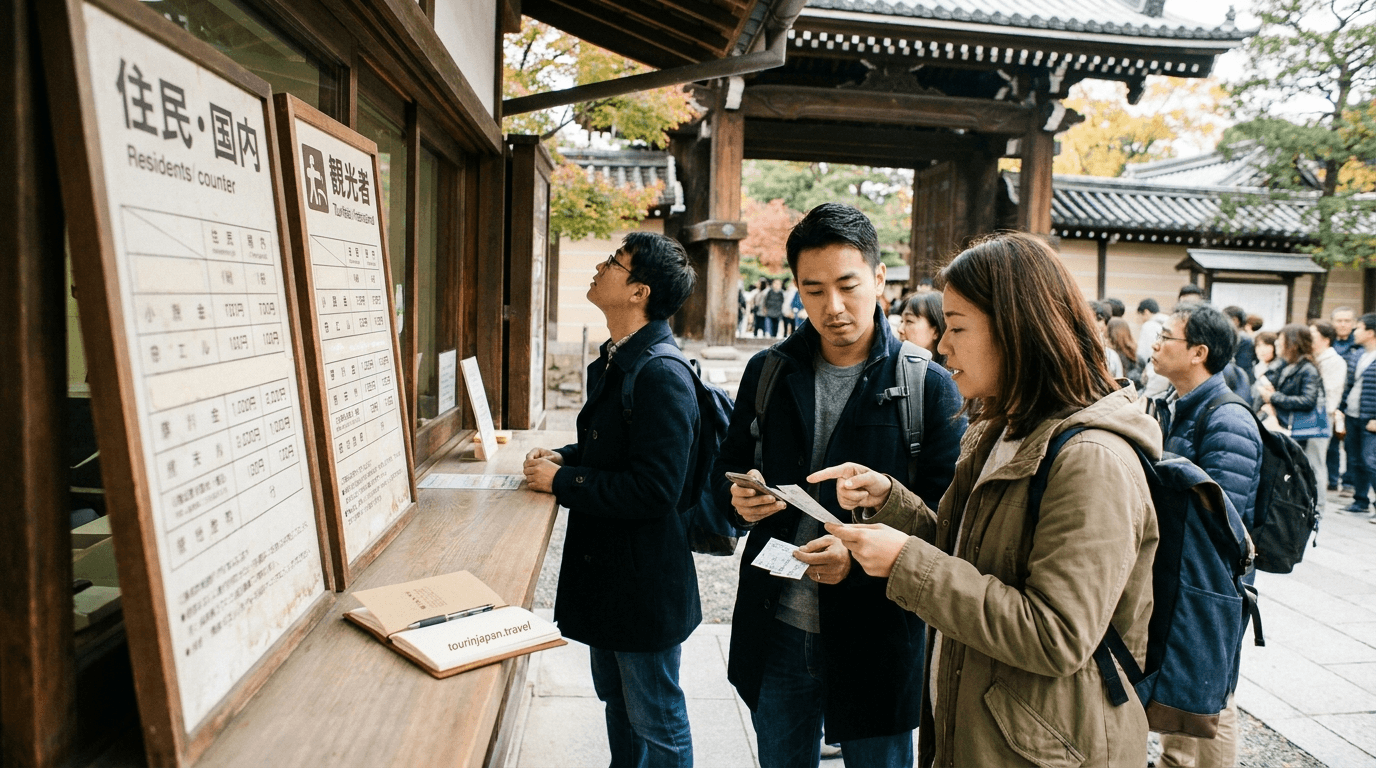
Japan dual pricing for foreigners has become an increasingly visible and debated topic in 2026. As Japanese authorities seek to manage overtourism, generate revenue for maintenance, and balance the economic impact of tourism on local communities, a growing number of sites have introduced higher prices for foreign visitors than for Japanese residents. This Japan dual pricing foreigners guide covers which sites have two-tier pricing, how much the difference is, and the broader context around the practice.
Sites With Confirmed Dual Pricing in 2026
Kyoto's Gion district has implemented a 1,000 yen entry fee for certain popular pedestrian alleys during peak hours, charged to all visitors but enforced primarily at tourist entry points. Kamakura has been piloting a tourist tax of 200 yen on certain days that residents are exempt from. Mount Fuji's Yoshida Trail charges all climbers 2,000 yen, but Japanese residents sometimes receive discounted or waived fees through municipal programs.
The most talked-about dual pricing example came from individual restaurant and ryokan owners who began publishing different menu prices in Japanese and English-language materials — sometimes with 20-50% premiums for foreign customers. These practices are not universally legal and have faced legal challenges, but informal price differentiation continues in some tourist-heavy areas.
The Arguments For and Against Dual Pricing
Proponents argue that foreign tourists generate disproportionate wear on infrastructure without contributing Japanese taxes, that higher prices reduce demand from mass tourism and improve the experience for all visitors, and that similar practices exist in many other countries (national park fees in Nepal, museum pricing in major European cities for EU vs. non-EU residents). The Japanese government has generally allowed local authorities to experiment with pricing differentiation.
Critics counter that dual pricing damages Japan's reputation for fairness and omotenashi hospitality, that higher prices don't actually address behavior issues (disrespectful tourists pay and still misbehave), and that the practice legally risks violating the Consumer Contract Act and unfair competition standards. Most major established attractions — Tokyo museums, Kyoto temples, National Parks — continue with uniform pricing for all visitors.
What Foreign Travelers Should Know and Budget For
- Mount Fuji Yoshida Trail: 2,000 yen per person (all visitors, collected at 5th Station gate)
- Miyajima Island, Hiroshima: 200 yen day visitor conservation fee
- Most hotels: accommodation tax (toshi-zei) of 100-500 yen per person per night depending on room price — applies to all guests
- Kyoto peak-season surcharges: some ryokan charge higher rates during cherry blossom and autumn foliage regardless of guest nationality
- Japan's major national museums (Tokyo National, Kyoto National) do not implement dual pricing
- Disneyland Tokyo, USJ, and major theme parks charge all visitors the same price (and already charge premium prices)
- Onsen ryokan: prices are uniform but some establishments remain foreign-visitor-unfriendly for other reasons (tattoo policies, language)
The dual pricing trend in Japan is likely to continue evolving in coming years. For most foreign travelers, the practical impact on total trip costs is minimal — the fees involved are generally small amounts that pale against airfare and accommodation costs. The more significant impact is philosophical: Japan's reputation for treating all visitors equally with impeccable hospitality is one of the things that makes it special, and how authorities balance revenue generation with that ethos will be worth watching.
Stay Connected in Japan
Yesim eSIMs work on arrival — no physical SIM needed. Japan data plans from $5.